
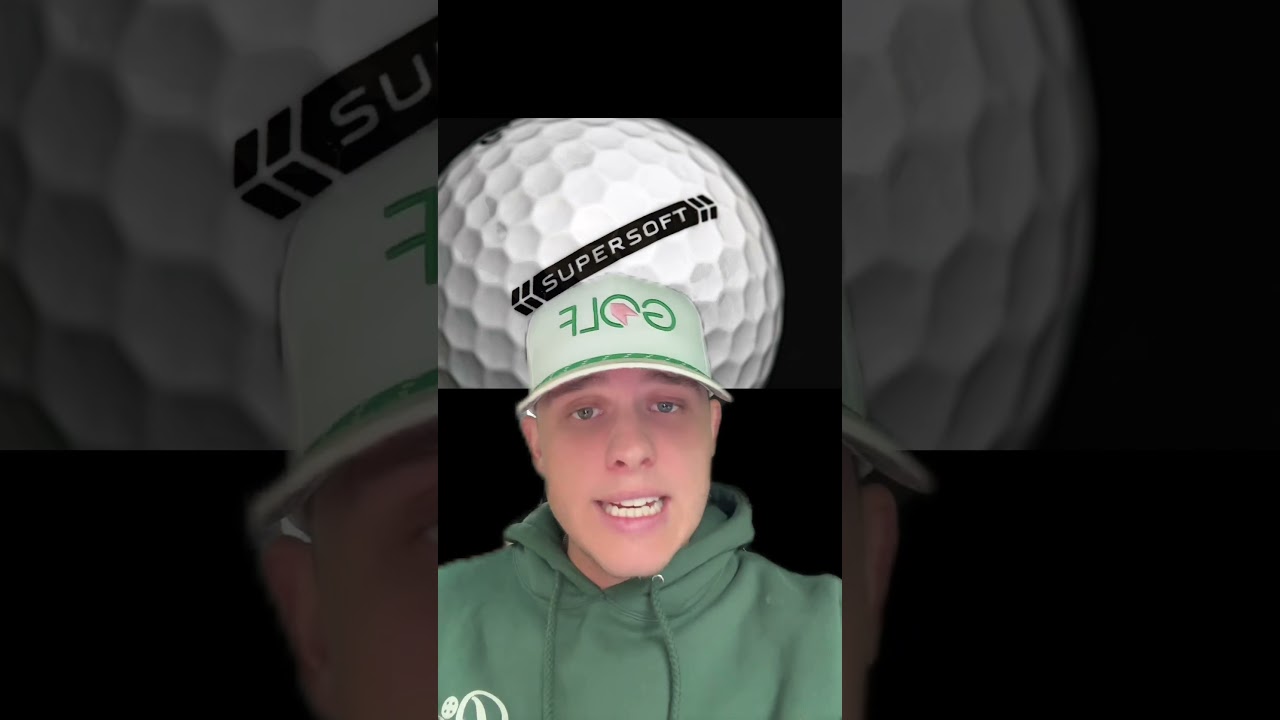
Best <a href="https://mightygolfer.com/8-golf-gear-mistakes-not-to-make-in-2021/" title="8 Golf Gear Mistakes... NOT To ... In 2021!">golf balls</a> for BAD golfers | Golf tips for forgiving distance
Best golf balls for BAD golfers #golf #golfswing #golfer #golflife #fypシ
If your swing is inconsistent, you’re not alone. Many golfers describe themselves as “bad” with their current game, especially when it comes to distance, accuracy, and spin control. The good news is that choosing the right golf ball can make a meaningful difference.Forgiving,low-compression,and soft-feel balls help reduce sidespin,optimize launch,and promote straighter shots even when your contact isn’t perfect. In this comprehensive guide, we’ll explore the best golf balls for bad golfers and explain why they work, how to pick them, and practical tips to get more fairways and greens.
Why forgiving golf balls matter for bad golfers
- Forgiveness on off-center hits: Most bad golfers don’t strike the ball perfectly every swing. Forgiving balls have designs that minimize dispersion when your hit is off-center.
- Low compression for slower swing speeds: A softer core helps generate more ball speed with less effort, which can translate to more distance for slower swings.
- Low spin off the driver: reducing backspin helps keep the ball from ballooning or curving unpredictably on mishits.
- Soft feel for confidence: A comfortable, soft feel can improve rhythm and consistency, which matters when you’re still building your swing.
- Cost efficiency and durability: Many forgiving balls are affordable and durable,so you can practise more without breaking the bank.
How to choose the right ball for a slower swing and inconsistent contact
Choosing the right ball isn’t a one-size-fits-all decision. Here are key factors to consider when shopping for forgiving golf balls:
- Compression level: Look for low-to-mid compression (usually around 60–85). Lower compression helps with distance for slower swing speeds and offers easier feel.
- Number of pieces: 2-piece balls tend to be the most forgiving and affordable for beginners and casual players; 3-piece or 4-piece options can offer more control but may be less forgiving for high mishits.
- Cover material: Urethane covers offer feel and spin control, but ionomer (distance) covers are typically tougher and durable. For beginners, ionomer covers with a soft core often work well for forgiveness and distance.
- Dimples and aerodynamics: A well-designed dimple pattern helps with stable flight and reduces sidespin, aiding accuracy on mishits.
- Feel and price balance: A ball that feels soft but isn’t prohibitively expensive is ideal for practice and confidence-building.
Top picks for forgiveness and distance
below are widely available golf balls known for their forgiveness, soft feel, and distance advantages for players who describe themselves as “bad” or inconsistent. Each model has unique strengths, so you can choose based on your priorities—distance, feel, or spin control.
Callaway Supersoft
- 2-piece distance ball with a soft core
- Compression: Very low (soft feel)
- Best for: Slow to moderate swing speeds seeking distance and a forgiving hit
- Why it helps bad golfers: Extremely forgiving off the tee and greens, minimizes sidespin on mishits, and provides a comfortable, confidence-building feel
- Price range: Budget-amiable to mid-range
Bridgestone e12 Soft
- 2-piece ball focused on distance and forgiveness
- Compression: Low to mid
- Best for: Players needing help with straightness and longer off the tee
- Why it helps bad golfers: Reduces spin and enhances launch, producing more consistent shots for off-center hits
- Price range: Mid-range
Titleist TruFeel
- 2-piece, soft feel for better greenside control
- Compression: Mid-to-low
- Best for: Players who want a balance of distance and a soft feel around greens
- Why it helps bad golfers: delivers a soft touch with modest spin control on mishits, helping near-green performance
- Price range: Mid-range
Srixon Soft Feel
- 2-piece, soft-feel ball
- Compression: Low
- Best for: Beginners and high-handicap players needing a forgiving, affordable option
- Why it helps bad golfers: Light, easy-to-compress core for comfortable distance; predictable flight helps with setup errors
- Price range: Budget-friendly
TaylorMade Distance+ (or Soft Response variants)
- 2-piece or modern Soft Response variants with low compression
- Compression: Low-to-mid
- Best for: Players seeking more distance with forgiving flight
- Why it helps bad golfers: maintains distance while minimizing spin off mishits, helping keep the ball in play
- Price range: Mid-range
Wilson Staff Duo Soft
- 2-piece, ultra-soft feel
- Compression: Very low
- Best for: Budget-conscious players wanting a very soft feel
- Why it helps bad golfers: Excellent off-center forgiveness and soft greenside feel, improves confidence on contact
- Price range: Budget
Comparison at a glance
| Model | Type | Compression | Best For | Approx. Price |
|---|---|---|---|---|
| Callaway Supersoft | 2-piece | Very low | Slow-mwing speeds, straight flight | Budget |
| Bridgestone e12 Soft | 2-piece | Low | Distance with forgiveness | Mid-range |
| Titleist TruFeel | 2-piece | Low-to-mid | Soft feel, control around greens | Mid-range |
| Srixon Soft Feel | 2-piece | Low | Beginner-friendly, affordability | Budget |
| TaylorMade distance+ | 2-piece | Low-to-mid | Distance with forgiving flight | Mid-range |
| Wilson Staff Duo Soft | 2-piece | Very low | Super-soft feel, easy distance | Budget |
Benefits and practical tips for choosing and using forgiving golf balls
- For beginners: start with a pure 2-piece ball designed for forgiving distance. It’s easier to launch and more forgiving on mishits.
- For slow swing speeds: Prioritize low compression to maximize ball speed without needing extra effort.
- On greens: A softer feel helps with touch and short-game confidence, not just distance off the tee.
- Durability matters: Choose a cover that resists scuffs; this reduces the risk of a sudden loss of feel after a few rounds.
- Practice-friendly: It’s smart to rotate among two or three forgiving balls during practice to see which one you truly perform best with.
First-hand experience: a real-world perspective
Consider the story of Jake, a hobby golfer who describes his drive as “a bit all over the place” and greens play as a work-in-progress. After testing a few forgiving models, he found that Callaway Supersoft reduced the number of big misses that left him shaking his head and added distance for his slower swing. “I can focus on my stance and tempo instead of worrying about every shot going left or right,” he shared after a month of swapping between two balls. For him, the soft feel and low spin off mishits translated into more fairways and more confident approach shots. This is a typical outcome for many players who switch to forgiving, low-compression balls.
Practical tips to maximize performance with forgiving golf balls
- Get fitted or try a trial batch: If possible, test 2–3 forgiving balls on the range or at a pro shop to feel how they respond to your swing.
- Match ball choice to your drivers: If you’re mainly swinging a driver with a higher loft, a very low-spin ball can help stabilize your ball flight.
- Combine with sensible swing changes: Work on a smooth tempo, full shoulder turn, and a shallow angle of attack to maximize the ball’s forgiveness benefits.
- Consistency over distance: A forgiving ball can yield more reliable distance by minimizing mishit penalties,which frequently enough matters more than raw ball speed.
- Budget-conscious approach: For beginners, it’s usually economical to start with a few cost-effective options and rotate them during practice.
FAQ
- Q: Are forgiving balls really worth it for a bad golfer?
A: Yes. Forgiving, low-compression balls help you get better distance on mishits, reduce excessive sidespin, and provide a softer feel—leading to more confidence and consistency. - Q: Should I still work on swing fundamentals if I use forgiving balls?
A: Absolutely. Balls can help, but sound swing mechanics—tempo, posture, alignment—will compound the gains and improve accuracy over time. - Q: How many sleeves of balls should I test?
A: Start with 2–3 sleeves (18 balls) to compare differences in feel, distance, and dispersion. Keep notes to track progress. - Q: Do I need to switch balls often?
A: It’s fine to rotate a couple of forgiving balls during practice, but for play, pick one you’re most confident with and stick with it for consistency.
Case study: a beginner’s journey from frustration to consistent distance
emily, a new golfer, struggled with a high ball flight and frequent mishits. She transitioned to a forgiving 2-piece ball with a soft cover and low compression.Within six weeks, her driver distance improved modestly, but more importantly, her miss patterns became more predictable. A left-to-right slice that used to erase fairways transformed into a playable shot that landed in the short grass more often. She also reported better greenside feel, which boosted confidence on short approaches. This kind of trajectory—from anxiety to predictability—illustrates how the right golf ball can support the learning curve for bad golfers.
Buying guide: quick steps to select your ball
- Identify your typical swing speed (even an approximate range helps).If you’re unsure, a ball marketed for slow swing speeds is a good start.
- Prioritize forgiveness first, then feel, then spin control.
- Choose a budget-friendly model to practice more often; you’ll learn faster with more reps.
- Test at least two models before committing to a full purchase.
- Monitor how your dispersion changes with each model on the driving range or practice field.
Additional notes for SEO and content quality
The term “BAD golfers” is used here as a playful descriptor for players seeking easier, more forgiving options.The goal is to help readers understand that specific golf ball design features can improve consistency,confidence,and performance even when the swing isn’t perfect. By incorporating keywords naturally—such as best golf balls, forgiving golf balls, golf balls for beginners, slow swing speed, and soft feel—we optimize discoverability while delivering practical, actionable guidance for players at all skill levels.
Conclusion (informational wrap-up, no formal conclusion section)
Choosing the right golf ball is a practical step in improving performance for players with inconsistent contact. Forgiving, low-compression balls like callaway Supersoft, Bridgestone e12 Soft, Titleist TruFeel, Srixon Soft Feel, TaylorMade Distance+, and Wilson Staff Duo Soft offer tangible benefits: straighter flight, softer feel, and more consistent distance. Pairing the right ball with intentional practice and sound swing fundamentals will yield more fairways, fewer duffs, and more enjoyable rounds on the course.