
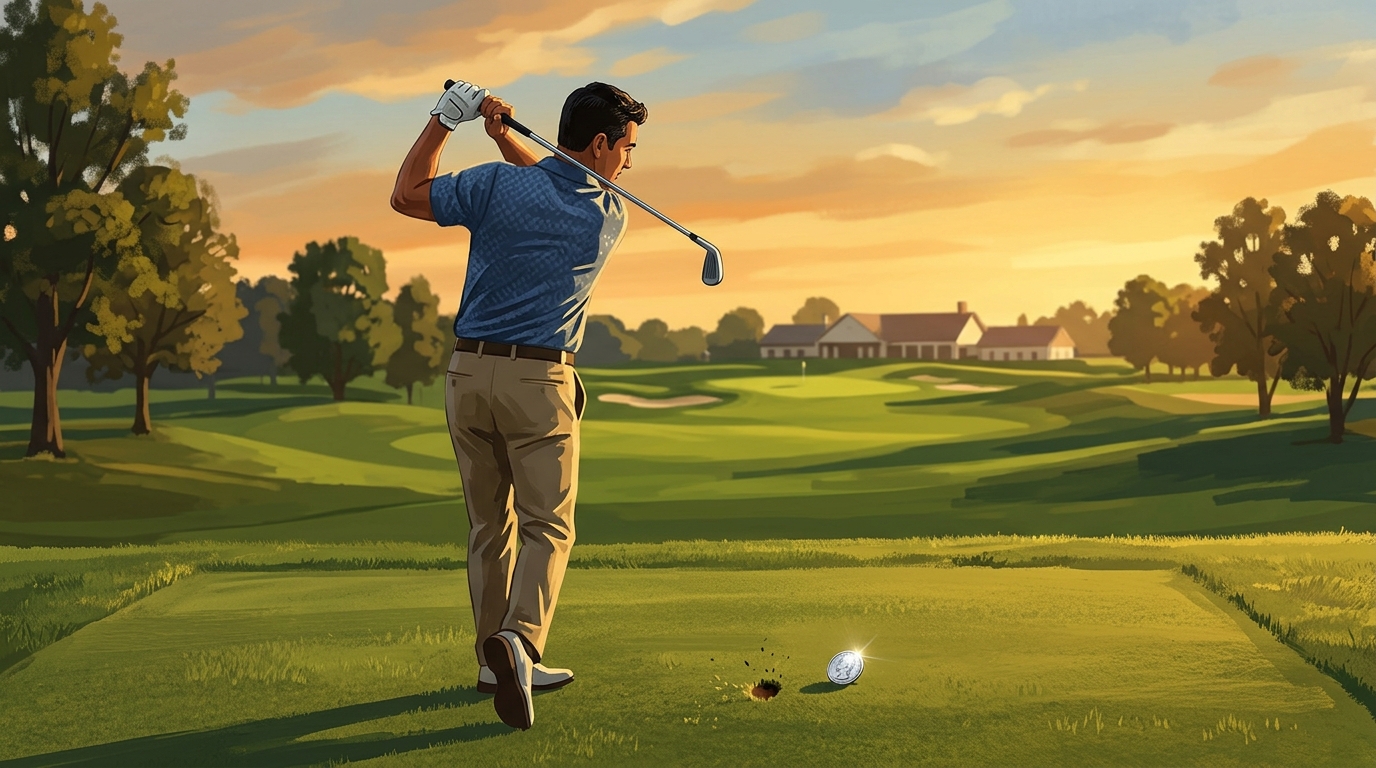
The Heavy Iron Strike That Robs Your Distance
Few feelings in golf are more frustrating than swinging at an iron from the fairway, feeling the club shudder into the ground, and watching a massive pelt of turf fly farther than your golf ball. Hitting iron shots "fat" or heavy instantly robs you of distance, shocks your hands, and leaves you facing another difficult approach shot.
Clean iron contact requires the club head to hit the ball first and then brush the ground, taking a shallow divot in front of where the ball rested. When you hit the shot heavy, the lowest point of your swing arc happens an inch or two behind the ball. The grass and dirt absorb all your swing speed before the face ever reaches the dimples.
What Causes Your Club to Hit Turf First
You do not need to tear down your entire golf swing to stop chunking your irons. Usually, the club bottoms out early because of a subtle breakdown in posture or lead wrist alignment just before impact.
Hanging Back Away From the Target
Many golfers intuitively try to help the ball up into the air by leaning their upper body away from the target during the downswing. When your sternum tilts backward toward your trail foot, the lowest point of your swing shifts backward along with it. Your club head reaches the bottom of its circle too early and slams directly into the turf behind the ball.
Flipping the Lead Wrist Early
If you unhinge your wrists early in an attempt to hit the ball harder—often called "casting"—the club head passes your hands before impact. Solid iron striking requires your hands to lead the club head slightly through the hitting zone. Flipping the wrists releases the club's radius prematurely, dropping the sole right into the dirt.
Resetting Your Low Point Forward
To produce crisp, ball-first contact, you must move the bottom of your swing arc just forward of the golf ball. A simple setup adjustment and a focused impact visual will clean up your contact quickly.
Start by checking your sternum at setup. Position your chest directly over the ball, or even half an inch ahead of it toward the target. Maintain this centered chest position as you make your backswing rather than swaying away from the ball.
As you swing down, imagine driving the back of your lead hand toward the target. Keeping your lead wrist flat through impact ensures the shaft leans slightly forward, holding the leading edge above the ground until after the face meets the ball.
The Coin-Strike Drill
This simple drill trains your eyes and hands to move your swing's lowest point ahead of the ball without needing any complicated swing thoughts.
- Place a small coin, such as a dime or penny, flat on the ground on a practice mat or turf.
- Set a golf ball down approximately two inches in front of the coin, directly along your target line.
- Take your normal address position, aligning the club face behind the golf ball as usual.
- Make your normal, smooth iron swing with one strict objective: strike the ball cleanly without letting your club touch the coin behind it.
If your club drops early, you will hear a sharp clink or send the coin skipping away. If you clear the coin and collect the ball, your club successfully entered the turf after impact. Hit ten balls with the coin in place, then remove the coin and recreate that same forward-reaching strike.
One Thing to Remember
Crisp irons never come from scooping upward; focus on keeping your chest over the ball so the club bottoms out in front of the shot, not behind it.