
Choose the Landing Spot Before You Choose the Club
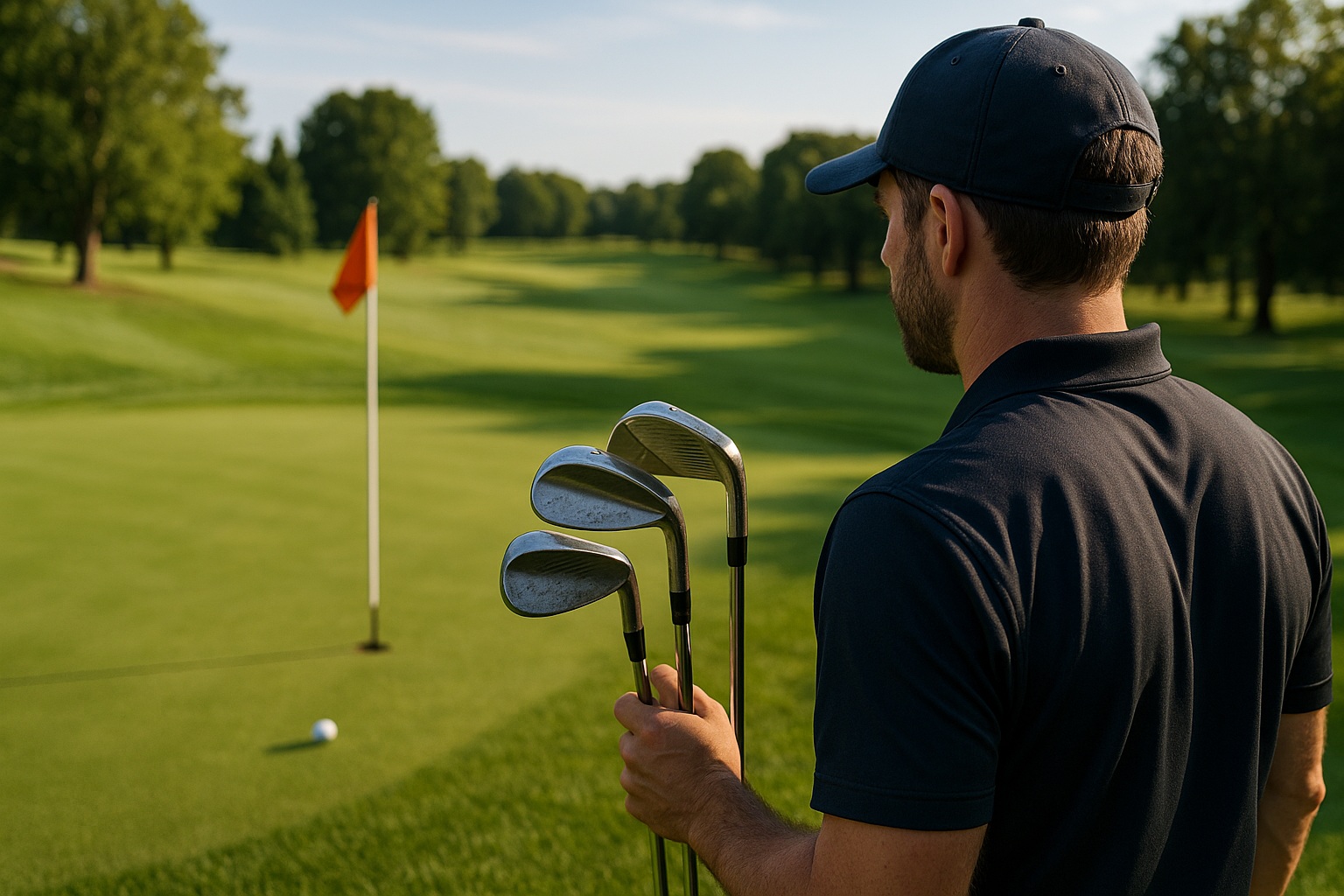
You have a short shot from just off the green. The pin is 20 feet away, the grass looks manageable, and three clubs are sitting in your hand: putter, pitching wedge, and sand wedge.
Many golfers immediately ask, “Which club should I use?” That is often the wrong first question.
A better question is: Where do I want the ball to land?
Once you choose the landing spot, the correct club usually becomes much easier to identify.
Why the Landing Spot Matters
Every shot around the green has two parts: the ball travels through the air, then it rolls along the ground. A chip with a wedge may fly only a third of the way and roll the rest. A putt from the fringe may stay on the ground almost the entire time.
The club changes the balance between carry and roll. More loft creates more carry and less roll. Less loft creates less carry and more roll.
The mistake is choosing a club because it feels familiar, then hoping the ball finishes near the hole. Better short-game decisions work in the opposite order:
- Read the lie and the green.
- Choose a landing spot.
- Pick the club that gets the ball there.
Start by Reading the Lie
Before thinking about the pin, look closely at the ball.
Is it sitting on short grass with plenty of space behind it? Is it nestled down in thicker rough? Is the ground wet, firm, uphill, or downhill? These details determine how reliably you can control the first few yards.
A clean lie gives you more options. You may be able to putt, bump the ball with a less-lofted club, or hit a normal chip.
A poor lie may remove some options. If the ball is sitting down in rough, a putter may get stuck in the grass. If the ground is soft, the club may dig. If the ball is perched on top of thick grass, a low-running shot can be difficult to judge.
Choose the shot you can strike reliably, not the shot that looks most impressive.
Pick the Landing Spot First
Instead of aiming directly at the hole, find a patch of ground where you want the ball to touch down.
For a simple chip, that spot might be a few feet onto the green. From there, the ball can release toward the hole. If the green slopes, choose a landing spot that allows the ball to use the slope rather than fighting it.
If there is a lot of green between you and the hole, a low shot may be sensible. If the pin is close to the edge of the green, you may need more loft to stop the ball sooner. If the landing area is uneven or surrounded by trouble, favor the shot that gives you the largest margin for error.
A simple club-selection guide
- Putter: Best when the ball is sitting cleanly and the path to the hole is smooth and predictable.
- Low-lofted club: Useful when you want a little air time but plenty of roll.
- Pitching or gap wedge: Helpful when you need more carry over rough or want the ball to stop sooner.
- Sand or lob wedge: Usually reserved for limited green, a high obstacle, or a shot that must land softly.
Do Not Automatically Aim at the Hole
The hole is not always the best target. Your real target may be a safe landing area that leaves a manageable putt.
For example, a downhill chip toward a fast hole may be difficult to stop. Landing the ball short and using the slope can be safer than trying to fly it directly to the flag. A shot that finishes six feet below the hole is often better than one that races 15 feet past it.
Also remember that “safe” does not mean timid. You still need enough speed for the ball to reach the hole. The goal is to remove unnecessary risk while giving the ball a clear path to the cup.
Try This: The Landing-Spot Challenge
During your next practice session, place three balls around a practice green. Before hitting each one, say out loud:
“My landing spot is…”
Point to a specific patch of grass, then choose the club that best reaches it. Do not change clubs unless the lie or landing area gives you a clear reason.
Your goal is not to hole every shot. Your goal is to make the ball land within a three-foot circle of your chosen spot. This teaches you to control the first part of the shot instead of judging success only by the final distance from the hole.
One Thing to Remember
Decide where the ball should land before deciding which club to use. When the landing spot is clear, your short-game choices become simpler, safer, and more consistent.