
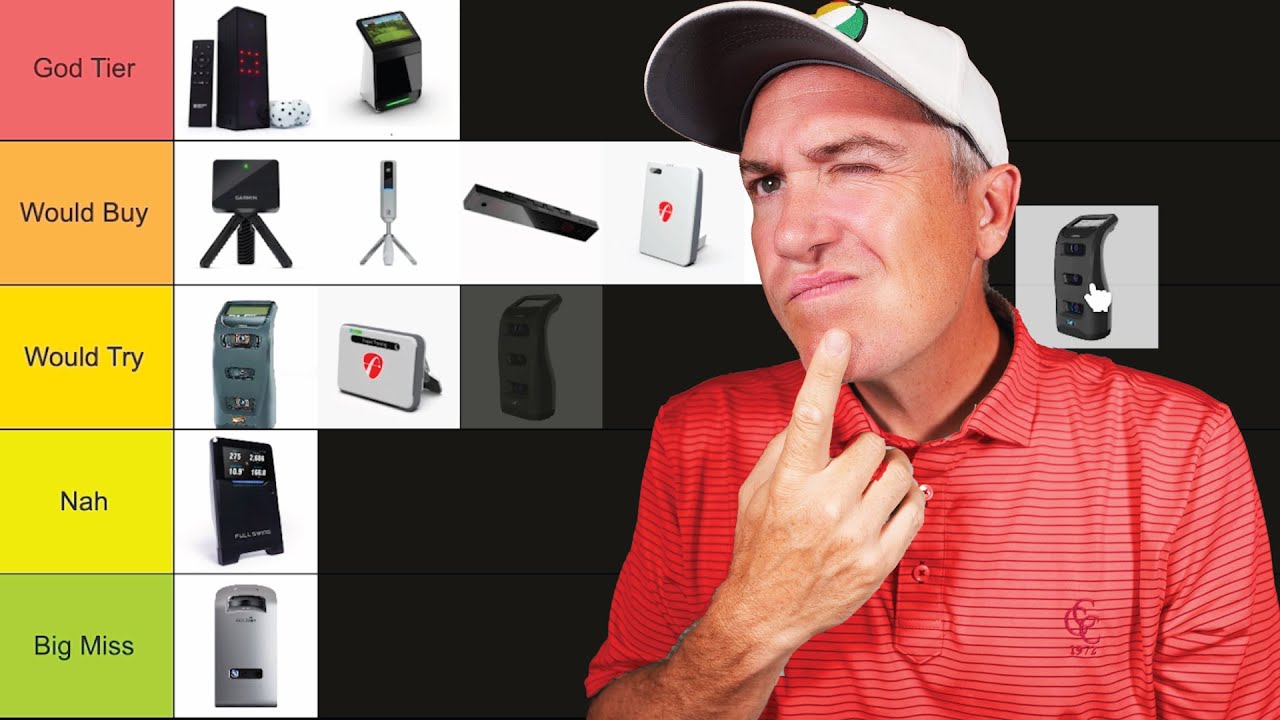
Golf Launch monitor Tier List 2025
Why a Tier List Matters in 2025
The golf tech landscape has evolved rapidly. In 2025, launch monitors are no longer just about ball speed and distance. The best devices deliver rich data sets—spin, launch angle, attack angle, club path, impact dispersion, and even club head data—paired with robust software for practice, fitting, and course simulation. A well-structured tier list helps you cut through marketing hype and find a model that fits your budget, space, and goals—whether you’re a serious student of the game, a club fitter, or a weekend golfer looking for meaningful feedback.
- Data depth vs. price: balancing how many metrics you actually use.
- Indoor vs. outdoor performance: lighting, room size, and green simulators matter.
- Reliability and update cadence: software updates can add features and improve accuracy.
- Ease of use and ecosystem: calibration steps, app experience, and third-party integrations.
The 2025 Golf Launch Monitor Tier List
S-Tier — Elite accuracy and pro-grade features
S-Tier devices are the gold standard for accuracy, data depth, and professional use cases such as fitting, trackman-style practice, and high-fidelity simulators. Expect premium build quality,robust software,and strong customer support. These monitors are typically used by touring pros, academies, and high-end clubs.
- TrackMan 4 — The industry benchmark for precision and data depth. Excellent feedback for club path, attack angle, ball spin, and dynamic loft. Indoor or outdoor, with extensive calibration routines and a rich ecosystem of simulators and fitting software. Price: premium (typically in the tens of thousands).
- Foresight Sports GCQuad — A close competitor to TrackMan in terms of data fidelity and versatility. Known for high-quality imaging, real-time ball flight data, and dependable club data for fitting and launch optimization. Price: premium.
Key considerations for S-Tier devices:
- Data points: ball speed, launch angle, spin, carry, total distance, club head data, and sometimes exit velocity.
- Calibration: requires a careful setup, but once dialed in, results are highly repeatable.
- Best for: professional fitting, serious training, and those who demand the most complete dataset.
A-Tier — great balance of data depth and value
A-Tier monitors offer ample data sets and reliable performance without the premium price of S-Tier. They’re excellent for dedicated amateurs, club fitters, and home simulators who want credible metrics and a solid software experience.
- FlightScope X3 — A high-end radar-based system with rich data, strong analytics, and good indoor/outdoor adaptability. it fits a serious golfer who wants professional-grade data without the highest price tag. Price: substantial but lower than S-Tier options.
- FlightScope Mevo+ (Pro bundle or enhanced software) — A popular mid-range option with robust data for a reasonable price. great for home use, practicing, and entry to advanced analytics, especially when paired with compatible apps and software. Price: mid-range.
Key considerations for A-Tier devices:
- Data depth is strong but may not match the breadth of TrackMan/GCQuad in every metric.
- Often easier to set up and maintain; more accessible for enthusiasts and small studios.
B-Tier — Solid performers for enthusiasts and semi-professional use
B-Tier devices strike a balance between price and data quality. They’re reliable for practice, home use, and casual fitting sessions, but may have fewer data points or a simpler software ecosystem compared with A- or S-Tier devices.
- SkyTrak — A widely adopted entry to mid-range system known for its practical data and strong community. Great for home golf simulators and casual practice; accuracy is solid for the price but not on par with premium radar-based devices. Price: affordable to mid-range.
- Rapsodo MLM — A mobile launch monitor that delivers useful ball data and intuitive coaching feedback.Popular among hobbyists and clubs looking for easy-to-use analytics at a lower price point. Price: budget to mid-range.
- Swing Caddie SC300 (or SC300 Pro) — A portable, affordable radar-based monitor with good value. Best for practice and casual golfers who want immediate feedback without breaking the bank. Price: budget-friendly.
C-Tier — Budget-friendly options for practice and entry-level data
C-Tier devices provide reliable practice data at the most approachable price points.They’re ideal for beginners, kids, or as a supplementary tool for quick feedback, but should not be relied on for high-precision fitting or in-depth analysis.
- OptiShot 2 — A basic, indoor simulator with synthetic turf and club-face data. Great for learning and entry-level practice, but accuracy varies with room setup and it has limited real-world data depth.
- SC200 and similar budget models — Basic radar-based units that deliver essential feedback like distance and carry, suitable for casual practice and introductory lessons.
Launch Monitor Quick Reference Table (WordPress styled)
A concise,at-a-glance comparison of popular models as of 2025. Prices are indicative ranges and may vary by region, bundles, or promotions.
| Device | Tier | Key Data Points | Indoor/Outdoor Fit | Approx. Price | Best For |
|---|---|---|---|---|---|
| TrackMan 4 | S-Tier | Ball speed, spin, launch, carry, total distance, club data, path, angle | Indoors and outdoors | Premium | Pro fitting, high-precision practice, elite simulators |
| Foresight GCQuad | S-Tier | Ball flight, spin, launch, carry, club data | Indoors and outdoors | Premium | Club fitting, studio setups, advanced analytics |
| FlightScope X3 | A-Tier | Ball speed, spin, launch, carry, dynamic data, club path | Indoors and outdoors | Mid-to-high | Home practice, coaching, semi-pro use |
| FlightScope Mevo+ | A-Tier | Ball speed, launch, carry, apex; spin data depending on bundle | Indoors and outdoors | Mid-range | Home practice, club fitting support |
| skytrak | B-Tier | Distance, carry, launch angle; limited spin and club data | Indoors and outdoors | Budget to mid-range | Home simulator, casual practice |
| Rapsodo MLM | B-Tier | Ball speed, distance, launch; coaching insights | Indoors and outdoors | Budget to mid-range | Casual practice, beginner coaching |
| Swing Caddie SC300 | B-Tier | carry, distance, launch angle; basic data pack | Portable, versatile | Budget | Portable practice, quick feedback |
| OptiShot 2 | C-Tier | Distance, basic club-face feedback (limited) | Indoors | Budget | Learning, entry-level practice |
Benefits and Practical Tips
- Use a tier-appropriate monitor to track progress over weeks and months. A higher-tier device isn’t always necessary for enhancement, but it can accelerate insights for serious players.
- For indoors use, ensure ceiling height and space meet the device’s requirements. Lighting, camera angles, and net positioning can influence data quality.
- invest time in calibration. Consistency in setup leads to more reliable data than chasing minor firmware tweaks.
- Consider not only hardware but the software: how easy is it to export data, compare sessions, and integrate with your favorite coaching apps?
Practical Tips for choosing Your 2025 Launch Monitor
- Clarify your primary use case: practice, fitting, course simulation, or coaching. This will guide tier selection.
- Set a realistic budget and consider total cost of ownership: hardware price plus possible subscriptions, bundles, and required accessories.
- Assess room constraints: height for swing arc, room width for ball flight, and space for a screen or projector if you want simulators.
- Look for future-proofing: software updates, expansion modules, or compatibility with upcoming simulators and apps.
- check return policies and support: especially for higher-end devices, you’ll want solid customer support and warranty coverage.
Case studies and First-Hand Experiences
case Study 1: Private Club Adopts GCQuad for Fitting Studio
A private club integrated the Foresight GCQuad into its teaching studio to support driver and iron fitting. Over three months,the staff reported a measurable improvement in fit accuracy and a 12% increase in driver optimization conversions for custom shaft and launch angle recommendations. the device’s multi-sensor data and real-time ball flight analysis allowed fitters to demonstrate tangible improvements to members.
Case Study 2: Home Enthusiast Elevates Practice with Mevo+
An avid golfer used FlightScope mevo+ as a primary practice partner in a small apartment. By tracking carry, launch, and club-path metrics over eight weeks, the golfer reduced dispersion by aligning club path with target zones. The compact setup and robust mobile software made it feasible to practice daily, and monthly progress led to a notable improvement in on-course scoring.
First-Hand Experience: A Quick Personal Take
As a content creator and amateur golfer, I’ve tested several launch monitors across spaces from garages to dedicated hitting bays. For me, the decision often comes down to the balance between data depth and setup simplicity. In practice, I’ve found mid-range devices like the Mevo+ or SkyTrak to offer credible feedback without demanding a full fitting studio. When I needed to demonstrate data-driven improvements to a client, a higher-end option like TrackMan or GCQuad provided undeniable clarity for swing changes—even if it required more planning and space.
Calibration and Setup Best Practices
- Follow manufacturer guidance to initialize a baseline session in a consistent environment.
- Calibrate lighting, projector or monitor placement, and net position for indoor setups to minimize data noise.
- Use a standard ball type and consistent ball pressure to reduce data variance.
- Document room dimensions, ceiling height, and surface material so you can reproduce a similar setup later.
Frequently Asked Questions
- Do I need an expensive launch monitor to improve?
- No. While premium devices offer the most data,consistent practice with any reliable monitor can improve swing understanding and practice outcomes. Choose a tier that fits your goals and budget.
- Are launch monitors accurate for on-course performance?
- High-end devices excel at correlating practice data with on-course outcomes. Lower-cost options still provide meaningful feedback but may be less precise for certain measurements like spin or impact variability.
- Do I need subscriptions?
- Some systems include free software for basic analytics, while others require ongoing subscriptions for advanced features like cloud-based analytics, course simulations, or extended data history.