
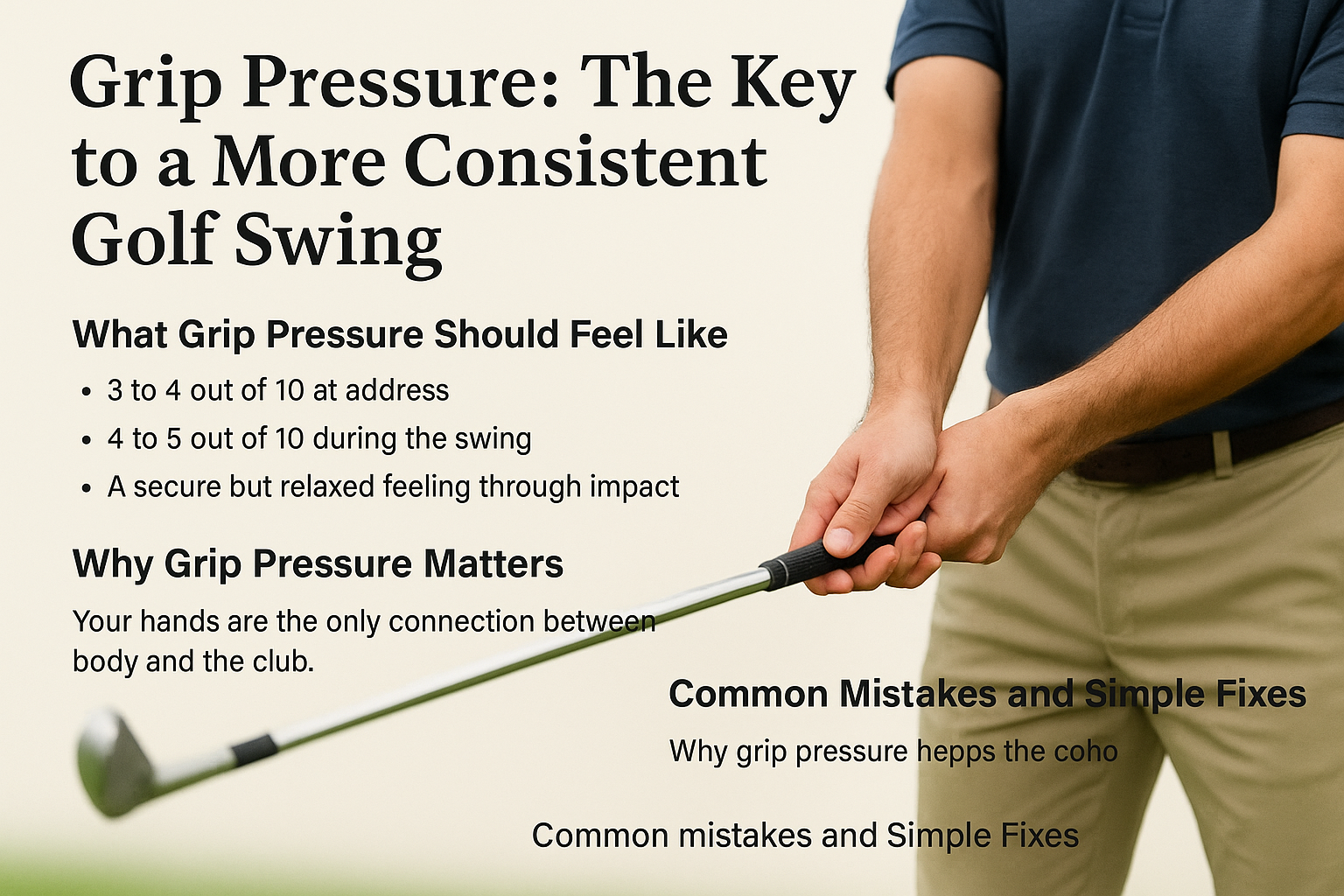
Grip Pressure: The Key to a More Consistent Golf Swing
Many golfers work hard on their backswing, downswing, and follow-through but overlook the one connection that controls everything: grip pressure.
Grip pressure is the amount of force you apply to the club with your hands. The goal is not to hold the club loosely or squeeze it tightly. The goal is to hold it securely while keeping your forearms, wrists, and shoulders relaxed enough to move naturally.
What Grip Pressure Should Feel Like
Imagine holding a small tube of toothpaste. You want enough pressure to keep it from falling, but not so much that you squeeze toothpaste everywhere. That is a useful model for your golf grip.
On a scale of 1 to 10, aim for approximately:
- 3 to 4 out of 10 at address
- 4 to 5 out of 10 during the swing
- A secure but relaxed feeling through impact
You may feel slightly more pressure in the last three fingers of your lead hand and the middle two fingers of your trail hand. Your thumbs should rest on the grip without pressing down aggressively.
Why Grip Pressure Matters
Your hands are the only connection between your body and the club. If you grip too tightly, tension travels into your forearms and shoulders. This restricts wrist movement, makes the swing feel rigid, and often causes golfers to rush the transition.
If you grip too lightly, the club can move inside your hands or rotate unpredictably. That makes it difficult to return the clubface squarely to the ball.
Proper pressure helps the club release naturally while giving you enough control to produce a repeatable clubface position. The result is typically better contact, more predictable direction, and improved distance control.
Common Mistakes and Simple Fixes
1. Squeezing the club at address
The mistake: Many golfers tighten their hands because they are worried about losing control. This creates tension before the swing even begins.
The fix: After taking your grip, gently wiggle your fingers and relax your forearms. Then reduce your pressure by one or two points. Your grip should feel secure, not locked.
2. Increasing pressure during the backswing
The mistake: Some players gradually squeeze harder as the club moves upward. This often leads to a tense transition and a loss of rhythm.
The fix: Keep your grip pressure steady from address to the top. Make practice swings while focusing on maintaining the same relaxed feeling in both hands.
3. Trying to “hit” the ball with the hands
The mistake: A golfer may suddenly tighten the grip through impact in an attempt to create more power. This can slow the clubhead and cause inconsistent contact.
The fix: Focus on swinging through the ball rather than striking at it. Feel that your hands remain firm but responsive as the club moves past impact.
Practice Drill: The One-Handed Grip Test
Try this simple drill at home or at the range:
- Take your normal golf grip with both hands.
- Make a few slow practice swings using only your lead hand.
- Then repeat using only your trail hand.
- Finally, make a two-handed swing and recreate the same relaxed feeling.
If the club feels impossible to control with one hand, you are probably gripping too lightly. If your forearm becomes tense immediately, you are likely gripping too tightly. Adjust until the club feels stable but easy to move.
Remember: Good grip pressure does not create power by itself. It allows your wrists, arms, and body to move efficiently so the clubface can return to the ball more consistently.