
Why Your “Safe” Layup Still Leaves a Difficult Shot
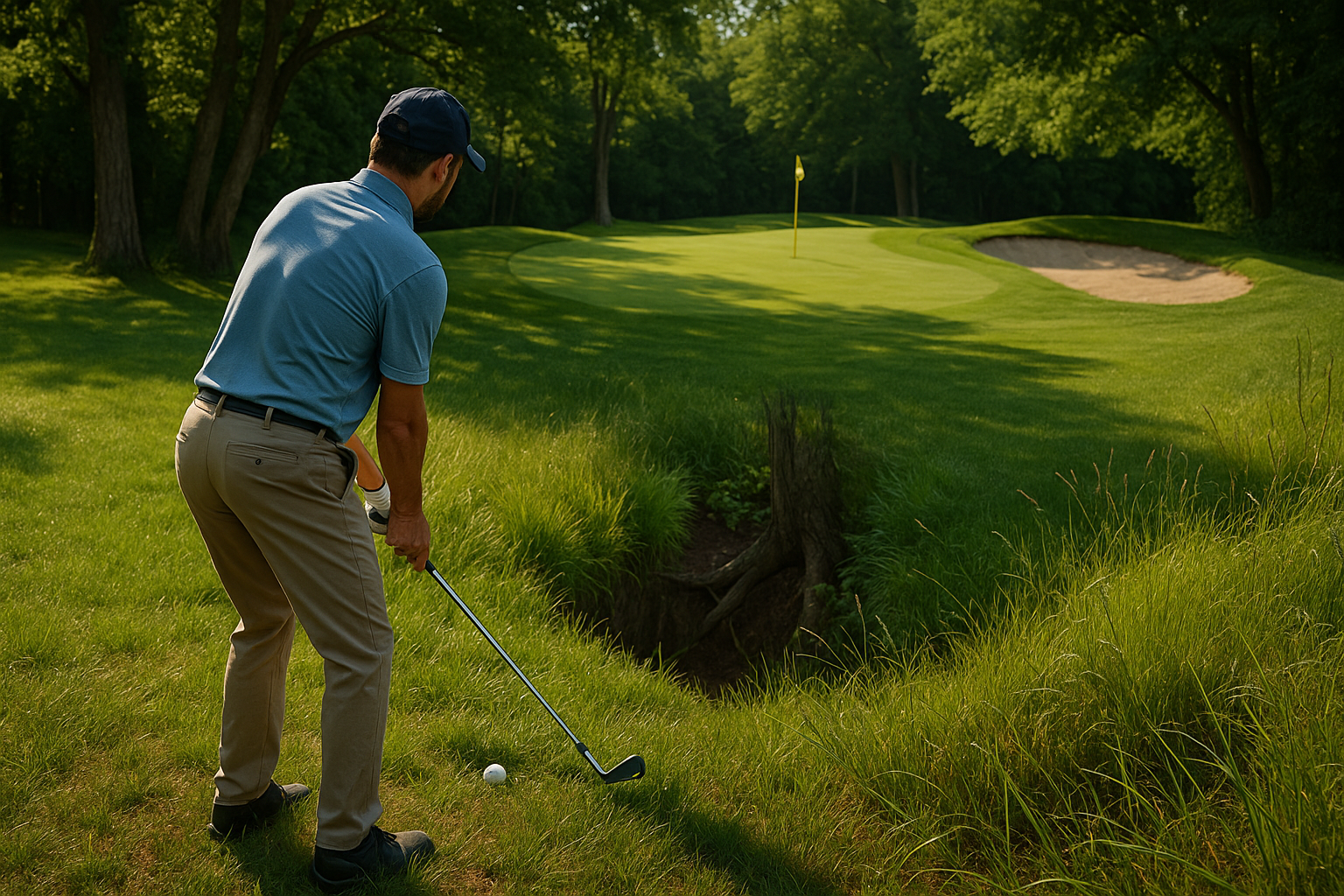
You hit a poor drive, and now trees, rough, or a hazard block the direct route to the green. The smart play seems obvious: lay up short of trouble. But many golfers choose a layup target based only on distance and then discover that the next shot is awkward, blocked, or nearly impossible.
A good layup is not simply a shot that avoids danger. It should also leave you with a comfortable next shot.
What Makes a Layup Good?
A layup is a deliberate shot played short of a hazard, obstacle, or difficult landing area. The goal is to turn a bad situation into a manageable one.
Before choosing a club, ask three questions:
- Where is the safest place for the ball to finish?
- What distance do I want for my next shot?
- What type of lie and angle will I have from there?
That third question is the one golfers often skip. A perfect 90-yard layup is not helpful if the ball finishes in deep rough with a tree directly between you and the green.
Choose the Next Shot Before the Current Shot
Start by looking at the green and working backward. Decide what shot you would most like to play next.
For example, you may prefer:
- A full wedge from a flat fairway lie
- A short iron from the widest part of the fairway
- A pitch shot from a clean area near the green
Then choose a layup target that gives you that opportunity.
Suppose a par 5 has water 40 yards short of the green. You have enough room to lay up to 100 yards, but the fairway narrows sharply at that distance. A safer target might be 120 yards away, where the fairway is wider and the lie is flatter. The extra distance may be less important than having a predictable stance and a clear view of the green.
Do Not Lay Up to a Number You Cannot Control
Golfers sometimes choose a favorite yardage without considering how difficult it is to reach. If you only have a narrow landing area, trying to leave exactly 80 yards can create unnecessary pressure.
Instead, pick a landing zone. Give yourself a reasonable window rather than one exact number.
For instance, you might decide that anywhere between 90 and 110 yards is acceptable. This allows you to make a normal swing instead of trying to manufacture a perfect distance with a half swing.
A comfortable full swing from a good lie is usually better than a precise number from a dangerous spot.
Watch the Trouble Beyond the Layup
Many golfers focus on the hazard they are trying to avoid but forget about the trouble past their intended target. A layup that finishes just short of a fairway bunker may still be a poor decision if a slightly longer shot leaves a much wider landing area.
Look at the entire route:
- What happens if you strike the ball slightly thin?
- Where does a pull or push finish?
- Is there rough, a bunker, or a cart path near your target?
- Will trees block the next shot from one side?
Your target should provide room for a small mistake. Do not choose a layup that only works when you hit the ball perfectly.
Try This Decision-Making Exercise
During your next round, use one par 5 as a layup experiment. Before hitting the shot, identify three possible targets:
- The shortest distance that avoids immediate trouble
- Your preferred wedge distance
- The widest and flattest landing area
Choose the target that gives you the best combination of safety, lie, and angle. After the shot, note whether your next swing felt comfortable. You are not judging the result only by distance. You are learning which layup choices create easier golf.
Common Layup Mistakes
- Hitting as far as possible: More distance is not always more progress.
- Choosing an exact yardage: A narrow target can add pressure and increase mistakes.
- Ignoring the lie: Fairway position and stance quality often matter more than a few yards.
- Forgetting the next shot: A layup should set up the hole, not merely end the current problem.
One Thing to Remember
A good layup is not the shot that goes the farthest. It is the shot that leaves you the easiest next swing.