
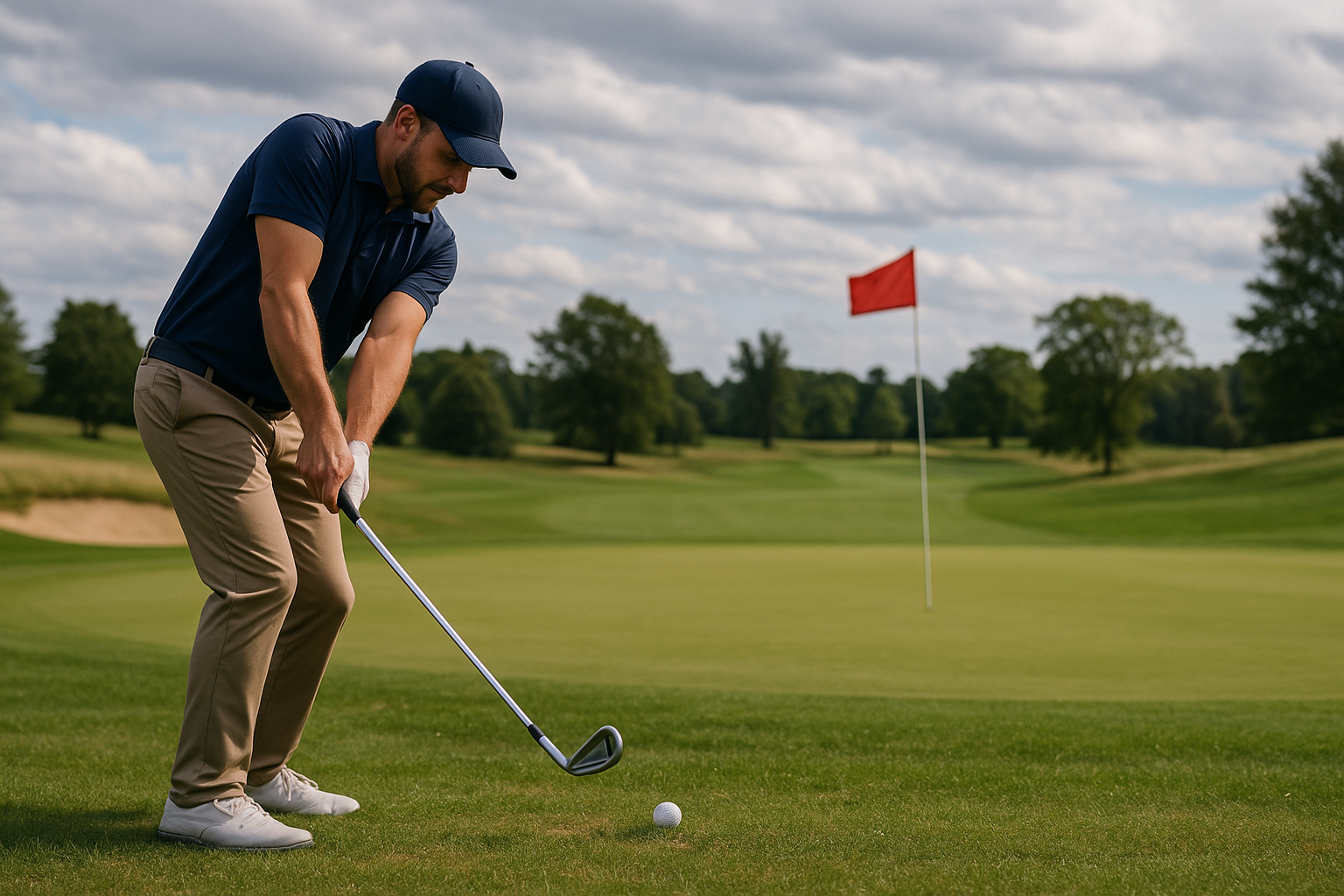
Why Your Best Wind Shot May Be a Punch, Not a Full Swing
You’re standing 145 yards from the green, and a strong breeze is blowing straight into your face. Your normal 7-iron usually flies 145, so you pull it from the bag and make a full swing.
The ball climbs high, loses distance, and comes up 20 yards short. You try again with more effort, but the result is similar.
The problem is not always the club. It’s often the height of the shot.
Why High Shots Struggle in the Wind
A high golf shot gives the wind more time to affect the ball. The longer the ball stays in the air, the more it can be pushed backward, sideways, or both.
Adding extra effort can make the problem worse. A harder swing often creates more spin and a higher launch, causing the ball to balloon. “Ballooning” means the shot rises too high, loses forward distance, and seems to hang in the air.
Instead of trying to overpower the wind, consider hitting a lower shot with less spin.
Choose More Club and Swing Easier
The simplest way to hit a controlled shot into the wind is to use more club than usual and make a smooth, shorter swing.
For example, if you normally hit a 7-iron from 145 yards, try a 5- or 6-iron and make a three-quarter swing. The extra club provides the distance, while the shorter swing helps keep the ball lower.
This may feel strange at first. Most golfers instinctively swing harder when they need more distance. Into the wind, the opposite approach is usually more reliable:
- Take one or two extra clubs.
- Make a smooth swing at about 70–80 percent effort.
- Finish under control rather than trying to hit the ball as hard as possible.
- Expect less carry and more rollout after the ball lands.
Make Three Small Setup Changes
Move the Ball Slightly Back
Position the ball one or two inches farther back than normal. For an iron shot, this may mean moving it from just forward of center to near the middle of your stance.
This can help you contact the ball before the ground and reduce the tendency to launch it excessively high.
Keep Your Weight Slightly Forward
Start with a little more pressure on your front foot. You do not need to lean dramatically toward the target. Just avoid starting with your weight on your back foot, which can encourage a high, floating shot.
Finish Lower
Think about making a shorter finish rather than forcing a full, tall finish. Your hands may finish around chest height instead of high above your shoulder.
Do not deliberately stop your body or try to “hold” the clubface closed. The goal is simply a controlled swing, not a stiff or manipulated one.
Do Not Ignore the Wind Direction
Wind is rarely perfectly straight. Look at the flag, nearby trees, grass, and leaves to determine whether the wind is helping, hurting, or coming from the side.
A strong crosswind may require you to aim away from the target and accept that the ball will move. But avoid aiming based only on what you see near the ground. Wind can behave differently higher up, where the ball travels.
When you are unsure, choose the safer side of the green. Missing short or toward the open side is often better than bringing a deep bunker, water hazard, or short-sided chip into play.
Try This at the Range
Take a mid-iron and hit three normal shots. Then choose one or two extra clubs and hit three shots using a smooth, three-quarter swing.
Compare the results. You are not looking only at total distance. Notice which shots fly on a lower, more predictable trajectory and finish closer together.
On the course, use the same idea when the wind is strong: let the club provide the distance and let your swing provide the control.
One Thing to Remember
Into the wind, take more club and make a smoother swing. Trying to hit harder usually sends the ball higher—not farther.