
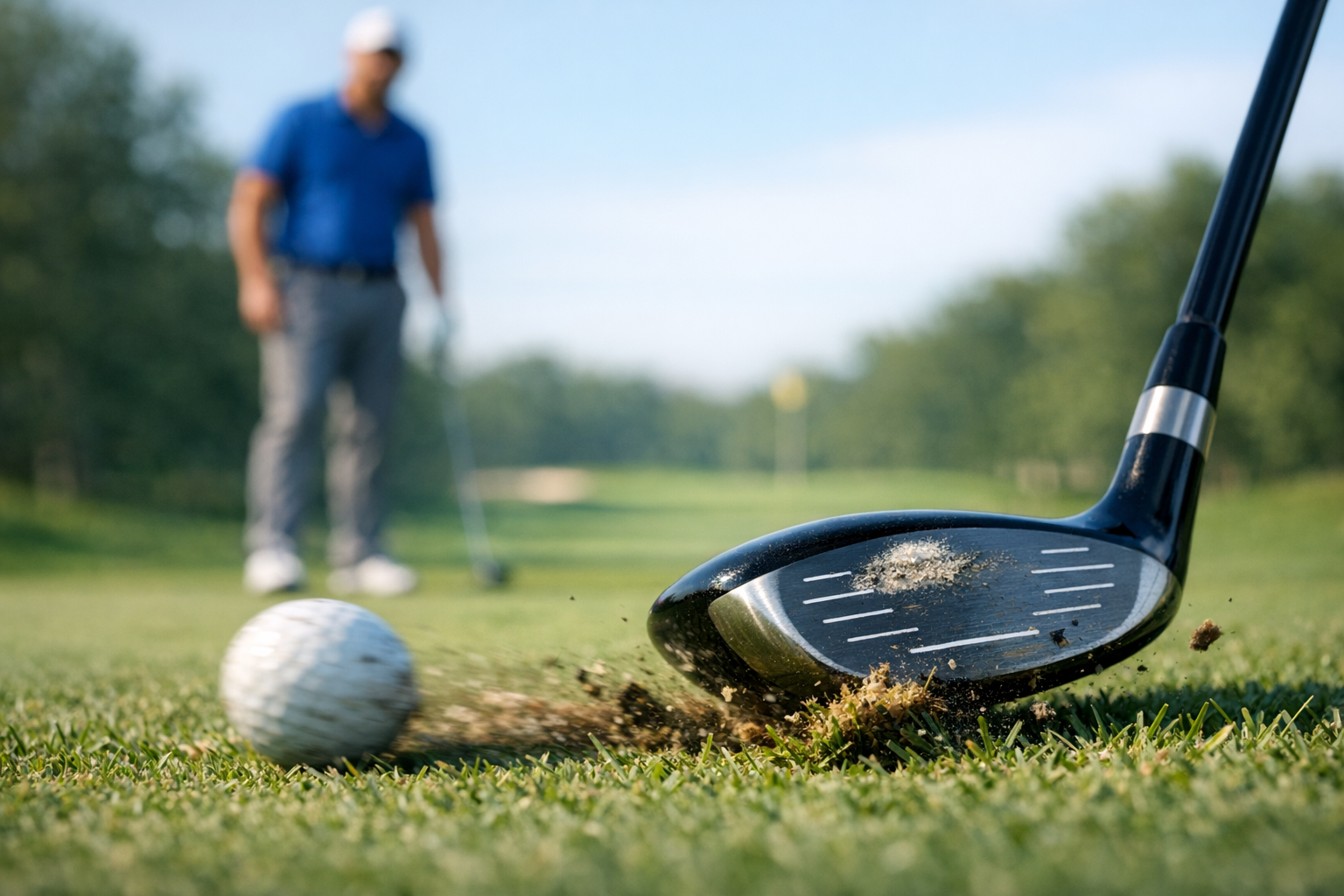
Why You Keep Topping Your Fairway Woods From the Ground
You hit your driver well, then pull a 5-wood from the fairway and watch the ball dribble forward with a low, weak flight. The club may feel as if it is swinging under control, but the ball is struck near the top—or sometimes even above the center—of the clubface.
Topping a fairway wood is frustrating because the club is designed to sweep the ball from the turf. The good news is that you usually do not need a complete swing rebuild. The first step is figuring out whether the problem comes from setup, posture, or trying to help the ball into the air.
What Is Happening at Impact?
A topped fairway wood usually means the clubhead is not returning to the bottom of the swing at the correct height. Instead of brushing the grass just after contacting the ball, the club rises too early or reaches the ball above its center.
Because fairway woods have a shallow clubface, even a slightly high strike can send the ball racing along the ground. The shot may feel like a “thin” iron shot, but the cause is not always the same.
Three Common Causes to Check
1. The ball is too far forward
Many golfers move the ball well forward because they believe a fairway wood should be played like a driver. From the ground, however, the ball usually needs to be slightly inside your lead heel—not directly opposite your front foot.
If it is too far forward, your swing may already be rising when the club reaches the ball. That makes it difficult to strike the center of the face and brush the turf correctly.
2. You lose your posture during the downswing
If your chest rises or your hips move closer to the ball before impact, the bottom of the swing can move away from the ground. This is often called standing up through impact, but you do not need to force yourself to stay completely still.
Look for a simple clue: do your topped shots come with your upper body noticeably taller than it was at address? If so, posture may be changing before contact.
3. You are trying to lift the ball
Fairway woods already have enough loft to launch the ball. Trying to scoop or lift the shot often causes the lead wrist to bend early and the clubhead to rise instead of moving through the ball.
The goal is not to hit down steeply. It is to make a shallow, sweeping swing that sends the clubhead through the grass after impact.
Simple Corrections That Can Help
- Move the ball back slightly. Start with the ball about two inches inside your lead heel. This gives the club more time to reach the bottom of the swing before contact.
- Use a balanced setup. Place a little more pressure on your lead foot—roughly 55 percent—but avoid leaning your upper body dramatically toward the target.
- Sweep the grass, not the sky. Make a relaxed swing and imagine the clubhead brushing the ground just beyond the ball. Do not try to scoop the ball upward.
After a shot, check the strike location with foot spray or impact tape if available. A mark low on the face can point toward a low point or posture issue, while a mark high on the face may suggest the club is contacting the ball after it has already started rising.
Try This Drill: The Two-Tee Sweep Drill
Place one tee in the ground where the ball would normally sit. Place a second tee about four inches in front of it, closer to the target. Do not use a ball at first.
- Set up with your fairway wood and make a slow half swing.
- Try to brush the grass at the first tee and lightly clip the ground near the second tee.
- Once you can do that consistently, place a ball on the first tee and repeat the same motion.
You are looking for a shallow brush of the turf, not a deep divot. If you repeatedly strike the first tee but miss the second, the club may be bottoming out too early. If you miss both tees and rise out of posture, make the swing shorter and focus on keeping your chest height steady.
One Thing to Remember
With a fairway wood from the ground, sweep through the ball—do not try to lift it. Start with a slightly back ball position, make a controlled swing, and let the club’s loft do the work.