
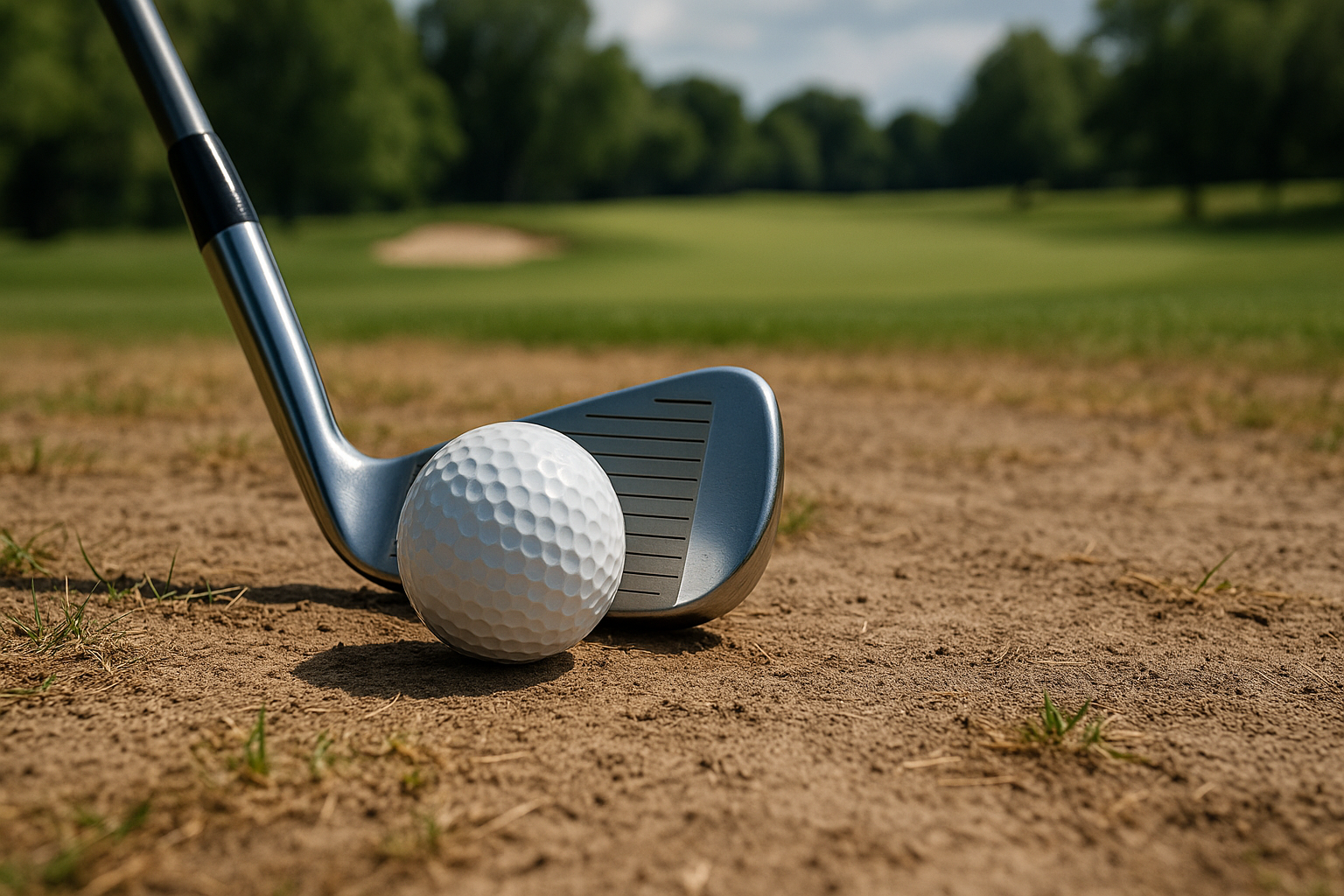
The Hardpan Lie: What to Do When the Ground Is Almost as Hard as Concrete
You find your ball in the fairway, but something feels wrong. There is almost no grass underneath it, the ground is baked hard, and the club seems likely to bounce straight into the ball—or skull it across the green.
This is a hardpan lie: a bare, compacted, or very firm patch of ground where the ball sits on little or no cushion. It is one of the most uncomfortable lies in golf, but it becomes much easier when you stop trying to hit it like a normal fairway shot.
Why Hardpan Lies Are Difficult
On a healthy fairway, the grass gives your club a small margin for error. If the club enters the turf slightly behind the ball, it can slide through the grass and still make usable contact.
Hardpan provides no such help. If the club hits the ground first, the firm surface can make the clubhead bounce upward before it reaches the ball. That often produces a thin shot, a topped shot, or a shot that flies much farther than expected.
The opposite mistake is also common. Golfers become afraid of hitting the ground and try to “pick” the ball cleanly with a scooping motion. That usually causes poor contact and sends the ball low and weak.
Change the Shot Before You Change Your Swing
The most important decision is club selection. You do not always need to hit the same club you would use from a perfect lie.
- Choose more loft if the ball is sitting on very firm ground.
- Consider a hybrid if the lie is bare but reasonably level and you need the ball to travel.
- Use a shorter club if trouble surrounds the target. A controlled 7-iron is often better than a forced 5-iron.
- Avoid a low-lofted club when you have little room for error. Long irons can be unforgiving from hardpan.
More loft helps launch the ball, while a shorter club gives you better control. The goal is not to prove you can hit the longest possible shot. The goal is to make solid contact and leave yourself a manageable next shot.
Set Up for Clean Contact
Make a few small adjustments rather than trying to create a dramatic new swing.
Move the Ball Slightly Back
Position the ball about half a ball to one ball farther back than usual. This encourages the club to contact the ball before the ground, which is especially important when the surface is firm.
Stand a Little Taller
Keep your posture comfortable, but avoid reaching down excessively. A slightly taller setup can help prevent the club from digging sharply into the hard surface.
Reduce Your Swing Length
A shorter backswing and controlled finish make it easier to maintain balance. Hardpan is not the place for a maximum-effort swing. Swing smoothly and let the club’s loft do the work.
Keep Your Hands Quiet
Do not try to scoop the ball into the air. Keep your hands moving toward the target through impact and allow the clubface to provide the launch.
Try This Practice Exercise
At the range, find a thin patch of grass or a firm area near the edge of the hitting surface. Start with a short iron and place a towel several inches behind the ball.
- Use a half swing.
- Try to strike the ball without touching the towel.
- Focus on balanced contact rather than distance.
- Repeat with a slightly longer club only when contact improves.
The towel gives you immediate feedback. If you hit it first, your low point is too far behind the ball. If you consistently miss the ball, you may be trying too hard to avoid the ground.
Common Hardpan Mistakes
- Trying to lift the ball: The club’s loft gets the ball airborne; your job is to strike it first.
- Using too much force: Extra speed makes poor contact more damaging.
- Ignoring the lie: A firm patch deserves a different plan than a fluffy fairway.
- Chasing the flag: From a difficult lie, aim for the safest part of the green or fairway.
One Thing to Remember
From hardpan, prioritize ball-first contact over distance. Take a little more club, make a controlled swing, and let a simple strike turn a difficult lie into a playable shot.