
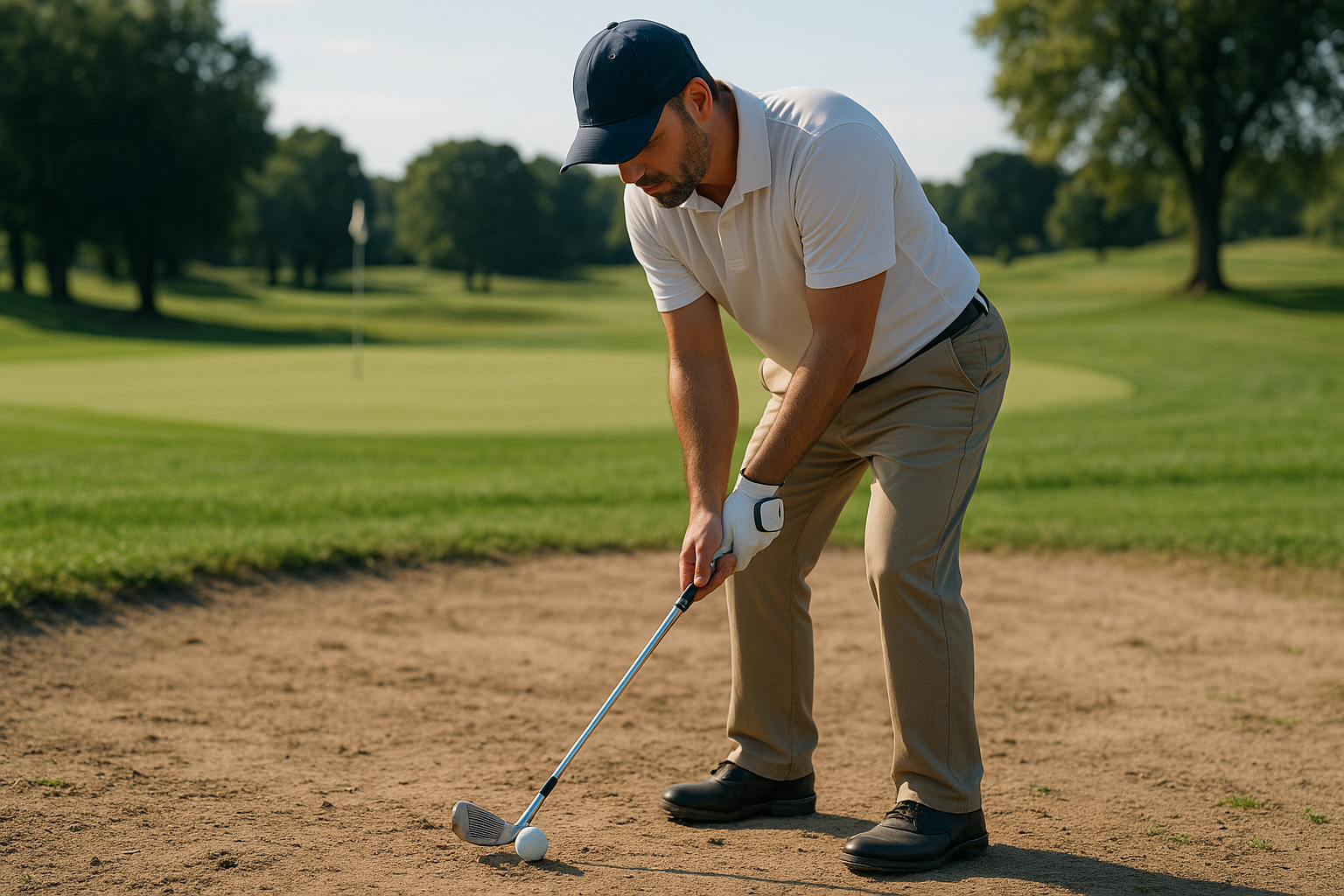
Your Ball Is Sitting on Hardpan—What Should You Do?
One of the most uncomfortable shots in golf is a ball sitting on hard, bare ground with almost no grass underneath it. The lie looks simple, but many golfers either hit the ground first, catch the ball thin, or try to help the ball into the air and lose control.
Hardpan requires a different decision. Instead of trying to hit a perfect, high shot, your goal is to make clean contact and choose a club that gives you some margin for error.
Why Hardpan Is Difficult
On normal turf, the club can brush through a small amount of grass before contacting the ball. On hardpan, there is little or nothing to cushion the club. If the club enters the ground too early, it can bounce sharply into the ball or dig into the firm surface.
The lie also creates a mental problem. Golfers often see a difficult surface and become tense. Then they try to lift the ball by scooping it with their hands. That usually produces a thin shot, because the club never gets a chance to strike the ball properly.
The ball will get into the air because of the clubface. You do not need to help it up.
Choose the Safer Shot First
Before selecting a club, look at the ground around the ball. Is it completely bare, or is there a thin layer of grass? Is the surface level? Are there rocks or roots nearby? Your answer should influence the shot as much as the distance does.
Consider these options:
- Use more club. A lower-lofted club, such as a 7-iron instead of a 9-iron, can produce a more dependable ball flight from a tight lie.
- Play for the front of the green. Hardpan is not the place to attack a tucked pin unless the lie is unusually clean.
- Take the simple recovery. If trouble surrounds the target, pitch back to a comfortable distance rather than forcing a risky shot.
- Put the ball on the ground when possible. A bump-and-run can be safer than a high shot that demands precise contact.
A Simple Setup for Better Contact
Once you have chosen the shot, make the setup slightly more conservative:
- Move the ball a little farther back in your stance than normal.
- Keep your weight balanced, with a small amount favoring your front foot.
- Stand tall enough to avoid reaching for the ball.
- Make a controlled swing rather than trying to hit harder.
- Allow the club to keep moving through the ball.
Do not press your hands dramatically forward or lean excessively toward the target. A little forward shaft lean can help contact, but too much can cause the leading edge to dig into the hard ground.
For a short shot, try to strike the ball first and make a shallow, controlled follow-through. Think “clip the ball,” not “scoop the ball.”
Common Hardpan Mistakes
Using Too Much Loft
A lob wedge may look attractive when the ball is near the green, but it often requires precise contact. Unless you must carry an obstacle, a pitching wedge, gap wedge, or even a 7-iron may be easier to control.
Trying to Hit a Full Shot
A full swing increases the penalty for a poor strike. If the lie is questionable, shorten the swing and accept a slightly shorter result. A controlled shot that finishes safely is better than a powerful shot that travels anywhere.
Ignoring the Bounce
Bounce is the part of the sole that helps the club glide instead of digging. On very hard ground, the club can bounce into the ball if it contacts the surface first. That is another reason to focus on ball-first contact and avoid hitting sharply down into the ground.
Try This Practice Exercise
At the range, find a firm patch of ground or a very tight lie. Start with a short 8-iron swing using half power. Hit five shots while focusing only on solid contact and a low, controlled finish.
Then repeat with a pitching wedge and compare the results. Notice which club gives you the best combination of contact, height, and direction. This helps you discover your reliable hardpan club before you need it on the course.
One Thing to Remember
From hardpan, choose the club and shot that make clean contact easiest—not the club that promises the most distance.