
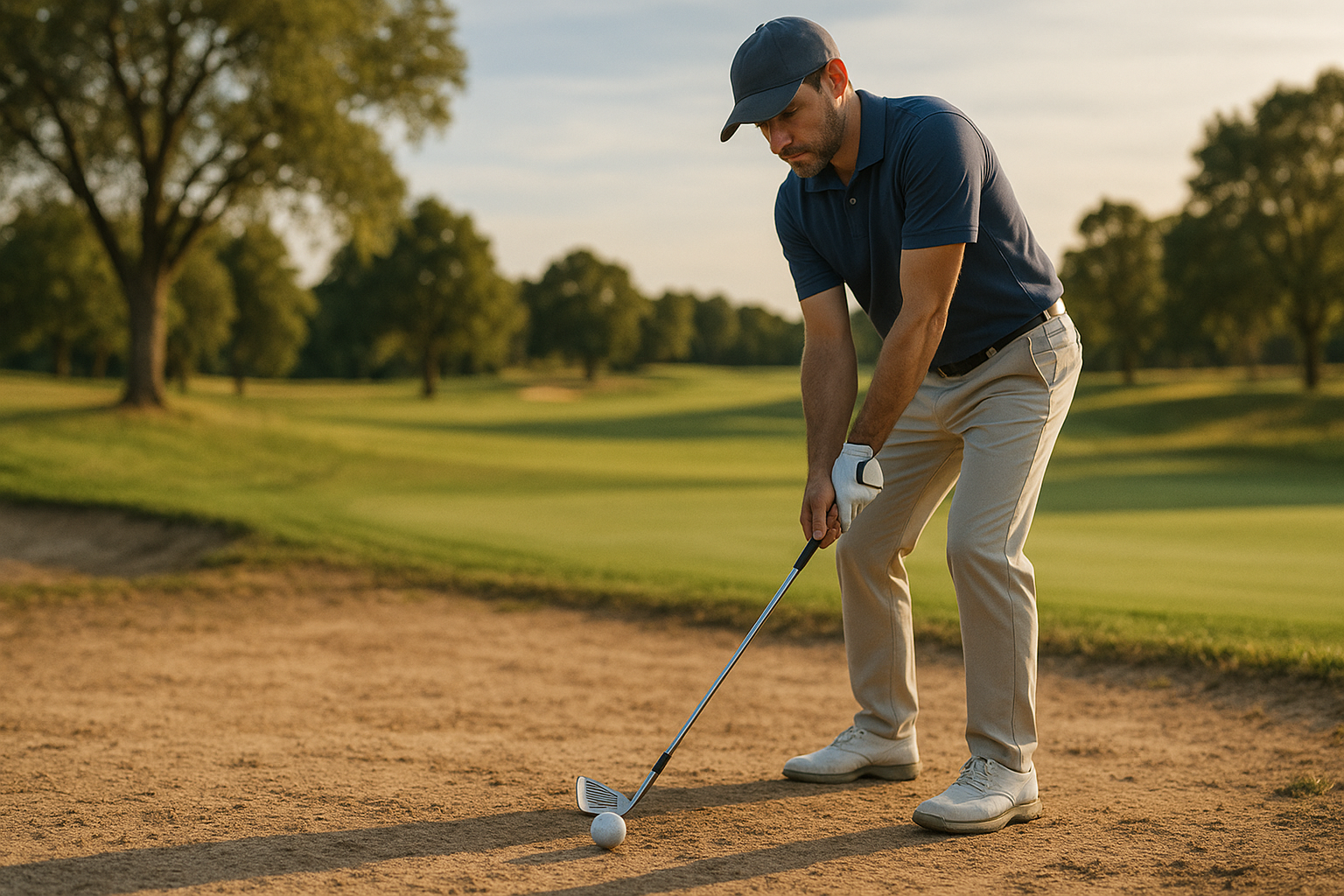
Hardpan Lies: Stop Trying to Hit the Ball Like It’s Sitting on Grass
Some golf shots look harmless until you reach your ball and find it sitting on hard, bare ground. There is no soft grass underneath it, the surface may be dusty or compacted, and the club seems certain to bounce into the ball or strike the ground too early.
Hardpan lies are difficult because they punish a normal fairway swing. The solution is not to swing harder or make a dramatic adjustment. You need to change the shot you are attempting and make clean contact a higher priority than perfect distance.
Why Hardpan Lies Cause Trouble
On a normal fairway, the club can brush through a small amount of grass and turf before or after contacting the ball. On hardpan, there is little room for error.
- Hit the ground first: The club can bounce upward, causing a thin shot.
- Catch the ball too high: The leading edge may strike the middle of the ball, sending it low and fast.
- Use too much loft: A high-lofted club can bounce off the hard surface instead of sliding through.
- Try to help the ball into the air: Leaning back or scooping usually creates poor contact.
The goal is simple: make the bottom of the swing happen just after the ball, while allowing the club to move through the shot without digging.
Choose a Safer Club
Before thinking about technique, decide whether the shot is worth attempting. If the ball is several inches from the green and you have a clean path, a lower-lofted club may be the safest choice.
Consider using one more club than normal and making a smooth swing. For example, an 8-iron may be easier to strike from hardpan than a pitching wedge because it has less loft and is less likely to bounce sharply into the ball.
If the surface is extremely hard, a hybrid or fairway wood may also work well for a longer shot. These clubs have rounded soles that can glide across the ground instead of digging into it.
Make Three Simple Adjustments
1. Move the ball slightly back
Position the ball about one ball-width farther back than normal. This encourages contact with the ball before the ground and helps prevent the club from reaching the bottom of the swing too early.
2. Keep your weight centered
Do not lean dramatically toward the target, but avoid hanging back. Keep your chest reasonably centered between your feet and maintain that feeling through impact. Excessive weight on the back foot often leads to scooping and thin contact.
3. Make a shorter, controlled swing
A three-quarter swing is usually more reliable than a full-power swing. Focus on solid contact and a balanced finish. You are not trying to lift the ball into the air; the club’s loft will do that for you.
Let the club brush the ground after the ball. Do not try to avoid the ground completely. A shallow strike is better than attempting to pick the ball perfectly clean.
When to Play It Safe
Hardpan is not always a good place to attempt an aggressive shot. If the ball is near trouble, the lie is uneven, or the green is guarded, consider advancing the ball to a comfortable distance instead.
A controlled punch with a 6- or 7-iron may be a better decision than forcing a high approach shot. Leave yourself a full wedge or an easy chip rather than bringing a double bogey into play.
Also check whether local rules allow you to move the ball if the area is marked as ground under repair. A bare patch is not automatically free relief, so do not assume you can move it without checking the course markings or local rules.
Try This Practice Exercise
At the range, find a thin or bare patch of ground if one is available. Hit ten shots using a club with moderate loft, such as a 7-iron.
- Move the ball slightly back in your stance.
- Make a three-quarter swing.
- Keep your weight centered.
- Judge success by contact, not distance.
Once you can produce solid contact, repeat the exercise with a hybrid or lower-lofted iron. Notice which club glides through the surface most easily. That club may become your preferred hardpan option on the course.
One Thing to Remember
From hardpan, prioritize clean contact over a perfect shot. Use less loft, shorten your swing, and let the club move shallowly through the ball.