
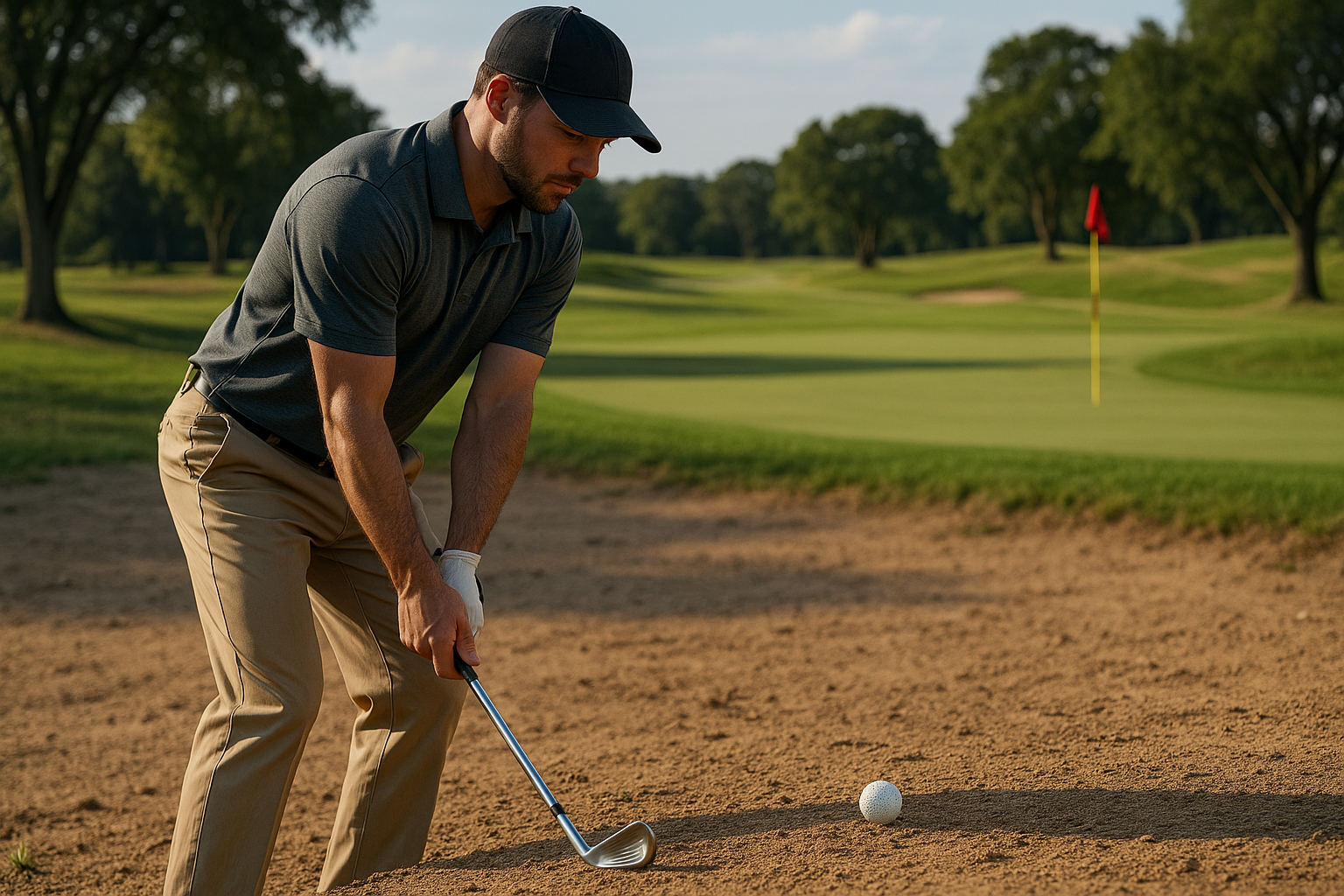
How to Play a Golf Ball Sitting on Hardpan
You walk toward your ball expecting a normal fairway lie, but it is sitting on dry, hard dirt with almost no grass underneath. The ground looks more like a cart path than a golf course. Your first instinct may be to help the ball into the air, lean back, or scoop it with a wedge.
Those reactions usually create the very shots you are trying to avoid: thin chips, bladed wedges, and shots that barely get off the ground.
A hardpan lie is difficult because the ground gives your club almost no room for error. The good news is that you do not need a special swing. You need a simpler shot and a better plan.
What Makes Hardpan So Unforgiving?
On a normal fairway, the grass and soft soil allow the club to brush the ground after contacting the ball. From hardpan, the club can bounce sharply off the surface if it hits the ground too early. That bounce can send the leading edge into the middle of the ball, producing a low, thin shot.
A wedge with a wide sole and plenty of bounce is especially likely to bounce into the ball from firm ground. “Bounce” is the part of the clubhead that helps it glide through soft turf or sand. It is useful in many situations, but hardpan often rewards a more direct strike.
Choose the Safest Club First
Many golfers automatically reach for a sand wedge because they are near the green. From a hard lie, that may not be the best option.
Consider using:
- A pitching wedge for a lower, more controlled pitch.
- A 9-iron when you have plenty of green and want the ball to roll.
- A hybrid or fairway wood for a bump-and-run from a longer distance.
- A putter if the ground between your ball and the green is reasonably smooth.
The less loft you use, the less you need to manipulate the club and the easier it is to make solid contact. Your goal is not necessarily to hit a high, soft shot. Your goal is to get the ball safely onto the green or into a manageable position.
Set Up for Contact, Not Lift
Place the ball slightly back of the center of your stance. This encourages the club to contact the ball before the ground. Keep your weight favoring your front foot, and avoid leaning away from the target.
Your hands should be slightly ahead of the ball, but do not create an extreme forward press. Too much forward shaft lean can reduce the club’s loft and make the shot come out lower than expected.
Make a short, controlled swing. A quiet lower body and a compact finish help you maintain control. Do not try to add speed at the bottom or scoop the ball upward. The club’s loft will provide the launch if you strike the ball first.
Think “Landing Spot,” Not “Perfect Shot”
Hardpan shots can come out lower and roll farther than normal. Pick a landing spot that allows for extra release. If you are pitching onto a green, land the ball short of the hole and let it roll toward the target.
Before choosing the shot, check what happens after the ball lands:
- Is there enough green to use a bump-and-run?
- Will a low shot roll into a bunker or collection area?
- Is the ground uneven enough to make a putter risky?
- Would accepting a longer putt be better than bringing trouble into play?
A shot that finishes 20 feet from the hole is often a success if the alternative is a bladed wedge over the green.
Try This Practice Exercise
At the practice area, find a tight lie or a patch of short, firm grass. Place five balls in a row and use a pitching wedge or 9-iron. Your only goal is solid contact with a low, predictable flight.
- Start with the ball slightly back of center.
- Keep your weight on your front foot.
- Make a half swing.
- Finish with your hands and chest facing the target.
- Watch how far each ball rolls after landing.
Repeat the exercise with a hybrid or putter if the practice area allows it. You are learning which club gives you the most reliable result, not trying to create one impressive shot.
Common Mistakes to Avoid
- Using too much loft: A lob wedge often adds unnecessary difficulty.
- Trying to lift the ball: Scooping usually leads to thin contact.
- Taking a large swing: More speed increases the damage from a poor strike.
- Ignoring rollout: A low shot may travel much farther once it lands.
- Chasing the flag: A conservative target is often the smart play from a poor lie.
One Thing to Remember
From hardpan, do not try to help the ball into the air. Use less loft, strike the ball first, and choose the shot that gives you the most predictable result after it lands.