
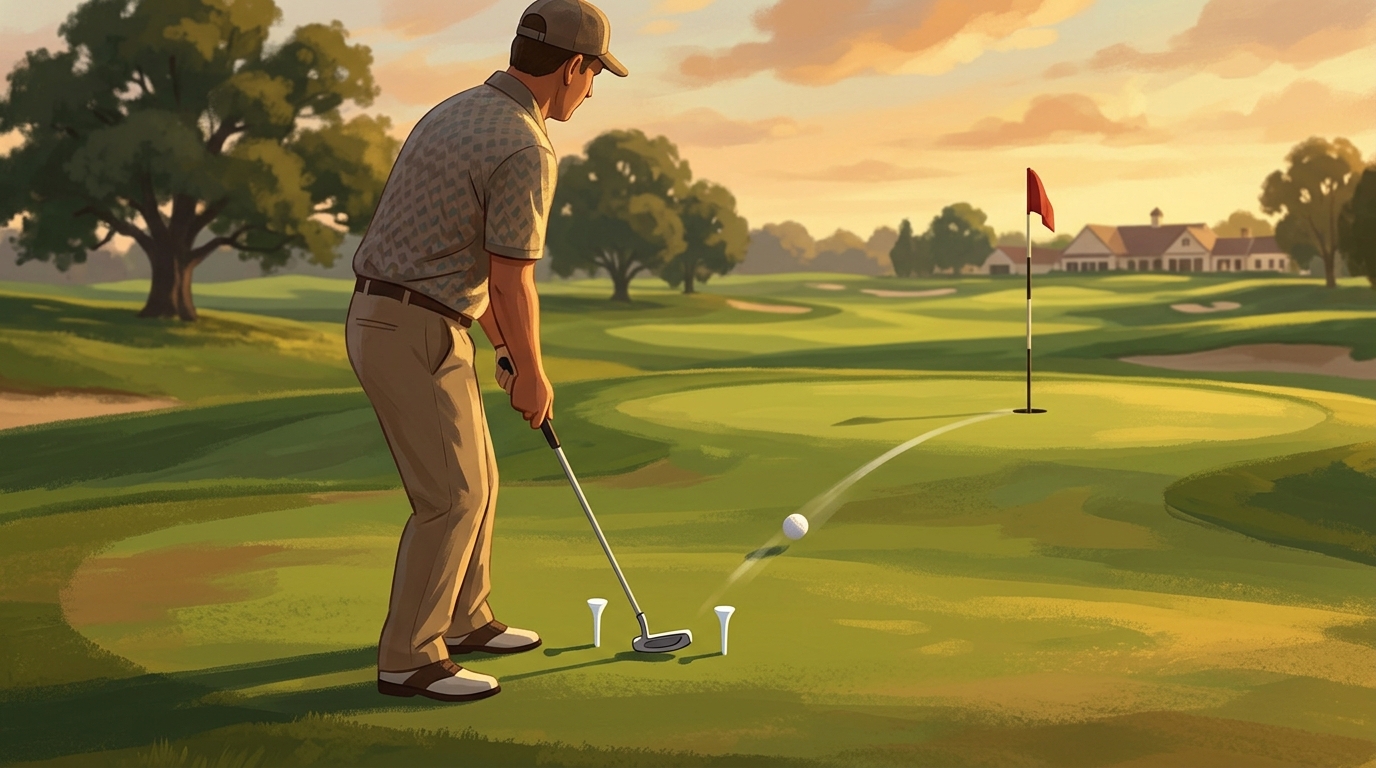
Why Your Putts Keep Dying Before the Hole
Leaving a putt short is one of the most frustrating feelings on the green. When you miss on the low side or leave a twenty-foot attempt four feet short, the ball never had an opportunity to drop. While green reading matters, the real culprit behind chronically short putts is almost always poor stroke acceleration.
Most players who struggle with pace assume they simply judged the green incorrectly. In reality, the putter head is slowing down right before it meets the ball. Understanding why your stroke loses energy is the fastest way to get your putts rolling all the way to the back of the cup.
What Causes a Decelerating Putting Stroke?
Deceleration is rarely intentional. It usually stems from protective instincts or subtle setup mistakes that interfere with how your arms and shoulders swing.
- A backstroke that is too long: When you drag the putter head back too far for a short- or medium-length putt, your subconscious realizes you have generated too much energy. To keep from blasting the ball off the green, your hands instinctively brake just before impact.
- Steering with the wrists: Trying to guide the ball into the cup causes your small muscles to take over. When the wrists hinge on the way back and collapse forward, the putter face twists and loses critical forward momentum.
- Watching the ball too soon: Peeking to see where the ball is heading before impact causes your front shoulder to lift. This pulls the putter up and out of the hitting zone, producing a weak, glancing strike off the bottom of the face.
How to Restore Forward Momentum
Solid putting speed depends on a pendulum motion where the forward stroke matches or slightly exceeds the length of the backstroke. Instead of pulling the putter far back and quitting on the ball, focus on a compact backswing paired with an assertive, unhurried follow-through.
Start by letting your larger shoulder muscles control the motion. Lock your wrists in a neutral position at address and keep them quiet throughout the stroke. Think of your arms and shoulders forming a steady triangle that rocks back and through together. When the backstroke stays neat and controlled, you can confidently accelerate through the strike without worrying about knocking the ball off the green.
The Two-Tee Track Drill
This drill trains your eyes and muscles to govern stroke length so you never brake into the ball.
- Find a flat section of the practice green roughly ten to twelve feet from a cup.
- Place a ball down, then press a tee into the green about five inches directly behind it. This tee marks your maximum backstroke length.
- Place a second tee about seven to eight inches ahead of the ball along the target line. This marks your follow-through target.
- Set up to the ball and make your stroke. Swing the putter head back until it reaches the first tee, then accelerate smoothly forward until the putter head reaches or passes the front tee.
- Hit ten putts in a row using these markers. Pay attention to how a shorter backstroke allows your putter head to glide firmly through the strike.
Once you get used to the rhythm of a shorter backswing and an extended finish, pull the tees out and replicate the exact same feel on free putts.
One Thing to Remember
Make your follow-through longer than your backstroke, and you will never quit on a putt again.