
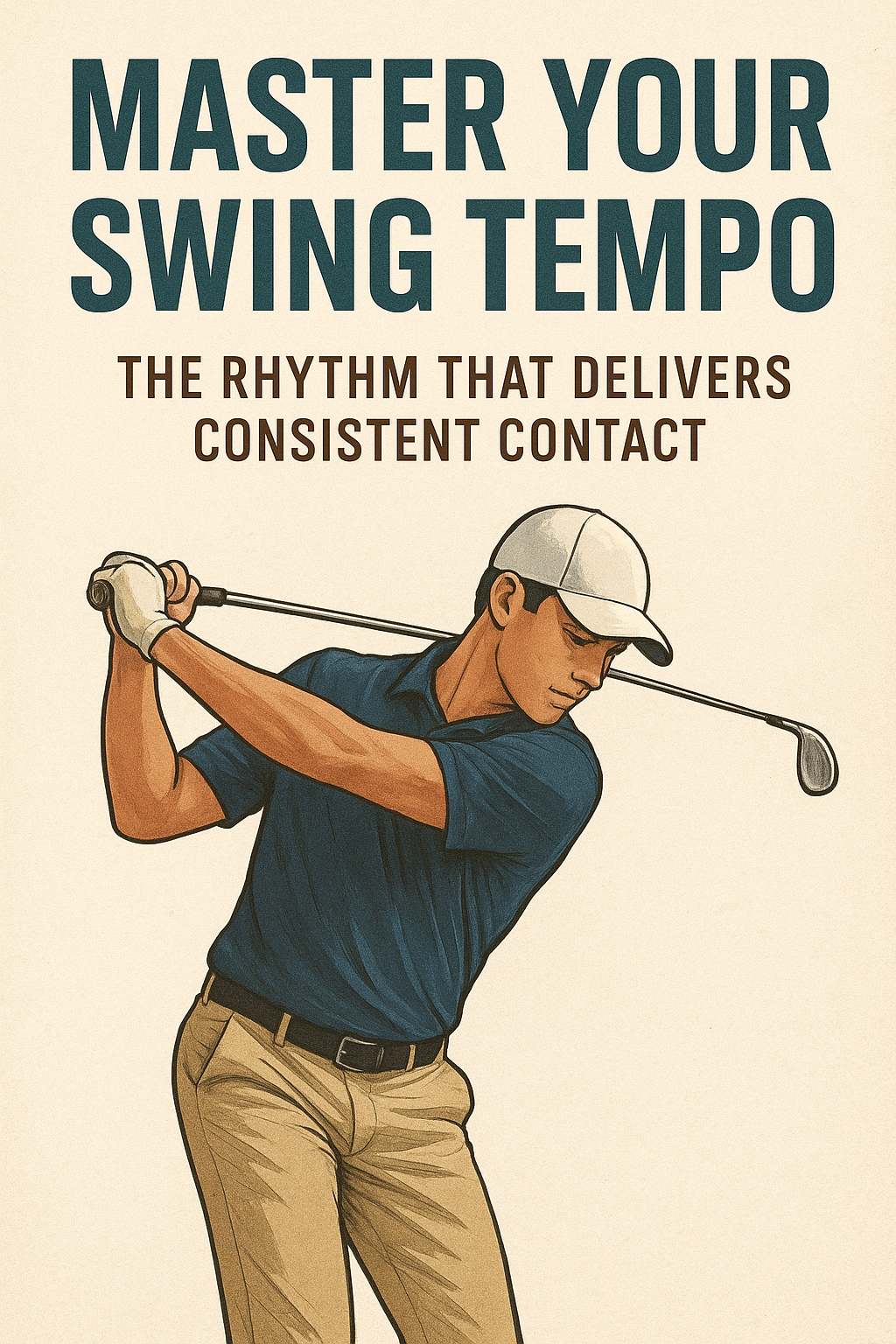
Master Your Swing Tempo: The Rhythm That Delivers Consistent Contact
Tempo is the heartbeat of the golf swing. It’s the smooth, repeatable rhythm that links your backswing to your downswing and through to the finish. For beginner to intermediate players, tempo is the single most effective area to simplify your motion and improve ball striking without overhauling your entire swing.
What the concept is
Tempo is the time relationship between the backswing and the downswing. A practical starting point is a 3:1 ratio: the backswing takes longer, the downswing comes down quicker and more in sequence. The goal is a steady, uninterrupted flow from start to finish—no jerky stops, no rushing through impact.
Why it matters to the golf swing
- Consistent contact: A trusted tempo reduces tension and helps the clubface stay square at impact.
- Predictable ball flight: Rhythm governs timing, which influences strike quality and trajectory.
- Club-to-club consistency: A dependable tempo translates across irons, hybrids, wedges, and drivers.
What the golfer should feel when doing it correctly
- Relaxed, connected arms and shoulders—no gripping or tension in the jaw or forearms.
- A natural, continuous rhythm from takeaway through to the finish—think “smooth flow” rather than “fast swing.”
- Balanced finish with weight toward the front foot and chest and hips open to the target.
2–3 common mistakes and simple fixes
- Mistake 1: Hitting at the ball or rushing the downswing
Fix: Emphasize a controlled transition. Try a brief pause at the top (0.2–0.4 seconds) to feel the move from backswing to downswing, then release through impact with a steady, quiet tempo. Use a metronome at a comfortable pace to ingrain the feel of a 3:1 ratio. - Mistake 2: Too quick a backswing or too slow of a downswing
Fix: Keep the backswing smooth and deliberate, not a “jerk.” Imagine breathing into the backswing and then letting the downswing “fall” into place. Practice with a tempo cue: count 1-2-3 on the backswing and 4 on the downswing, keeping the transition fluent rather than abrupt. - Mistake 3: Inconsistent tempo across clubs
Fix: Use the same tempo framework for all clubs. Start with a mid-iron to lock in rhythm, then apply the same 3:1 feel to shorter wedges and longer woods. A consistent tempo across clubs creates more repeatable contact and distance control.
One easy practice drill you can do at home or at the range
- Tempo drill with a metronome: Set a metronome to a comfortable pace (e.g., 60–70 BPM). Begin with your feet shoulder-width apart and hold your club. On beat 1, start the backswing; beat 2 and 3progress the backswing to the top; beat 4 is the downswing through to contact. Repeat in a smooth four-beat cycle, focusing on a calm, even tempo. As you improve, increase the tempo to 70–90 BPM, always preserving the 3:1 feel. Start with a 7-iron or a wedge, then move to longer clubs as your rhythm stabilizes.
Tip: read your own tempo like a musician reads a beat. If you find yourself speeding up from one swing to the next, slow everything down a notch and walk through the four-beat cycle again until it feels automatic.
Tempo isn’t about swinging harder or faster—it’s about creating a reliable rhythm you can repeat. With a steady 3:1 feel, you’ll notice more solid contact, straighter trajectories, and more consistent distances across clubs. Keep it simple, stay relaxed, and let the rhythm guide your shots.
Master Your Swing Tempo: The Rhythm That Delivers Consistent Contact
Performance-focused swing tempo for baseball and softball hitters
What is Swing Tempo and Why it Matters
Swing tempo is the intentional timing cadence that coordinates loading, the stride, and the swing arc so the bat meets the ball in the optimal window. When tempo is consistent, hitters create repeatable contact with the strike zone, reduce timing errors, and maintain balance through the swing. Tempo isn’t about rushing or slowing down indefinitely; it’s about preserving a stable rhythm that aligns with pitch timing, pitch height, and the hitter’s own biomechanics.
In practice, a well-tuned swing tempo helps a hitter stay in the strike zone longer, reduces drift in the bat path, and improves plate discipline. It also supports arm-leg coordination, trunk rotation, and the sequence of events from load to launch. The result is more consistent contact, higher quality line drives, and fewer soft-hit or mis-hit balls.
Key Tempo Concepts for Consistent Contact
- A controlled loading phase sets the tempo and primes the hips and shoulders for a synchronized swing.
- A simple cadence—load, stride, swing—helps maintain a steady tempo even as pitch location changes.
- Tempo supports balance; a stable base prevents early collapse or overextension that disrupts timing.
- A repeatable tempo creates a rhythm that can absorb minor pitch variations without breaking contact.
- Short, consistent cues help players internalize tempo more quickly than counting alone.
This rhythm also translates to different pitch speeds and locations. The goal is to keep the overall tempo constant while adapting the swing plane to find the best path to the ball. In short, tempo is the soundtrack of timing—without it, even a mechanically sound swing can miss the optimal contact window.
Tempo Metrics: How to Define and Measure Your Rhythm
Tempo can be measured in simple, practical terms. Use a metronome or a tempo app to establish a rhythm you can feel in your feet, hips, and hands. Start with a comfortable tempo and gradually increase as you tighten your sequence.
- A three-beat cadence (1-2-3) helps you feel the three stages of the swing: load, stride, and swing through contact.
- Inhale during the loading phase, exhale as you swing, aligning breath with mechanics to reinforce timing.
- Record your at-bats or tee work, then mark the moments of foot action, shoulder turn, and contact to verify consistent timing.
A practical starting point for many hitters is a tempo range of roughly 60–90 beats per minute (BPM) for the three-stage cadence,with the exact tempo tailored to the hitter’s age,level,and swing speed. the emphasis is on consistency rather than chasing a single BPM.
How to Measure Your Tempo in Practice
Measuring tempo is about repeatability. Use these methods to diagnose and tune your rhythm:
- set a tempo to a comfortable BPM and perform dry swings, then progress to tee work while maintaining the same tempo.
- Analyze clips to identify timestamps for load, stride, and contact. Compare moments across swings to assess consistency.
- Develop a short verbal cue for each phase (e.g., “load,” “stride,” “swing”) and speak them softly as you swing to reinforce timing.
Practical Drills to Master Swing tempo
incorporate these drills into your training plan. They’re designed to build a repeatable tempo without sacrificing bat speed or swing plane.
- Stand in batting stance,feet comfortable,with a metronome set to a steady beat (e.g., 66 BPM). Take dry swings in three phases: load on beat 1, stride on beat 2, swing on beat 3. Goal: complete the sequence every time without rushing.
- Place a ball on a tee. Move through load and stride with your cue, then swing through contact while maintaining the same tempo. If contact quality drops, pause briefly at balance to reset tempo.
- Have a coach softly toss underhand and give a single-word cue for each phase. Example: “Set” (load), “Step” (stride), “Swing” (launch). maintain the cue-driven cadence until it feels automatic.
- After the stride step,pause for a split second at balance before initiating the swing. This helps you lock in timing and prevents early or late releases.
- For a faster tempo, compress to a two-beat rhythm: load and swing with a single stride forward. This helps athletes who rush their swing under pressure to regain control.
- Use simple feedback cues (e.g.,“good contact on every swing,” “keep feet quiet until the stride,” “finish tall”). Recording feedback helps you refine tempo over time.
| Drill | Setup | tempo Target | Focus |
|---|---|---|---|
| Metronome Dry Swings | stand in batting stance, no ball | 66 BPM (3-beat cadence) | Cadence, rhythm, balance |
| Tee Work with Cadence | Tee in front, cue-language ready | 70–78 BPM | Load-to-swing timing |
| Soft Toss with Rhythm | Underhand toss, coach provides cues | 74–82 BPM | Real-time timing under pitch speed |
Tempo Implementation in Your Training Routine
Building tempo is a habit-building task. Use a simple weekly scaffold to integrate tempo work without overloading training time.
- Baseline tempo with dry swings and tees at 60–68 BPM. Focus on smooth load and quiet stride.
- Introduce soft toss with cadence cues; keep BPM at 68–74 and refine balance pause.
- increase tempo to 72–82 BPM; incorporate video review to verify consistent contact timing.
- Peak tempo at 90 BPM for two-beat rhythm drills; measure contact quality and adjust as needed.
As you advance, the tempo should feel natural and automatic. The aim is to preserve the cadence under pressure—fastballs, off-speed pitches, and changing locations—without breaking the rhythm you’ve established.
Case Studies and First-hand Experiences
Here are two concise, anonymized scenarios illustrating how tempo training translates to on-field results.
- A high school hitter with inconsistent contact improved hit quality by 18% after six weeks of metronome-based drills, focusing on a three-beat load-stride-swing cadence and a brief balance pause. The hitter reported fewer late swings and more solid contact at the front of the plate.
- A college-level player struggling with off-speed pitches adopted a 2-beat tempo for early-season practice.After two months, strike-zone recognition improved, and contact rate against off-speed pitches rose as the rhythm helped the hitter stay back and adjust timing mid-swing.
Common Tempo Mistakes and How to Fix Them
- Fix by slowing to the target tempo and using a balance pause. Focus on keeping the hands relaxed and the hips turning in sequence.
- Simplify to a reliable three-beat cadence. Too many cues or patterns can disrupt the timing signal.
- Tie breath to the tempo cycle (inhale during load, exhale through contact) to reinforce rhythm and reduce tension.
- Train with drills under simulated game pressure (live pitching or swift toss) while maintaining tempo, then gradually increase difficulty.
Benefits of Consistent contact Beyond Power
- Increased contact rate due to reliable timing and better bat-to-ball alignment.
- Improved plate discipline as tempo reduces frantic swings and favors pitch recognition.
- Enhanced bat path control through a steady sequence of loading and launching.
- Lower risk of swing-and-miss under fastball pressure because timing becomes intuitive.
- Greater confidence at the plate as rhythm becomes a familiar predictor of action.
Tempo Tools and Resources
leverage tools that reinforce cadence and feedback to accelerate progress:
- Metronomes and tempo apps tuned for swing cadence
- Video analysis software to audit load, stride, and swing path
- Cadence cues and printable tempo sheets for practice sessions
- Coaching feedback focused on rhythm consistency
Tempo Benchmarks by Skill Level
Use these general guidelines as a flexible framework. Individual tempo should maximize consistent contact for your biomechanics and swing speed.
| Skill level | Suggested BPM | Tempo Focus | |
|---|---|---|---|
| Beginner | 60–68 | Load → Stride → Swing cadence | “Load, step, swing” |
| Intermediate | 68–82 | Balance and timing under varied pitches | “Set, drive, through” |
| Advanced | 82–110 | Fastpitch adaptation and contact quality | “Two-beat tempo: load + swing” |
Final Notes on Tempo Mastery
mastery of swing tempo is a dynamic process. The rhythm must feel natural and repeatable, yet flexible enough to adapt to different pitchers and game situations. The most successful hitters use tempo as a personal edge: a reliable internal clock that keeps contact consistent,even when the plate pressure rises.