
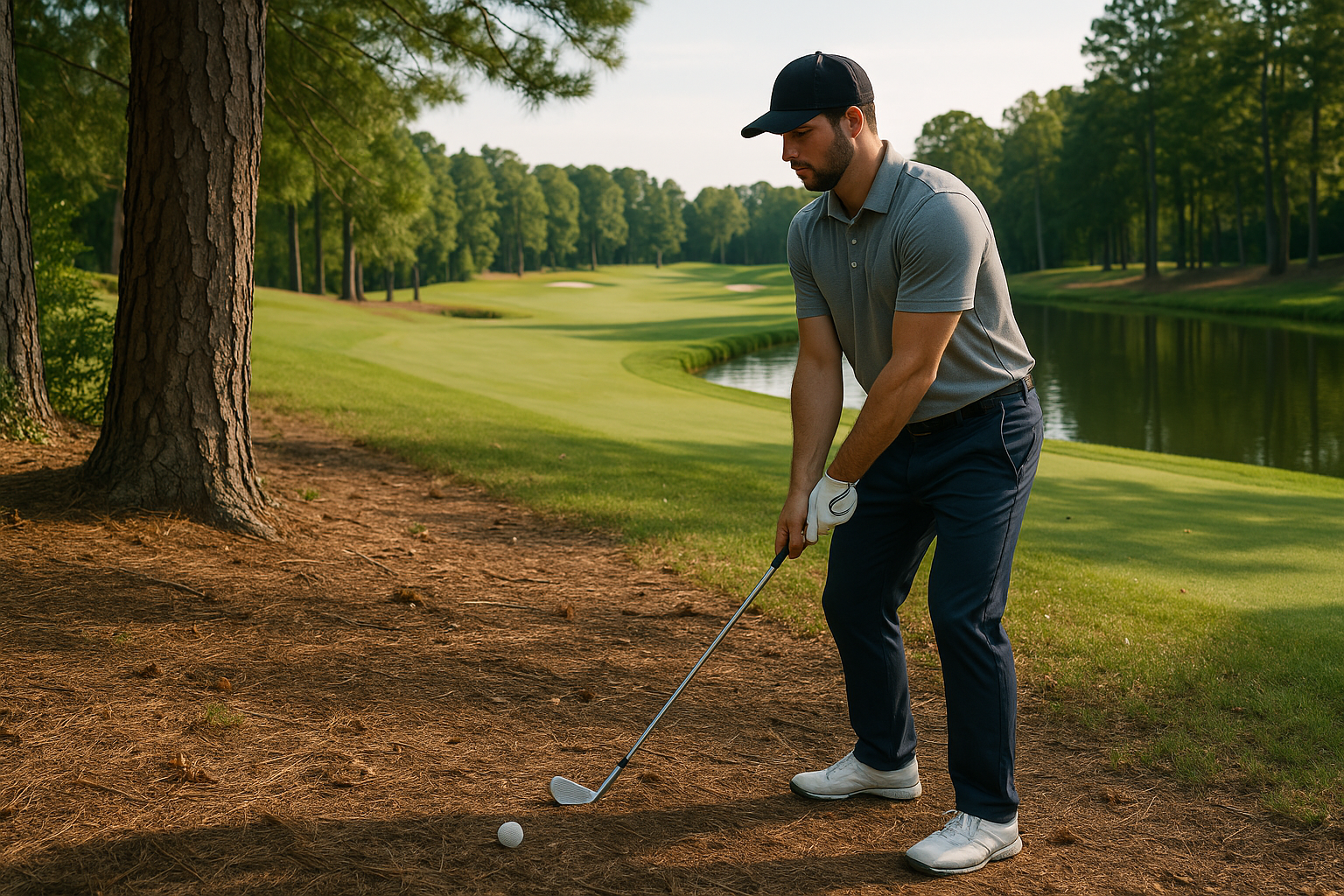
One Bad Shot Is Enough: How to Recover After a Penalty
You hit a tee shot into the trees, try to pull off a miracle recovery, clip a branch, lose another ball, and suddenly a routine par 4 has become a nine.
The original mistake was only one shot. The real damage came from the decision that followed.
Recovering after a penalty—whether from a lost ball, out-of-bounds shot, water hazard, or unplayable lie—is one of the most valuable skills a recreational golfer can develop. You do not need a perfect swing. You need a simple plan that prevents one mistake from becoming several.
Accept the Penalty Before Choosing the Next Shot
Many golfers walk toward the next ball still arguing with the previous shot. They are thinking, “I can’t believe I did that,” or “I have to make up for it.” That emotional reaction often leads to an aggressive club choice and a low-percentage shot.
Take a few seconds to acknowledge what happened:
- The penalty is already on the scorecard.
- You cannot recover the lost stroke with one risky swing.
- Your next job is simply to put the ball back in play.
This is not giving up. It is damage control. A bogey after a penalty may feel disappointing, but a triple bogey caused by another mistake can ruin the entire hole.
Use the “Two-Shot Question”
Before hitting your next shot, ask:
“Where do I want my ball to be after two more shots?”
This question is more useful than asking whether you can reach the green immediately.
For example, imagine your tee shot goes out of bounds on a par 4. Your ball is now lying safely in the fairway after taking the penalty. The green is 190 yards away, but there is water short and trouble behind the green.
You could attempt a difficult long shot and bring another penalty into play. Or you could hit a comfortable club to a safe area, then play a simple pitch or chip. Two controlled shots may leave you putting for bogey. The aggressive option may leave you hitting five from another difficult lie.
Think in terms of the next two shots, not the perfect shot that erases the mistake.
Choose the Club That Removes the Biggest Danger
After a penalty, golfers often choose a club based on distance. A better approach is to choose based on danger.
Ask yourself:
- What is the easiest place to miss?
- Which trouble can create another penalty?
- Can I reach a safe section of fairway with less than a full swing?
- What club gives me the widest margin for error?
If a hybrid can advance the ball while keeping it short of a hazard, it may be a better choice than a driver or long iron. If the green is surrounded by bunkers, aiming for the center—even if it leaves a longer putt—may be the smartest play.
The goal is not to hit the most impressive shot. The goal is to make the next shot easier.
Try This on Your Next Round
Play a “no hero shots” challenge for nine holes. Any time you receive a penalty or hit into serious trouble, you must choose the option that keeps the ball in play and avoids bringing another penalty into consideration.
After the round, review each decision and ask:
- What was the safest reasonable option?
- Did I choose it?
- What would my likely score have been if I had taken the conservative route?
You may discover that the smart decision does not always lead to a great score, but it prevents the disastrous ones. That is how scoring improves.
Common Mistakes to Avoid
- Trying to win the stroke back immediately: Golf rarely rewards emotional decisions.
- Ignoring the lie: A ball in thick rough, pine straw, or a deep depression may not be capable of producing a normal shot.
- Aiming at the flag: After trouble, use a larger target such as the center of the green or a safe part of the fairway.
- Changing your swing completely: Make a normal, balanced swing with a club you trust instead of forcing extra distance.
One Thing to Remember
After a penalty, do not try to save the hole with one shot. Try to save it with your next two decisions.