
You’re Behind a Tree—What Is the Smartest Way Out?
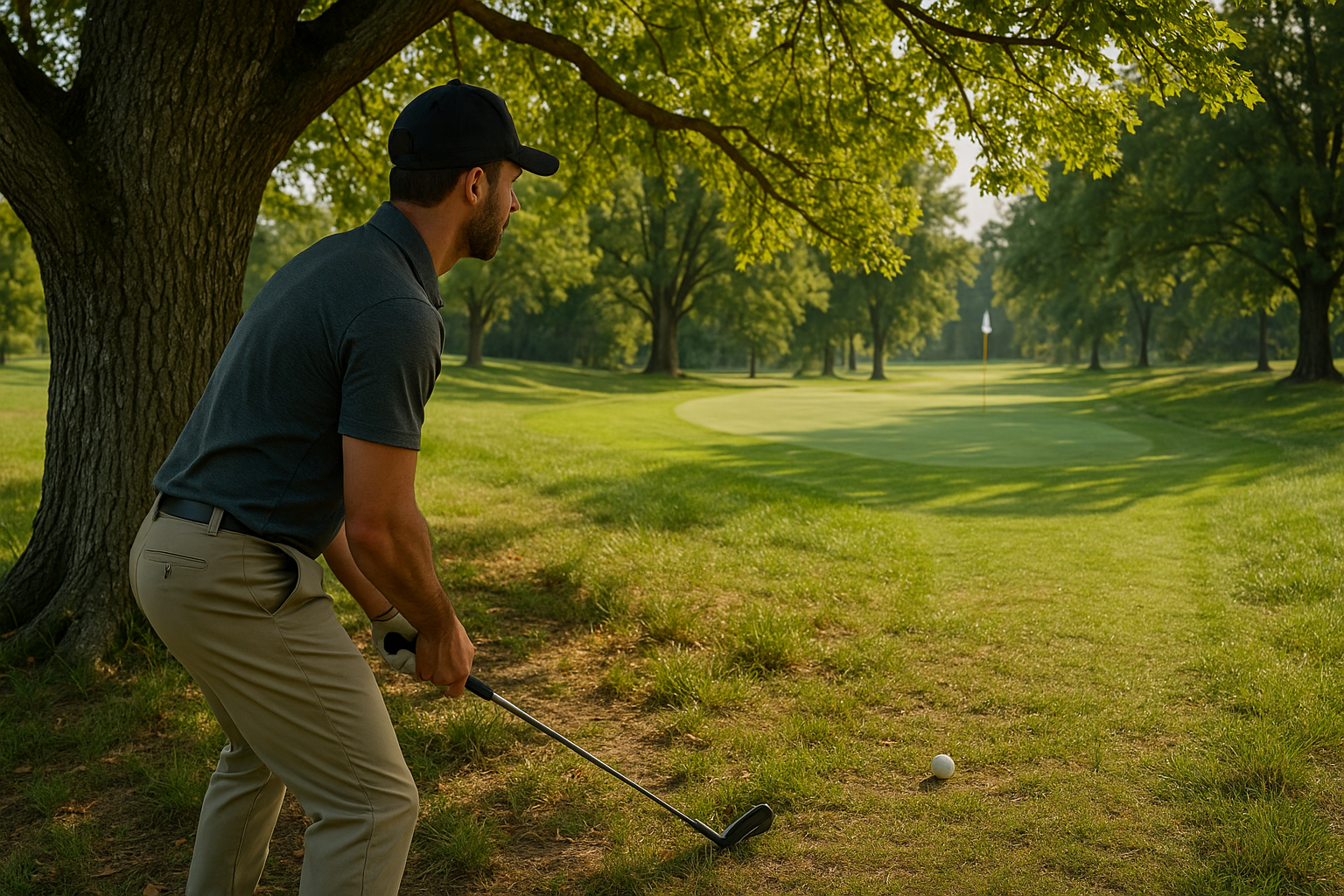
You hit a decent drive, but your next shot is blocked by a tree. The green is visible through a narrow gap, and you can just about imagine the ball rolling onto the putting surface.
This is where many golfers turn a manageable mistake into a big number. They attempt the heroic shot, clip a branch, hit the tree, or send the ball deeper into trouble. The smarter play is usually less dramatic: get the ball back into a position where your next shot is easy.
First, Decide What “Out” Means
Before choosing a club, forget about the flag for a moment. Your first job is to identify the safest useful area.
Ask yourself:
- Can I return to the fairway with one simple shot?
- Is there a clear route to the side of the green?
- Where is the worst miss if I get this wrong?
- Will my next shot be played from a good lie?
“Getting out” does not always mean hitting sideways. If you have a wide opening toward the fairway, that is often the best choice. If the fairway is blocked but the rough beside the green is open, advancing the ball may make sense. The correct target is the place that gives you the best chance of finishing the hole without another penalty or recovery shot.
Check the Height Before Choosing a Club
A punch-out shot needs to travel under or around the branches, but it still has to clear the first obstacle in its path. Many golfers focus only on the tree they are beside and forget about branches farther down the intended line.
Walk behind the ball and picture the entire route. Look for:
- Low branches immediately in front of you
- Branches hanging over the fairway
- Slopes that could send the ball into rough or hazards
- Obstructions near your safe landing area
A long iron or hybrid may look like the obvious escape club, but it can fly higher than expected. A shorter iron often produces a lower, more controlled shot and leaves you with a better chance of making solid contact.
Use Less Club Than Your Ego Wants
The goal is not to hit the ball as far as possible. The goal is to remove the obstacle.
If a 7-iron comfortably reaches the fairway, there may be no reason to use a 4-iron. A shorter club gives you more control, reduces the chance of catching a branch, and usually makes the next shot easier.
For a low punch shot, move the ball slightly back in your stance, keep your hands a little ahead of the ball, and make a controlled swing. Do not try to smash it. A three-quarter swing with a shorter club is often more reliable than a full swing with a long club.
Remember that a punch shot usually rolls a long way after landing. If you need the ball to travel 100 yards through the air, it may roll another 20 or 30 yards depending on the lie and ground conditions. Choose your landing area, not just your total distance.
When the Gap Is Too Narrow
If the opening is narrower than your normal shot pattern, it is probably not a real target. You may be able to hit through it once, but that does not make it a smart decision.
A useful rule is this: if you cannot comfortably miss on either side, do not aim through the gap.
Take your medicine and play sideways or backward. One extra recovery shot is usually cheaper than a lost ball, a penalty stroke, or another difficult lie. A sideways shot may feel disappointing, but it often keeps bogey in play—and sometimes even saves par.
Try This: The Three-Target Recovery Drill
At the practice area, choose three targets at different angles: one straight ahead, one to the left, and one to the right. Use a mid-iron and hit controlled punch shots toward each target.
- Start with half swings.
- Keep the ball slightly back in your stance.
- Focus on a low finish and balanced contact.
- Notice how far each shot rolls after landing.
This exercise teaches you what your punch shot actually does instead of forcing you to guess during a round. It also helps you become comfortable with choosing a safe direction.
One Thing to Remember
When you are behind a tree, choose the shot that gives you the easiest next shot—not the shot that makes the best story.