
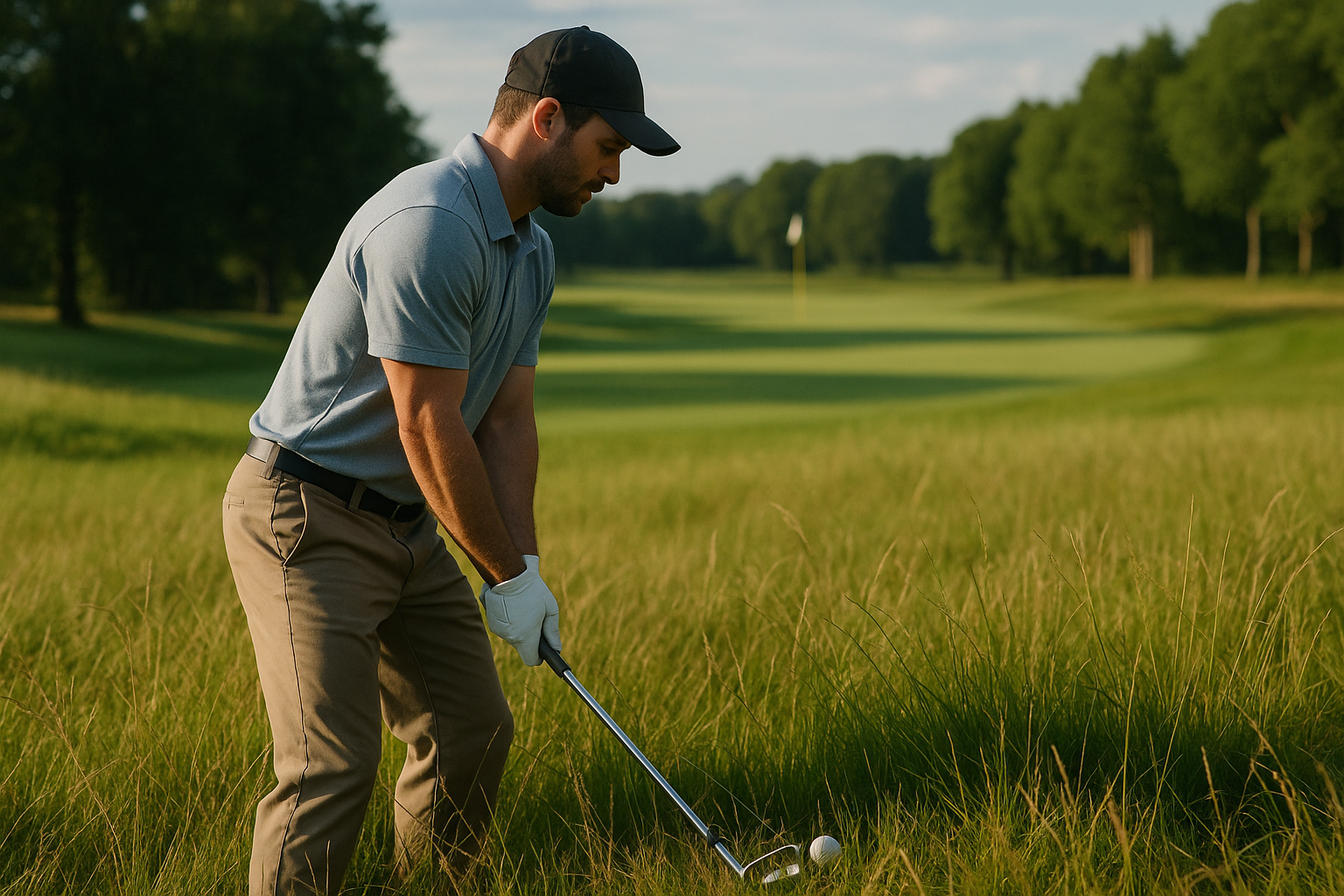
When Your Ball Lands in Thick Rough, Stop Automatically Taking More Club
You miss the fairway by only a few yards, but your ball disappears into grass that reaches halfway up the clubface. The pin is 150 yards away, so you pull the same 7-iron you would normally hit.
That is often the mistake.
From thick rough, the biggest question is not simply, “How far is it to the green?” It is, “Can my club get through the grass and still send the ball where I want it to go?” Choosing the right club and target can turn a frustrating recovery into a straightforward bogey—or even a par opportunity.
Why Thick Rough Changes the Shot
Grass around the ball can grab the hosel and clubface during the downswing. This is especially true with clubs that have a lot of loft, a wide sole, or a larger clubhead. The grass can also slow the club, reduce spin, and make the ball come out lower or hotter than expected.
The longer the grass and the deeper the ball sits, the less predictable the shot becomes. A club that normally carries 150 yards may travel much shorter, while a shot that comes out with little spin can roll farther than you expect.
That is why taking one extra club is not always the best answer. Sometimes you need a shorter club simply because it can move through the rough more cleanly.
Start With a Three-Question Check
1. How deep is the ball?
If you can see most of the ball sitting on top of the grass, you may be able to use your normal club. If the ball is sitting down, expect less control and a shorter flight.
2. Which way is the grass growing?
Grass growing toward the target may help the ball come out, but it can also reduce friction and send the shot farther. Grass growing against you is much more likely to twist the clubface or stop the club.
3. What happens if the shot is poor?
Look beyond the green. Is there a bunker, water hazard, or out-of-bounds area near your target? If missing short leaves an easy chip but missing long creates a disaster, choose a conservative target and club.
Choose the Club That Can Escape
When the rough is heavy, many golfers reach for a hybrid or fairway wood because they want extra distance. That can work from light rough, but thick grass can wrap around a large clubhead and close the face. The result is often a low, hard hook.
A mid-iron may be a better choice because the narrower sole and sharper leading edge can cut through the grass. You might sacrifice distance, but you gain a more predictable launch and direction.
As a general guide:
- Light rough: Use your normal club or one extra club, depending on the lie.
- Medium rough: Consider a club with enough loft to escape, such as a 6- or 7-iron.
- Heavy rough: Take the club that gets the ball back into play, even if that means laying up.
Make a Few Simple Setup Changes
Choke down slightly on the grip to improve control. Stand with the ball a little farther back in your stance than normal, and make a smooth swing rather than trying to hit harder. Excessive effort increases the chance that the grass will twist the clubface.
Keep your expectations realistic. From difficult rough, a shot that advances the ball 120 yards and leaves a simple pitch may be much better than an ambitious attempt that travels 40 yards and finishes behind a tree.
Try This Decision-Making Exercise
During your next practice round, deliberately play three balls from different lies in the rough. Before each shot, say out loud:
- How far would this club go from the fairway?
- How much distance and control might the rough take away?
- Where is the safest place to miss?
Then choose your club based on the answers, not on the yardage printed on your watch or sprinkler head. This exercise teaches you to judge the lie before choosing the club.
One Thing to Remember
From thick rough, choose the club that can escape the grass—not the club that promises the most distance.