
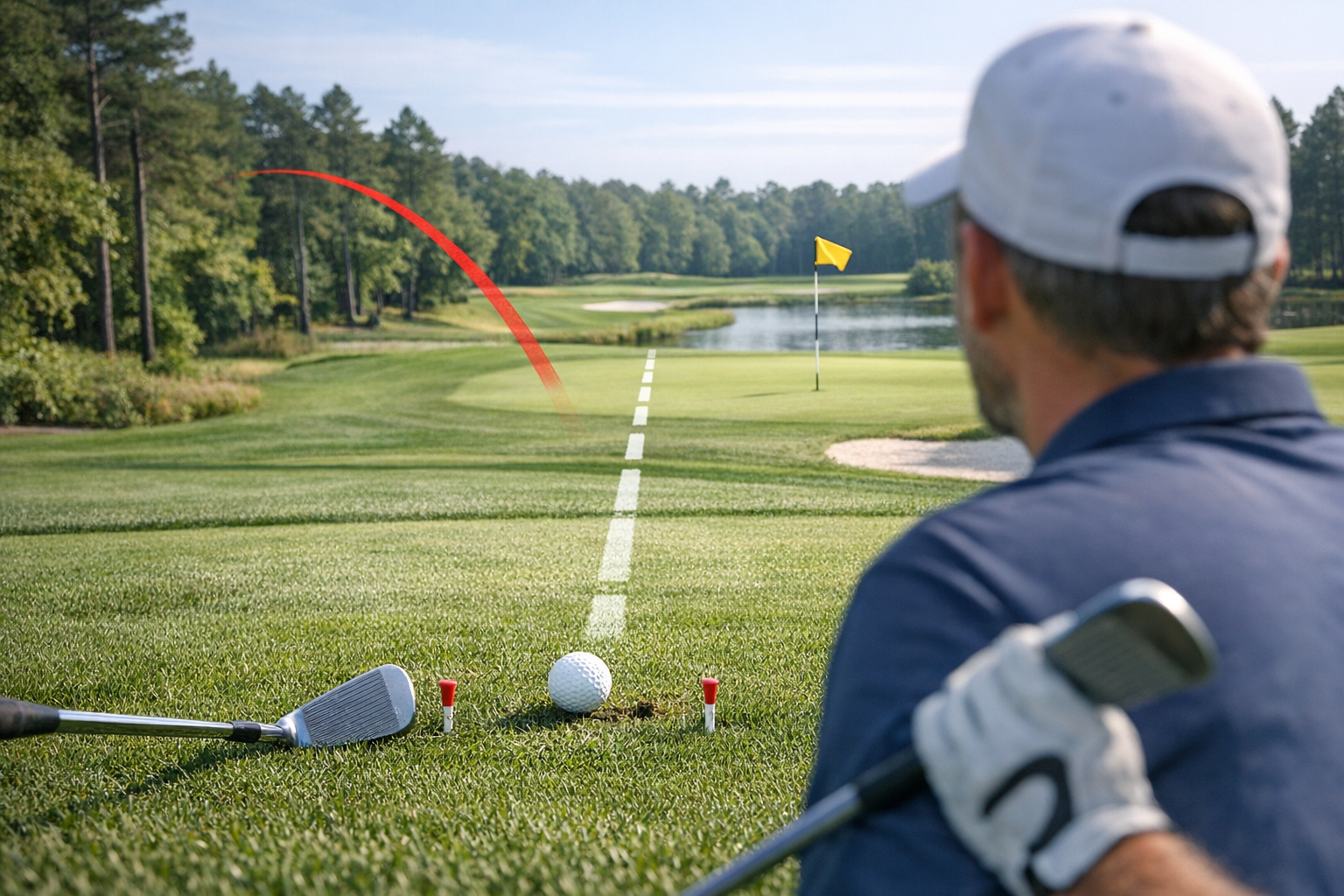
You aim at the center of the green, make what feels like a solid swing, and watch your iron shot start left of the target. Sometimes it flies straight left. Other times it begins left and curves even farther away. Pulling iron shots is frustrating because the contact can feel perfectly solid.
The good news is that a pull usually has a clear cause. Instead of rebuilding your entire swing, first identify whether the problem comes from your setup, clubface, or swing path.
What a Pulled Iron Shot Looks Like
A pull starts left of your intended target and usually flies fairly straight. A shot that starts left and curves farther left is more likely a pull-hook, which involves both swing direction and clubface control.
Notice the starting direction before focusing on where the ball finishes. The ball generally begins close to the direction the clubface is pointing at impact. That makes the initial launch a useful clue.
Why Your Iron Shots May Start Left
Your Alignment Is Aimed Too Far Left
This is one of the easiest causes to overlook. Golfers often aim the clubface at the target but position their feet, hips, and shoulders well left of it. Once your body is aimed left, your swing may naturally travel along that line.
Iron shots can make this mistake more obvious because you are usually hitting at a specific flag, tree, or section of the green. Your eyes may convince you that you are aimed correctly even when your body is not.
The Clubface Is Closing Too Early
If the clubface is pointing left at impact, the ball can start left even when your swing path is reasonable. A grip that is too strong, excessive hand action through impact, or a clubface that is already closed during the takeaway can contribute.
Look at your divots and ball flight together. If the divot points near the target but the ball starts left, the clubface is probably the main issue.
Your Swing Path Moves Too Much From Inside to Outside
Some golfers try to hit harder by dropping the club too far behind them in the downswing. The club then travels out toward the target from the inside. If the face is square or slightly closed to that path, the shot can begin left or turn into a hook.
A deep, inside takeaway or an aggressive push from the trail hand can make this pattern worse. You do not need to force the club onto a perfect professional swing plane. You simply want to reduce the extreme movement.
Simple Fixes for Straighter Iron Shots
Start by checking your alignment. Place a club or alignment stick on the ground pointing at your target, then position your feet parallel to it. Your body lines should aim slightly left of the target for a normal shot, while the clubface points directly at the target.
Next, check your grip. With a neutral grip, you should see roughly two knuckles on your lead hand when looking down. Your trail hand should not sit dramatically underneath the handle. A small adjustment is enough; avoid weakening the grip so much that the clubface stays open.
During the takeaway, move the club back with your hands, arms, and shoulders together. Do not immediately pull the handle behind you. On the downswing, feel that your chest keeps turning toward the target instead of throwing the clubhead aggressively with your hands.
Try This Gate Drill
Place two tees in the ground about one clubhead wider than your iron’s clubface. Position the tees just ahead of the ball, creating a small gate aimed at the target. Hit short, controlled shots through the gate.
- Start with half-swings using a 7-iron.
- Set the clubface square to the target before each shot.
- Feel the clubhead travel through the space between the tees.
- Gradually lengthen the swing while keeping the same starting direction.
If the ball repeatedly hits the left tee or starts sharply left, your clubface or swing path is still moving too far left. Successful shots should launch toward the target with solid contact and a shallow divot pointing slightly left of the target line.
One Thing to Remember
When iron shots start left, do not immediately try to swing harder or make a major mechanical change. Check your alignment first, then use the ball’s starting direction and your divot to decide whether the clubface or swing path needs attention.