
When Your Ball Is Sitting Down in the Rough, Stop Swinging Like It’s on the Fairway
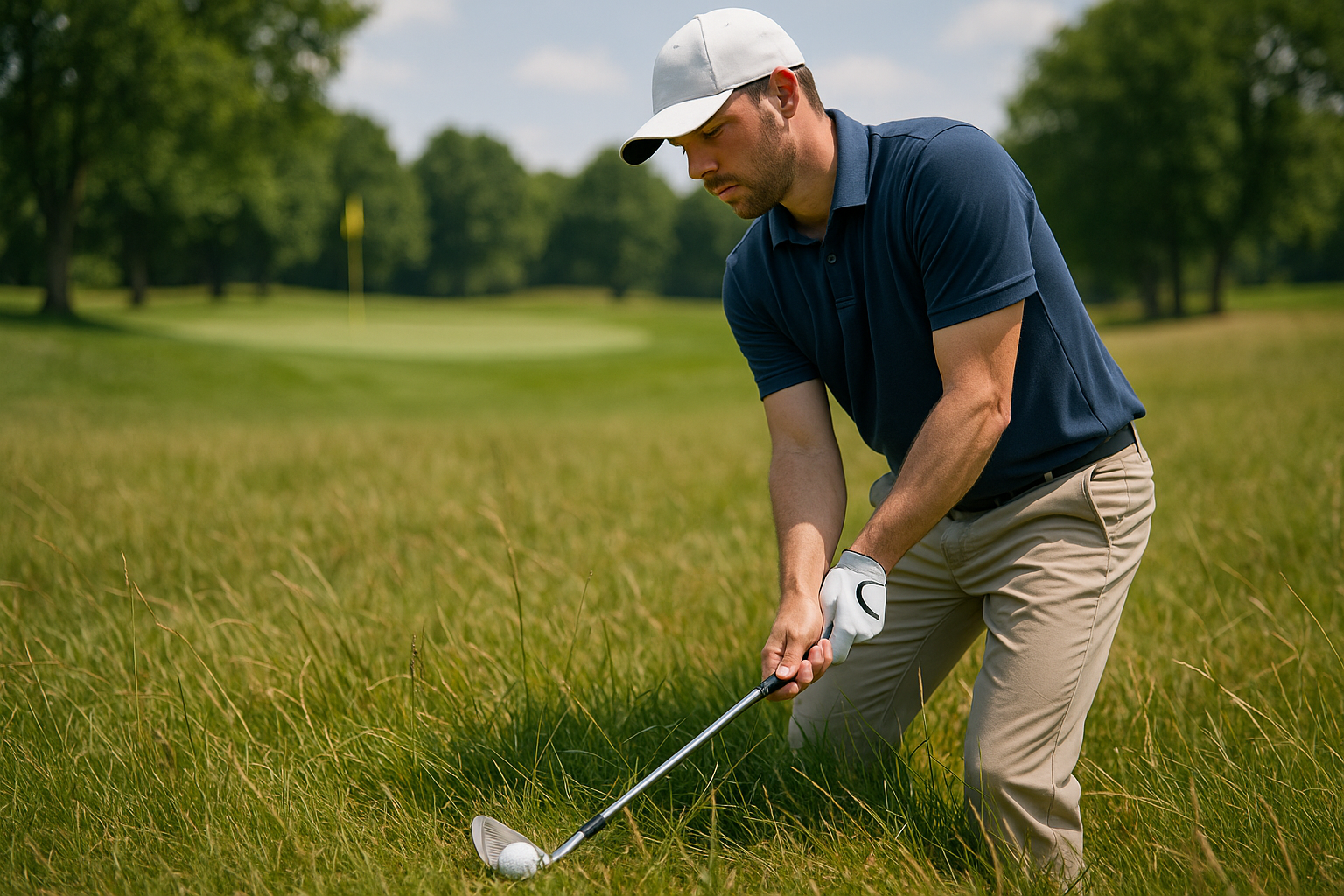
You find your ball just off the fairway. It is not lost, not buried, and not in terrible trouble—but it is sitting down in thick grass. The green is reachable, so you pull the same club you would use from a perfect fairway lie.
Then the grass grabs the clubhead, contact comes out heavy, and the ball flies only half the distance you expected.
A ball sitting down in the rough requires a different decision before it requires a better swing.
Why This Lie Is Difficult
When the ball is sitting below the tops of the grass, the club must travel through vegetation before it reaches the ball. That grass slows the clubhead and can close the clubface, especially when using a club with a wide sole or a lot of loft.
The biggest mistake is trying to hit a delicate, perfect shot from an imperfect lie. You may have enough distance on paper, but the lie—not your normal carry distance—should determine the shot.
Before choosing a club, ask three questions:
- Can I see enough of the back of the ball to make clean contact?
- Is the grass growing toward the target, against me, or across the ball?
- What happens if the club gets caught in the grass?
If the answer to the third question is “the ball goes into trouble,” choose a safer option.
Choose the Club That Can Handle the Grass
From a deep or damp lie, a hybrid or fairway wood is not always the best choice, even if it can reach the green. These clubs have long shafts and shallow faces, making them more demanding when the ball is sitting down.
A mid- or short-iron often gives you a better chance of making solid contact. The club has more loft, a shorter shaft, and a face that can get through the grass more reliably.
Consider using:
- A shorter iron: When the ball is deeply buried or the lie is unpredictable.
- A hybrid: When the ball is sitting reasonably well and you need help launching it.
- A wedge: When the grass is thick around the ball and advancing it safely is more important than reaching the green.
Do not choose a club based only on the distance to the flag. Choose one that gives you a realistic chance of contacting the ball first.
Make Contact Your Main Goal
Set up with the ball slightly farther back than normal. This encourages contact with the ball before the grass and helps prevent the clubhead from reaching the bottom of the swing too early.
Stand a little more firmly, particularly if the rough is thick around your feet. Then make a controlled swing with a smooth tempo. Trying to hit harder usually makes the problem worse because the clubhead approaches the grass too steeply and your contact becomes less predictable.
You do not need to force the ball into the air. The loft on the club will do that. Your job is to make a committed swing and accept that the shot may fly shorter than usual.
Pay Attention to the Grass Direction
Grass growing against the direction of your target can grab the clubface and reduce distance. Grass growing toward the target may allow the club to slide through more easily, but it can also produce a lower-running shot.
If the grass is clearly working against you, take one more club and swing smoothly. For example, if you would normally hit a 7-iron, consider a 6-iron and make a controlled swing. The extra club compensates for the distance lost to the rough.
When the grass is growing toward the target, expect the ball to release more after landing. Aim for a landing area rather than automatically firing at the flag.
Try This Practice Exercise
During your next practice session, place three balls in light rough and three balls in thicker rough. Use the same target, but choose the club you believe matches each lie.
Before every shot, say out loud:
- “What is the lie allowing me to do?”
- “What is the safest club that can advance the ball?”
- “Where is my best miss?”
Keep score based on whether the ball finishes in a playable position—not whether it reaches the green. This teaches you to make decisions based on the lie instead of wishful thinking.
One Thing to Remember
From a ball sitting down in the rough, choose the club that gives you the best chance of clean contact—not the club that reaches the green on paper.