
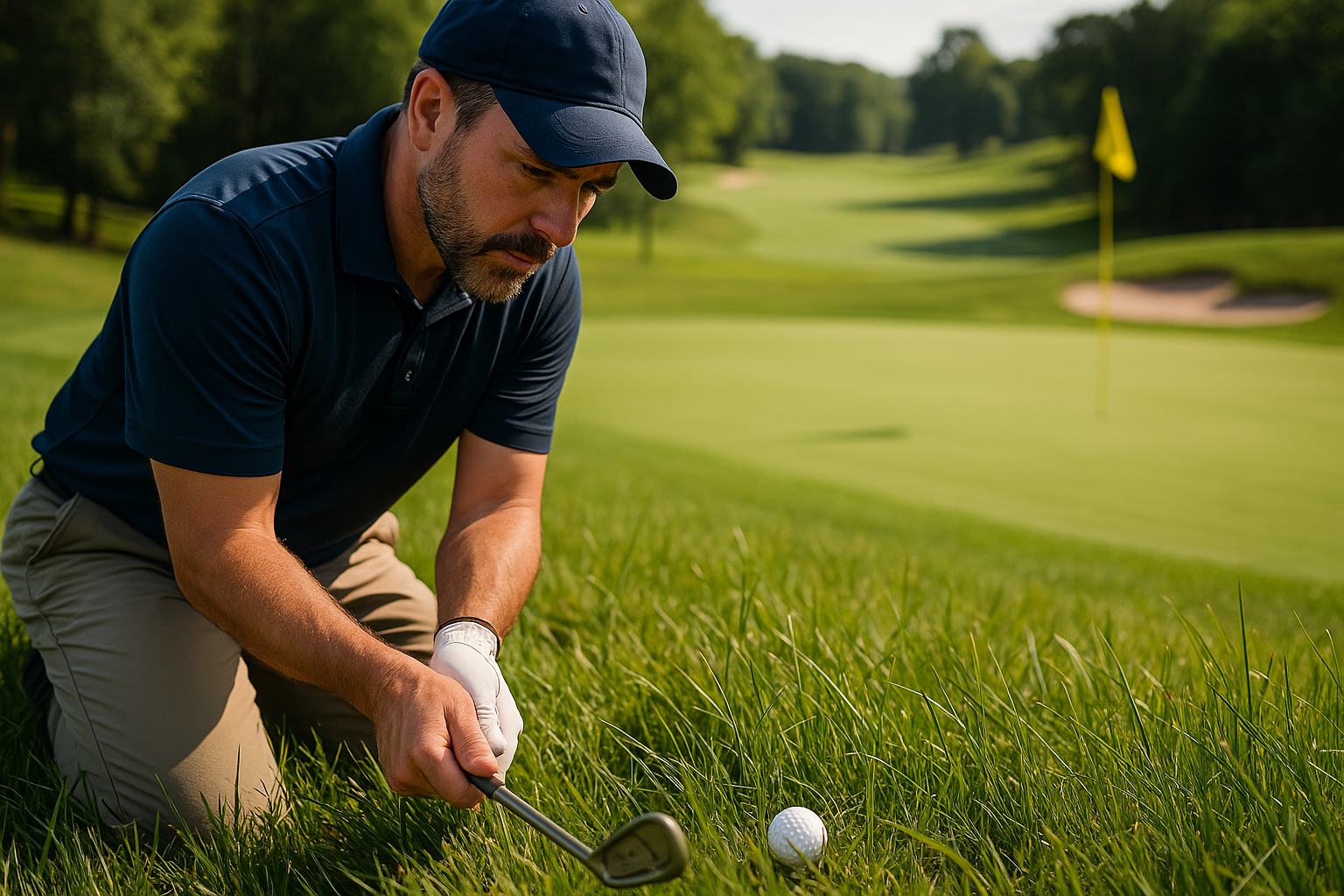
The Best Club for a Difficult Shot Is Often the One You Trust Most
You are 145 yards from the green, but the ball is sitting in thick rough. The flag is tucked near a bunker, and your perfect 7-iron distance is somewhere in the back of your mind.
Should you still hit the 7-iron?
For many recreational golfers, club selection starts with distance and ends with hope. But from a poor lie, the club that goes the farthest on a perfect swing is not always the club that gives you the best chance of scoring.
When the lie is difficult, choose the club that produces the most predictable result—not the club that matches the yardage on your rangefinder.
Why Yardage Alone Can Mislead You
Course yardages usually assume a reasonably clean lie. From the fairway, a 7-iron may carry 145 yards. From thick rough, however, grass can grab the clubhead and reduce speed. It may also prevent you from making solid contact.
A club that normally carries 145 yards might now fly only 125 or 130. Trying to force extra distance often creates an even worse result: a heavy shot, a pulled shot, or a swing that never gets through the grass.
The same problem appears in fairway bunkers, wet ground, pine straw, and uneven lies. The number may be accurate, but your ability to deliver the club is different.
Start With the Lie, Not the Flag
Before choosing a club, ask three quick questions:
- Can I make clean contact? Look at how much grass, sand, mud, or rough is behind and around the ball.
- What is the safest miss? If you miss, is it better to be short, left, right, or long?
- What is the easiest next shot? A shot that finishes 20 feet short may be better than one that reaches the green only once out of five attempts.
These questions shift your focus from “What club should reach the flag?” to “What shot can I repeat?” That is a much more useful question during a round.
When More Club Is the Smarter Choice
From thick rough, many golfers make the mistake of taking more loft because they are afraid of the ball flying too far. Often, the opposite is better.
A lower-lofted club, such as a 6-iron instead of a 7-iron, can help you reach the target even if the rough reduces distance. You are not trying to swing harder. You are simply allowing for the poor lie.
Make a controlled swing and accept that the ball may come out lower with less spin. If the green is open in front, this can be a sensible way to advance the ball.
However, do not automatically take less loft. If the grass is extremely thick, the ball is sitting down, or there is trouble short of the green, a higher-lofted club may be better because it gives you more control and helps the ball stop sooner. The correct answer depends on the lie and the hazards.
Use a “Reliable Distance” Instead of Your Maximum Distance
Every golfer should know two distances for each important club:
- Maximum distance: how far the club travels when you make excellent contact.
- Reliable distance: how far it travels on an ordinary, controlled swing.
From a difficult lie, use your reliable distance. If your 8-iron can carry 135 yards when struck perfectly but usually carries 125 to 130, do not choose it for a 135-yard shot over water. You may need a 7-iron, a safer layup, or a completely different target.
Try This on the Practice Area
During your next practice session, create three different lies: fairway grass, light rough, and a poor lie with the ball slightly buried. Hit five shots from each lie using the same club.
Record the average carry distance and notice the common miss. Do not worry about your longest shot. You are learning how much distance you can reasonably expect when contact is less than perfect.
You can also repeat the exercise with one more club. This helps you discover whether taking extra club produces better results than trying to swing harder.
One Thing to Remember
From a difficult lie, choose the club for the shot you can repeat—not the distance you can hit on your best swing.