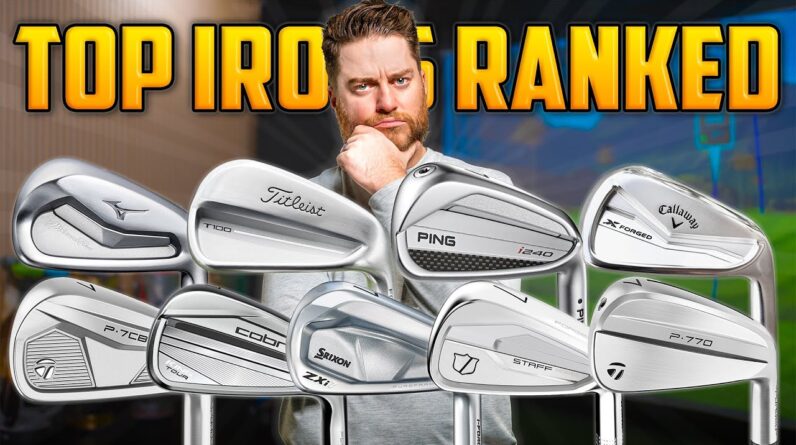

The BEST IRONS In Golf – For EVERY GOLFER!
Why irons matter: control, distance, and consistency
In golf, the irons are the workhorses that bridge distance off the tee with precision into the greens. The right iron set can help you flight the ball, control spin, and hit consistent carry on a variety of turf conditions. Whether you’re a complete beginner learning the basic swing or a low-handicap player chasing tighter dispersion, investing in the right irons is one of the fastest ways too raise your scores.
When people search for the best irons in golf, they’re often asking two main questions: Where should I start, and how do I pick the irons that fit my game? The answer depends on your skill level, your typical shot shapes, and how much forgiveness you want on off-center hits. This guide covers every golfer—from beginners to low-handed- cap pros—so you can find irons that help you play your best game.
Categories of irons: what each design promises
Irons come in several broad families, each with a different blend of forgiveness, workability, and feel. Here are the main categories you’ll encounter on store shelves and in reviews:
Game-enhancement irons (GI): forgiveness first
GI irons are built to help golfers hit straighter shots with higher launch and more consistent distance. They typically feature larger head sizes, wider soles, and optimized offsets to help get the ball up quickly, even on mishits.
- Excellent for beginners and high handicappers seeking confidence at impact.
- Usually the most forgiving option among standard irons.
- Common in sets with matching hybrids to cover gaps.
Super game-improvement irons: maximum forgiveness
These are the easy-to-hit extremes of GI design. They often incorporate oversized heads, extra-wide soles, and higher offsets to help even the most reluctant swings stay in play.
- Best for players regaining confidence after a rough period or facing tough conditions.
- Distance tends to be very forgiving and center impact may feel subdued compared with players irons.
Players irons (blade and compact shapes): precision and workability
Players irons, including blade and compact cavity designs, prioritize feel, feedback, and shot-shaping mastery. They’re favored by mid- to low-handicap players who can consistently strike the sweet spot and want precise control over flight, trajectory, and shot shaping.
- Smaller heads and less offset provide feedback on mis-hits.
- Optimal for players who value control and the ability to shape shots with confidence.
Hybrid/iron hybrids and convenience options
Hybrid irons blend features from both fairway woods and irons, offering easier launch and versatile performance in long irons. They’re notably helpful for players who struggle with mid-to-long irons or want practical distance in a compact package.
- Great bridging clubs between long irons and mid irons.
- Often recommended as replacements for hard-to-hit long irons (3-, 4-, 5-irons).
One-length irons: a different setup for consistency
One-length irons keep the club length uniform across the set, aiming to simplify the swing and help players repeat the same motion for consistent contact. Results vary by player, so testing is essential.
- May reduce swing changes between clubs, aiding rhythm for some players.
- Best tested during a fitting session to see if it suits your tempo and feel.
How to choose the best irons for your game
Picking the right irons starts with understanding your current game and your goals. A professional fitting can be invaluable, but you can start with these practical checks at home or in-store.
Consider your skill level and goals
- Beginners / high handicaps: prioritize forgiveness and ease of launch. GI or super GI irons are often the best starting point.
- Improving players / mid-handicaps: you’ll benefit from a balance of forgiveness and a touch of workability—think mid-range cavity-back or players irons with slightly larger heads.
- Low handicaps / players: prioritize feel, feedback, and shot-shaping capability. Look at players irons or compact cavity backs.
Key specs to know when shopping for irons
- Loft and lie: determine trajectory and alignment. Many golfers benefit from a slightly stronger loft to maximize carry, but this depends on swing speed.
- Offset and cavity design: offset helps with mis-hits and launch; cavity backs enhance forgiveness while preserving distance.
- Shaft type (steel vs graphite) and flex: steel is common for control and consistency; graphite is lighter and can boost clubhead speed for slower swings.
- Length and balance: proper length affects posture and alignment. Some players see better results with slightly shorter or longer shafts depending on stance.
- Grip size and texture: a properly sized grip reduces tension and improves control.
Fitting versus off-the-rack: why fitting matters
A proper iron fitting takes your swing tempo, attack angle, and dispersion into account. A professional fitter will measure your swing speed, optimize shaft flex, and recommend the right lie angle and offset. The result is tighter dispersion, more consistent distances, and comfortable contact—essential for golf irons for beginners and beyond.
Top iron picks by category
Below are representative selections across common iron families. These examples illustrate the kinds of features you’ll find in the market.Availability and exact models may vary by region and year.
Best irons for beginners and high handicappers
- Game-improvement irons with larger sweet spots and high launch.
- Exmaple families: GI and super GI lines from major brands.
- Strong choice for new players who want confidence right away.
Best irons for improving players (mid-handicap)
- Mid-sized heads with enough forgiveness to keep misses in play, plus a touch of workability.
- Look for slightly narrower sole and modest offset to support flight control.
Best players irons (low handicap, high feel and workability)
- Compact heads with precise feedback and the ability to shape shots.
- Excellent for players who rely on control over raw forgiveness.
Best hybrids/iron hybrids and alternatives
- Long irons replaced with hybrids for easy launch and consistent distance.
- Consider a hybrid at 3- or 4-iron replacements if you struggle with long irons.
First-hand experience: test-drive highlights
A good way to understand iron performance is to here how real players felt during a fitting or a demo day. Such as, players often report that GI irons feel more forgiving on off-center hits, with a launching trajectory that helps get the ball airborne quickly. Players irons deliver feedback and a sense of control, while hybrids provide forgiveness in a package that can replace challenging long irons.
Iron performance snapshot (at a glance)
Use this quick-reference table to compare categories side-by-side. The table uses WordPress-friendly classes for easy styling in most themes.
| Category | Forgiveness | Feel & Feedback | Workability | Ideal for |
|---|---|---|---|---|
| Game-improvement irons | High | moderate to smooth | Moderate | Beginners, high handicaps |
| Super game-improvement irons | Very High | Soft, cushioned | Low to Moderate | New players needing max forgiveness |
| Players irons (blade/compact) | Low to Medium | High feedback | High | Low handicaps, shot-shapers |
| Hybrid/irons hybrids | High | Moderate | High | Long irons replacements |
| One-length irons | variable | Moderate | Moderate | Rhythm-focused players |
First-hand experience: a golfer’s journey with irons
Emma started with a full GI iron set after a few seasons of inconsistent ball striking. Her early rounds showed a lot of dispersion, especially with mid irons. at a fitting, she tried a game-improvement set with a light graphite shaft and a slightly higher loft. The result was noticeably higher launches, more carry, and a much tighter dispersion around the target line. After a few weeks, Emma reported that she could trust mid irons to land softly on the greens, allowing her to attack flags with more confidence. A new mindset,better speed control,and forgiving irons helped her lower her handicap by multiple strokes.
Meanwhile, her friend Lucas, a mid-handicap player, experimented with a players iron setup. He preferred the feel and feedback and learned to shape shots more deliberately, using the workability to navigate tight fairways. He still used a GI 7-iron for certain tee approach shots, but his overall score improved as he gained a better sense of control around the greens.
Benefits and practical tips for choosing and using irons
- Test before you buy: demo days, fitting sessions, and practice at the range help you understand how irons feel on your swing.
- Set makeup matters: consider the gap between your longest iron and your hybrid or fairway wood. You may want fewer long irons and more hybrids for easier greenside access.
- Consistency over raw distance: more consistent distances reduce double-pool decisions on the course and lower scores.
- Rotation and rhythm: practice with a simple drill focusing on a smooth tempo to maximize iron contact and improve dispersion.
- Grip and posture: a comfortable grip size and correct posture can dramatically impact impact location and accuracy.
Frequently asked questions
What is the best type of iron for a beginner?
For most beginners, game-improvement irons with larger heads, higher loft, and more offset provide the easiest and most forgiving experience while building confidence at impact.
Should I replace my long irons with hybrids?
Many players find hybrids easier to hit than long irons (2- and 3-irons).Replacing hard-to-hit long irons with hybrids can improve overall scoring by providing reliable distance and better miss-hit forgiveness.
Do one-length irons really help with consistency?
One-length irons can help some players by simplifying the swing. The effectiveness depends on your tempo, posture, and how your swing adapts to uniform club lengths. Testing with a fitter is recommended.
How often should irons be fitted?
as a general rule, consider re-fitting whenever your swing changes noticeably, you gain or lose speed, or you experience a drop in accuracy. A professional fitting every 1–2 years is common for dedicated golfers.
Getting fitted: steps to a great iron fit
- Schedule a formal iron fitting with a certified clubfitter or at a reputable golf shop.
- Bring your current irons and note typical distances with each iron.
- Test several models within each category—GI, GI-forgiveness, and players irons—to understand differences in feel and flight.
- Ask about shaft material,flex,and weight as these can influence swing tempo and accuracy more than you might expect.
Tip: A good fitting should leave you with a clear reason to choose a particular model and shaft combination, not just a hope that more expensive irons will magically improve your scoring.
If you’re unsure where to start, begin with a GI or game-improvement set for comfort, then consider moving toward a players iron lineup as your short game improves and your needs evolve.
Take action: your next steps to better iron play
Ready to upgrade your irons? Start with a fitting or demo day to narrow your options.Consider your goals—whether you want maximum forgiveness, more workability, or a blend of both—and choose a set that aligns with your swing and course conditions.
Pro tip: pair your iron set with a properly fitted shaft and grip, and don’t overlook a complementary range routine focused on tempo and impact position. Small changes today can unlock big improvements on the course.