
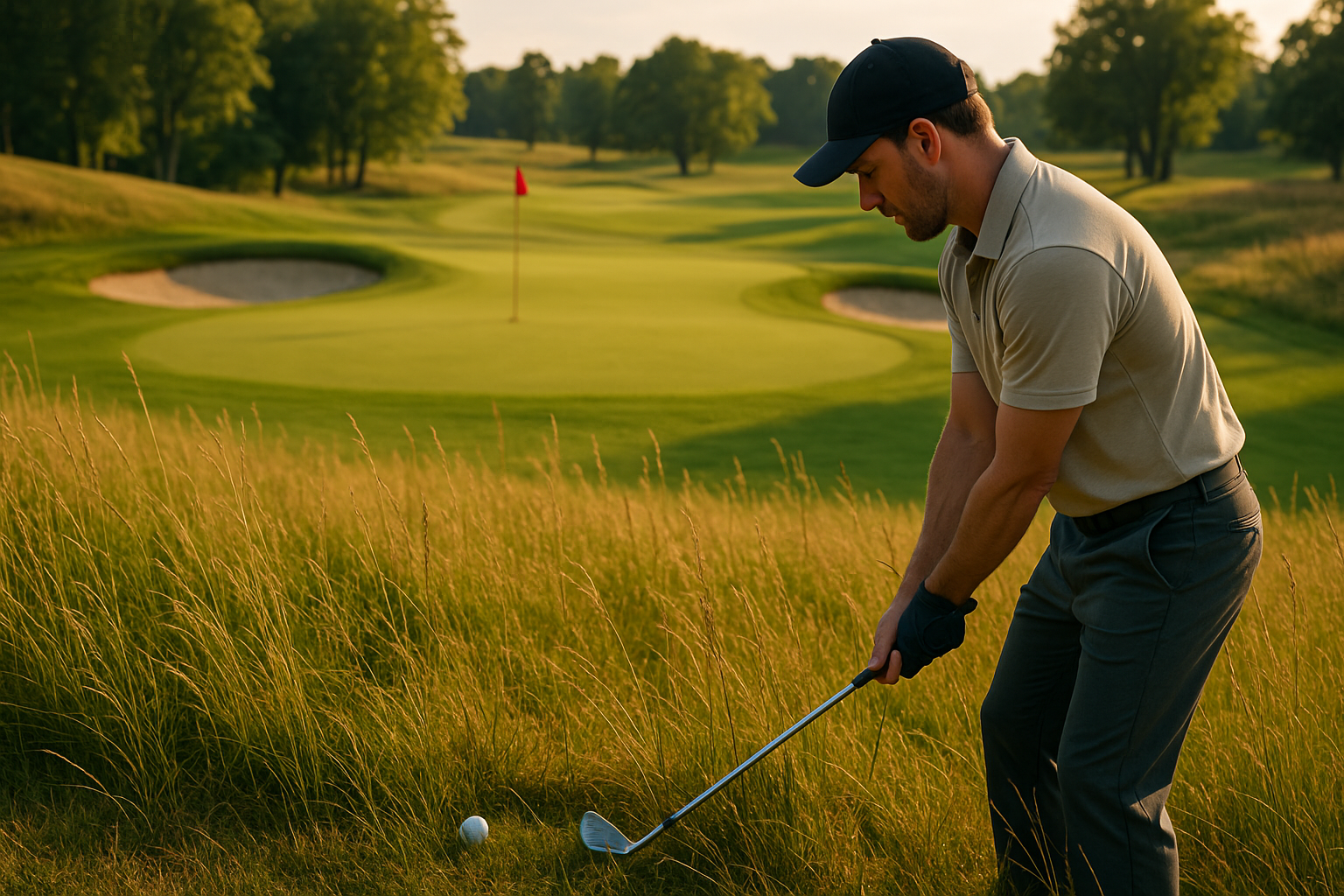
The Shot After a Lost Ball: How to Stop One Mistake Becoming a Big Number
You hit a decent drive, but it kicks into deep rough and disappears. After a few minutes of searching, you accept the penalty and walk to the next tee or drop area. The frustrating part is not only losing the ball—it is the temptation to “make up” for it immediately.
That next shot often becomes a low-percentage attempt: a driver from a poor lie, a long iron through a narrow gap, or a wedge aimed directly at a tucked pin. One mistake turns into another, and suddenly a double bogey becomes a triple.
The most important decision after a lost ball is not how aggressively you can play. It is how to get your round back under control.
Why the Recovery Shot Feels So Important
A lost ball creates an emotional debt. You feel as if you need to recover the penalty with one excellent shot. That feeling can make a risky option seem necessary, even when the hole has plenty of space to limit the damage.
But golf does not reward you for balancing the score in your head. The penalty has already happened. Your next job is simply to complete the hole with as few additional problems as possible.
Think of the penalty as a reset. You are no longer trying to save the original plan. You are building a new plan from where you are now.
Use the “Next Safe Shot” Question
Before choosing a club, ask:
What is the safest shot that still gives me a reasonable chance to finish the hole?
This does not always mean hitting the shortest club. It means choosing the option with the best balance of distance, space, and confidence.
For example, after a lost tee shot on a par 4, you might have 210 yards remaining from the drop area. A long club may technically reach the green, but trouble surrounds the target. A hybrid or fairway wood may leave you short-sided or in a bunker.
A better choice could be a comfortable mid-iron to a wide section of fairway, followed by a wedge. You may still make bogey, but you have removed the chance of another penalty or a difficult recovery.
Check These Three Things
- Where is the widest landing area? Aim away from the worst trouble, even if that means playing farther from the hole.
- What is your most reliable club today? Use the club you can control, not the one that looks impressive on the scorecard.
- What happens if the shot misses? A smart choice usually has a manageable miss rather than a disaster waiting on both sides.
Do Not Chase the Pin
After a penalty, golfers often aim at the flag because they want a birdie chance to erase the mistake. That is usually the wrong target.
Instead, choose a target that gives you room to miss. If the pin is near a bunker, water, or the edge of the green, aim toward the safer half of the putting surface. A 30-foot putt is not exciting, but it is much better than another penalty stroke.
Remember that bogey after a lost ball is often an excellent result. You have limited the damage and kept the round from spiraling.
Try This: The Recovery Planning Game
During your next practice round, create three imaginary penalty situations. Drop a ball somewhere reasonable and give yourself one shot to recover.
- Choose your first club without rushing.
- Say your target out loud.
- Name your safest miss.
- Commit to the shot and accept the result.
The goal is not to hit a perfect recovery. The goal is to practice making a calm decision when your score is already damaged.
Common Mistakes to Avoid
- Choosing a club because it can reach the green, even though you rarely hit it accurately.
- Aiming at the flag instead of the safest part of the green.
- Trying to recover the entire penalty with one swing.
- Making a decision while angry, hurried, or distracted.
One Thing to Remember
After a lost ball, do not try to get the stroke back on the next shot. Try to prevent the next mistake.
A calm recovery may not rescue par, but it can save bogey, protect your confidence, and keep one bad break from ruining the rest of your round.