
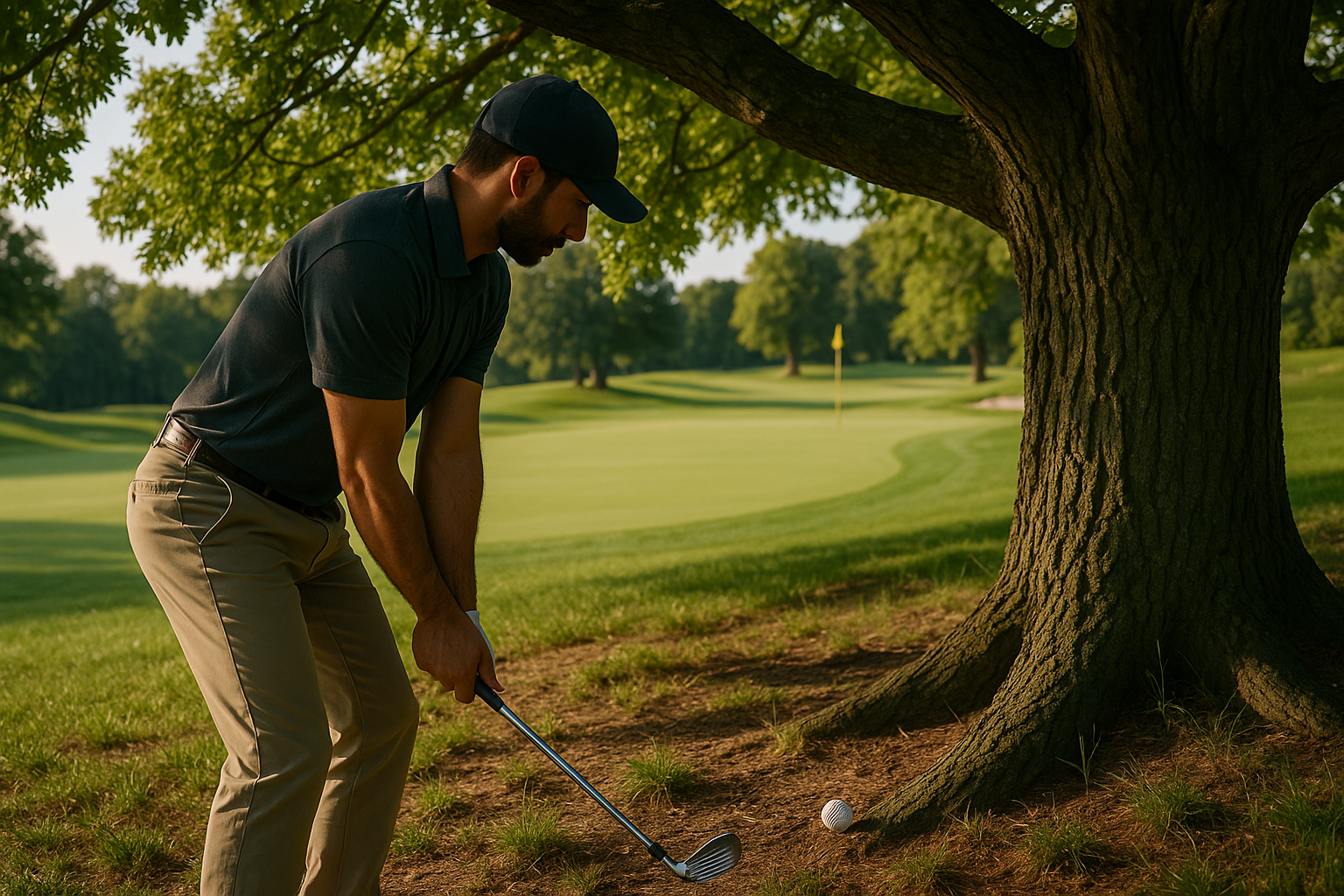
Under a Tree? Stop Trying to Hit the Perfect Recovery Shot
Your ball has missed the fairway and settled under a tree. The green is visible through a narrow gap, the pin is tempting, and you have just enough room to attempt a miracle shot.
This is where many golfers turn a manageable mistake into a double bogey. They choose the most aggressive route instead of the shot that gives them the best chance of finishing the hole.
The goal of a recovery shot is not always to reach the green. Often, it is simply to get back into the hole.
First, Identify the Real Problem
Before selecting a club, look at the entire situation—not just the distance to the flag.
- Can you make a full swing without hitting a branch?
- Is the gap wide enough to allow for a slightly poor strike?
- What happens if the ball starts a few yards left or right?
- Where will the ball finish if you miss?
- Is there a safe area beside or behind the green?
A gap that looks large from the fairway can feel extremely small when you stand over the ball. Remember that your shot will not always start exactly where you intend. A recovery plan should allow room for an ordinary miss, not just a perfect swing.
Choose the Lowest-Risk Route
In many cases, the smartest play is to punch the ball back onto the fairway. This may leave you with a longer approach, but it removes branches, tree trunks, and awkward angles from the next shot.
Use a club that produces a low flight, such as a long iron, hybrid, or sometimes even a mid-iron. Play the ball slightly farther back in your stance, make a shorter backswing, and finish low. You do not need to hit the ball hard. A controlled swing is more useful than extra distance.
If the ball is sitting in rough, check the lie carefully before choosing a low punch. Thick grass may grab the clubhead or prevent clean contact. In that situation, a wedge or lofted iron may be more reliable, even if it does not travel as far.
When Going for the Green Makes Sense
There are times when the aggressive shot is reasonable. Consider it only when most of these conditions are true:
- The ball is sitting on a clean lie.
- You have a clear, generous opening.
- The branches are high enough to allow your intended trajectory.
- A miss will not create an even worse problem.
- You can confidently start the ball away from danger.
Even then, aim for the safest part of the green—not necessarily the flag. If the pin is tucked beside a bunker or near the edge, use the middle of the putting surface as your target.
Do Not Forget the Tree Trunk
Golfers often focus on branches and forget the trunk. A shot that gets through the opening may still roll or curve directly into the base of the tree.
Also consider the ball’s expected roll. A low punch may travel farther after landing than you expect, especially from firm ground. Pick a landing area, not just a direction, and leave yourself enough room for the ball to release.
Try This Recovery-Decision Exercise
During your next practice round, deliberately place a ball beside a tree or near another obstacle. Before hitting, describe three options out loud:
- The safest escape.
- The aggressive shot.
- The shot you would choose if you were trying to make bogey at worst.
Then choose the option with the smallest penalty for a miss. This exercise trains you to evaluate outcomes instead of reacting to the flag.
Common Recovery Mistakes
- Using too much club: More distance does not help if the ball hits a branch.
- Aiming at the opening instead of the finish: The gap may be clear, but the next shot may be terrible.
- Trying to curve the ball around the tree: Shape the shot only if you can control the curve reliably.
- Ignoring the score: If you already made a mistake, avoid making the next decision emotionally.
One Thing to Remember
A recovery shot does not need to be spectacular—it needs to make your next shot easier. When in doubt, take your medicine, return the ball to a comfortable area, and give yourself a chance to save bogey.