
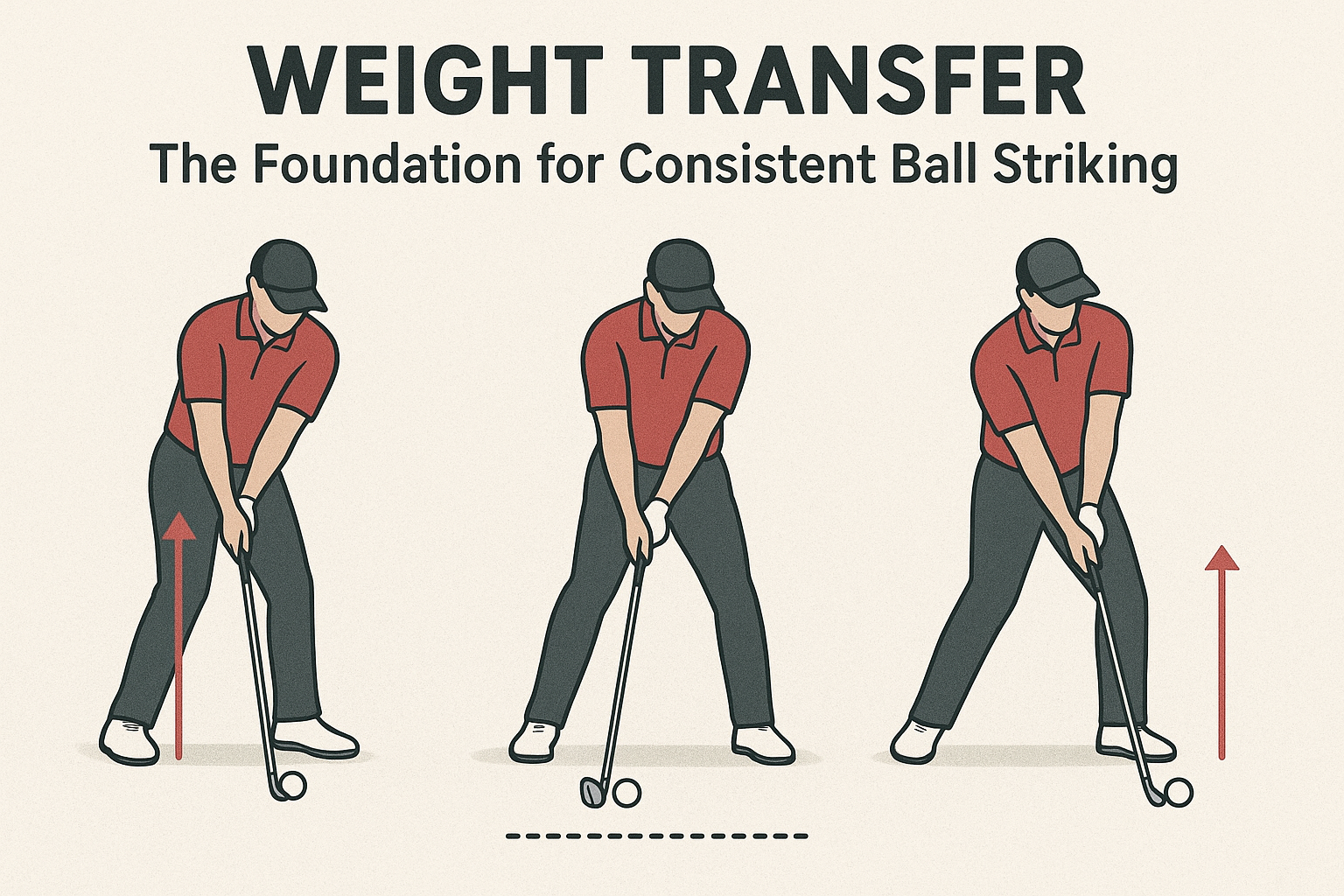
Weight Transfer: The Foundation for Consistent Ball Striking
This article focuses on one critical aspect of the golf swing: weight transfer. It’s not flashy, but it’s the engine that powers solid contact and consistent distance. Proper weight transfer means moving your body’s weight from your trail (back) foot to your lead (front) foot as you swing, especially from the downswing through impact, while staying balanced and in control.
What the concept is
Weight transfer is a controlled shift of your center of gravity. At address, most of your weight is felt on the back foot. As you swing, you gradually move that weight toward the front foot so your torso, hips, and arms can release through the ball with speed and control. The goal isn’t a big slide or a dramatic lunge; it’s a smooth, square-to-target transfer that keeps your spine angle and balance intact.
Why it matters to the golf swing
- Improved contact: Adequate transfer helps compress the ball instead of hitting it fat (fat shots) or thin (thin shots).
- Consistent path and face control: A balanced transfer supports a repeatable swing path and more solid face rotation through impact.
- Better distance and accuracy: When weight shifts naturally, you generate power from the ground up (legs and hips) rather than twisting the arms alone.
What the golfer should feel when doing it correctly
- Spine stays relatively tall and centered; you don’t dip your head excessively.
- Trail foot gradually releases weight into the lead foot as you rotate toward the target.
- Pressure builds through the lead foot at impact, with the chest and hips facing the target.
- You finish with most of your weight on the lead foot and a stable, balanced finish.
2–3 common mistakes and simple fixes
- Mistake 1: Not transferring weight at all; you stay back and “hit behind” the ball.
Fix: Picture stepping into the ball with your lead foot as you swing. Start with slow, controlled motions and feel the weight shift from trail to lead foot in the downswing. Keep your head steady over the midline and your knees flexed to maintain balance. - Mistake 2: Slipping or sliding too aggressively onto the lead foot, losing posture.
Fix: Focus on rotating the hips and torso rather than sliding the entire body forward. Build the movement from the ground up (feet → ankles → knees → hips → torso). Practice with slower tempo to reinforce a rotation-based transfer rather than a big slide. - Mistake 3: Over-shifting too early, causing the hands to “get out in front” and lose control.
Fix: Maintain a stable spine angle early in the backswing and initiate the transfer during the downswing with a conscious hip turn, not a forward lunge. Think of loading your leading leg as you rotate through impact.
One easy practice drill you can do at home or on the range
Step-Through Weight Transfer Drill (no ball required, great for beginners and mid-handicap players):
- Stand with feet hip-width apart, knees lightly flexed, weight balanced between both feet.
- Swing back into a comfortable position, then start the downswing with your hips turning toward the target.
- As you rotate through impact, imagine stepping forward with your lead foot and transferring your weight onto that foot. Your balance should feel centered over the lead foot at the finish.
- Repeat 8–12 times, first slowly, then at a comfortable pace.
Progress by adding a half-speed shot with a ball on the range. Focus on feeling the weight move forward from your trail foot to your lead foot through impact. If you feel you’re leaning forward or losing balance, slow down and reset with the drill.
By concentrating on a steady, rotation-based weight transfer, you’ll build a reliable foundation for solid contact and consistent ball striking. Practice this with intention, and you’ll notice smoother starts, crisper strikes, and more predictable results over time.
Weight Transfer: The Foundation for Consistent Ball Striking
Weight transfer is the invisible engine behind clean, repeatable ball striking across sports. by coordinating how you move your body from the heels too the toes, and from the ground up through the hips, torso, and arms, you unlock more power, control, and consistency on every swing.
The core concept: What is weight transfer?
Weight transfer refers to the intentional shifting of your body’s weight from one area to another during the swing. In most sports that require a precise strike—golf, tennis, baseball, and cricket—the goal is to transfer energy efficiently from the ground up through the kinetic chain. Proper weight transfer aligns the center of gravity with the direction of the shot,engages the larger muscle groups (hips and legs),and minimizes wasted energy in the upper body.
key concepts to understand include:
- Center of gravity (CG) management: Keeping the CG over the stable base provided that possible enables a more powerful, controlled strike.
- Ground reaction force (GRF): The force your feet deliver to the ground is the source of energy that drives the swing. Efficient weight transfer converts this ground energy into clubhead speed (or racquet/ball speed).
- Sequencing: A well-timed chain—from setup to trail-side to lead-side weight shift—creates a smoother, more rapid acceleration into impact.
- Balance and posture: A stable spine angle and athletic posture reduce wobble, helping you transfer weight without losing control.
The science behind weight transfer in a swing
Understanding the biomechanics behind weight transfer helps explain why some swings feel smooth while others feel flat or erratic. In essence, a prosperous weight transfer sequence optimizes three core elements: balance, tempo, and sequencing.
Primary phases of weight transfer
- Load phase (pre-impact): The athlete shifts slightly onto the trail foot (back foot in many swings) while maintaining spinal posture. This stores potential energy in the legs and hips.
- Transition (coiling): The hips and torso begin to rotate, transferring weight toward the rear foot and creating a dynamic stretch on the front-side muscles.
- Acceleration through impact: Weight shifts toward the lead foot as the hips rotate forward,and the trunk uncoils to deliver velocity to the ball.
- Release and follow-through: After impact, weight continues to shift toward the lead foot, finishing with balance and a stable finish position.
When each phase occurs with the right timing,the body acts as a well-tuned lever system. If weight transfer happens too early, too late, or with poor control, clubhead speed can suffer, accuracy can drop, and the risk of injury rises due to abrupt deceleration or compensations.
Kinetic chain and energy transfer
The kinetic chain describes how energy moves from the ground up through the body to the point of contact. Efficient weight transfer ensures the largest muscle groups contribute first,with smaller muscles finishing the transfer to the extremities. This minimizes energy leaks and helps maintain momentum through the impact zone.
Techniques to optimize weight transfer
Stance and posture
- Adopt a athletic, balanced setup with a slight knee flex, hips above the ankles, and a tall spine. A solid base makes it easier to shift weight without wobble.
- Distribute weight evenly at address, then progressively tilt toward the trail foot during the load phase to begin the weight transfer naturally.
- Keep the head steady and eyes on the ball through impact to maintain a consistent transfer path.
Ground contact and pressure shift
- Feel a gradual transfer of pressure from the center of the trail foot toward the heel while loading, then forward onto the lead foot during acceleration.
- Avoid excessive lateral movement; a controlled pressure shift along the arch of the foot supports better balance and repeatability.
- Practice with soft steps to teach the body the sensation of moving weight in a coordinated, fluid manner.
Sequencing and tempo
- Develop a consistent tempo: a quieter load, a controlled transition, and a sharp but smooth release. This rhythm improves timing and contact quality.
- Use a short pause at transition in some drills to emphasize feeling the weight shift before the strike.
- Integrate breath control to help regulate tempo and prevent rushing the downswing.
Practical drills to ingrain weight transfer
Include these drills in practice sessions to build reliable weight transfer without overthinking mechanics.
- Step Drill: Start with feet close together. Step toward the target during the backswing,then step into the shot with a firm transfer of weight to the lead foot. This trains sequencing and ground reaction forces.
- pump Drill: At the top of the backswing, perform 2–3 small pumps by bending and extending the lead knee while maintaining posture. Then execute a full swing, focusing on unloading energy into the ball.
- Pause-and-Release Drill: Pause briefly at the top of the backswing to feel the weight stored in the trail leg, then release into impact with a smooth transfer of weight to the lead side.
- Slow-Motion Swing: Perform a complete swing in slow motion, emphasizing where weight shifts and how the hips and torso unwind into impact.
- Mirror Feedback Drill: Use a mirror or video to observe whether weight shifts toward the lead foot occur early enough and consistently across reps.
Benefits of improved weight transfer for ball striking
- Increased distance and ball speed due to efficient energy transfer from the ground up.
- Sharper accuracy as weight transfer creates a more stable strike path and reduced decentering of the swing plane.
- Enhanced consistency across multiple reps and different targets or shot shapes.
- Reduced risk of overuse injuries by promoting balanced loading and reducing compensations in the upper body.
- Better post-impact stability and a repeatable finish that aligns with the intended shot.
Case studies and first-hand experiences
Case Study 1: Amateur golfer refines consistency through weight transfer
John, a 14-handicap golfer, struggled with a frequent inconsistency in contact and direction.After a 6-week period focusing on weight transfer—especially the transition from the trail to the lead foot—his ball flight became more predictable. He reported fewer pushes or pulls and noticed greater distance on center-face hits. The coach used step drills and slow-motion feedback to help John feel the moment of unloading energy into impact, resulting in a more repeatable swing plane.
Case Study 2: Tennis player regains control on groundstrokes
In tennis, stabilizing weight transfer is crucial for both forehands and backhands. A player with mixed results found that a purposeful tempo and a slight delay in the forward weight shift allowed cleaner contact and more consistent depth. By focusing on maintaining knee flex and pelvic alignment during the load phase,the player achieved steadier ball striking and improved rally consistency.
First-hand experience: A coach’s perspective
In coaching hundreds of swings, I’ve noticed that when athletes fixate on “getting the weight forward” without respect for the load and transition, they end up rushing into impact and lose control. The turning point often comes when players learn to feel the weight settle into the trail foot in the backswing and then transfer smoothly through impact. The goal is not a sudden jump of weight, but a controlled, progressive shift that aligns with hip rotation and trunk unwind.
quick-reference drill table
| Drill | Focus Area | How to Perform | Common Cues |
|---|---|---|---|
| Step Drill | Weight transfer sequencing | Step toward target during backswing; step into shot with gradual weight shift to lead foot | “Step into it,” “drive through the lead foot” |
| Pump Drill | Load and unload energy | 3 small pumps on trail side before swinging | “Load, unload, strike” |
| Pause-and-Release | timing and unloading | Pause at top, feel weight stored, then release into impact | “Pause, then push” |
| slow-Motion Swing | Sequencing and feel | 5–6 seconds per swing, focus on weight path | “Feel the sequence” |
Weight transfer training checklist
- Establish a balanced athletic stance with slight knee flex and active core.
- Initiate the load phase by gently shifting weight toward the trail foot without collapsing the spine.
- Allow a smooth hip and torso rotation to guide the transition toward the lead foot.
- Maintain eye level on contact and finish with a stable, balanced position.
- Incorporate drills 2–3 times per week to reinforce the feel of weight transfer.
Frequently asked questions
- Why is weight transfer so crucial for ball striking?
- Because it directly affects energy transfer, timing, and control. A smooth weight shift converts ground reaction forces into clubhead speed and precision at impact.
- Can weight transfer fix all swing issues?
- It’s a foundational element.It helps with consistency and power, but it should be integrated with posture, grip, swing path, and tempo for complete improvement.
- How long does it take to see improvements?
- Most athletes notice cleaner contact within 2–6 weeks of focused practice, especially when drills are performed with intention and video feedback.