
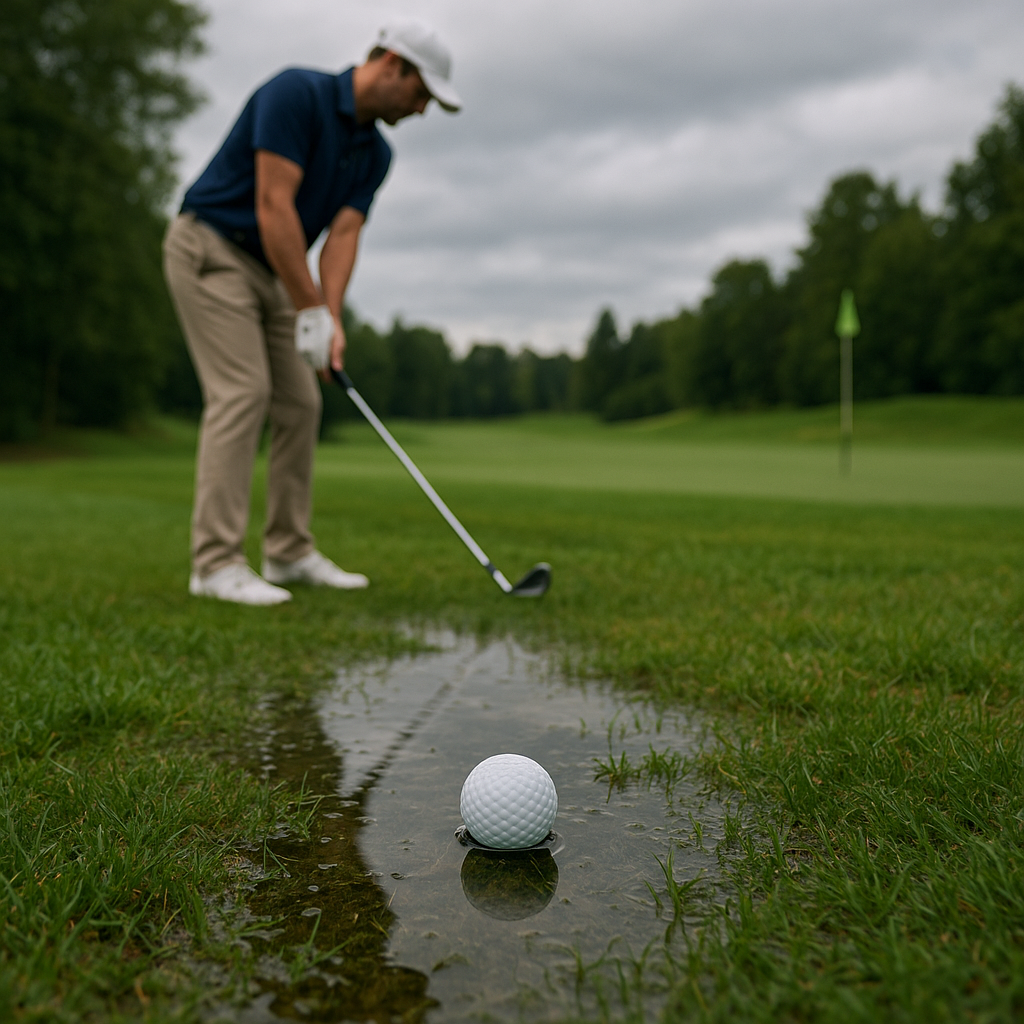
The Fairway Is Wet—Should You Take More Club?
A wet fairway can make a normally simple approach shot surprisingly difficult. The ball may be sitting down, your feet may feel unstable, and the clubface may slide through the turf instead of striking the ball cleanly. Many golfers respond by swinging harder, but that usually creates even more problems.
The better solution is to change your plan slightly before you swing. Wet conditions often require a different club, a simpler motion, and more realistic expectations.
Why Wet Fairways Change the Shot
When the ground is soft, the clubhead can enter the turf more easily. That sounds helpful, but it also means the club can lose speed if it digs too deeply. A shot that normally carries 150 yards might come up short, even with a good swing.
The ball may also sit lower than usual, especially if it has settled into a damp patch. This gives you less room to strike the ball cleanly and can produce a lower flight with less spin.
Your footing matters, too. Wet grass reduces traction, so your normal full-speed swing may cause your feet to slip or your body to lose balance.
Take More Club, But Don’t Swing Harder
For many wet-fairway shots, taking one extra club is a sensible adjustment. If you would normally hit a 7-iron, consider an 8-iron only if the ball is sitting well and the hole allows for a lower shot. More commonly, you would choose a 6-iron instead of a 7-iron to account for reduced contact and carry.
The key is to make a controlled swing. Do not try to create the missing distance by hitting harder. A harder swing can make you lose balance, strike behind the ball, or catch the ground too steeply.
Think of the adjustment this way:
- Choose one more club than normal when the lie is soft or the ball is sitting down.
- Make a smooth three-quarter swing.
- Finish in balance rather than trying to add speed.
- Expect a lower shot with less stopping power.
Check the Lie Before Choosing the Club
“Wet fairway” does not always mean the same thing. Look closely at how the ball is sitting.
A Ball Sitting Up
If the ball is resting on top of the grass, you may not need to change clubs at all. However, the wet ground can still reduce traction, so use a controlled swing and avoid excessive foot movement.
A Ball Sitting Down
If the grass is growing over the ball or the ball is pressed into soft turf, take extra club and focus on clean contact. You may want to play the ball slightly farther back in your stance than normal, which can help you strike the ball before the club enters the ground.
Standing Water or Casual Water
If water is visible around your ball or your stance, stop and check the rules before playing. You may be entitled to free relief from temporary water, depending on the situation. Do not rush into a difficult shot when a rules-based option may be available.
Use a Safer Target
Wet conditions make it harder to control distance and spin. That means a shot aimed directly at a tucked flag can become dangerous quickly.
Choose the larger part of the green and favor the side that leaves an easy next shot. If the flag is near a bunker or water, aim toward the opposite half of the green. A 30-foot putt is often a better result than a short-sided chip from wet rough.
Also remember that the ball may release differently. A low shot landing on a damp green may stop quickly, while a shot landing on a firm area may roll farther than expected. When in doubt, aim for the middle and accept a longer putt.
Try This Practice Exercise
At the range, place a towel or headcover a few inches behind the ball. Practice hitting iron shots without touching it. This teaches you to strike the ball first without taking a deep divot.
Start with half-swings and focus on balance. Once you can make solid contact consistently, increase to three-quarter swings. The goal is not maximum distance. The goal is a predictable strike that would hold up when the ground is soft.
One Thing to Remember
When the fairway is wet, take enough club to reach your target—but use a smooth swing that stays in balance. More club and less effort will usually produce a better result than trying to overpower a difficult lie.