
Why Your Ball Comes Out Hot From Bare Lies—and What to Do
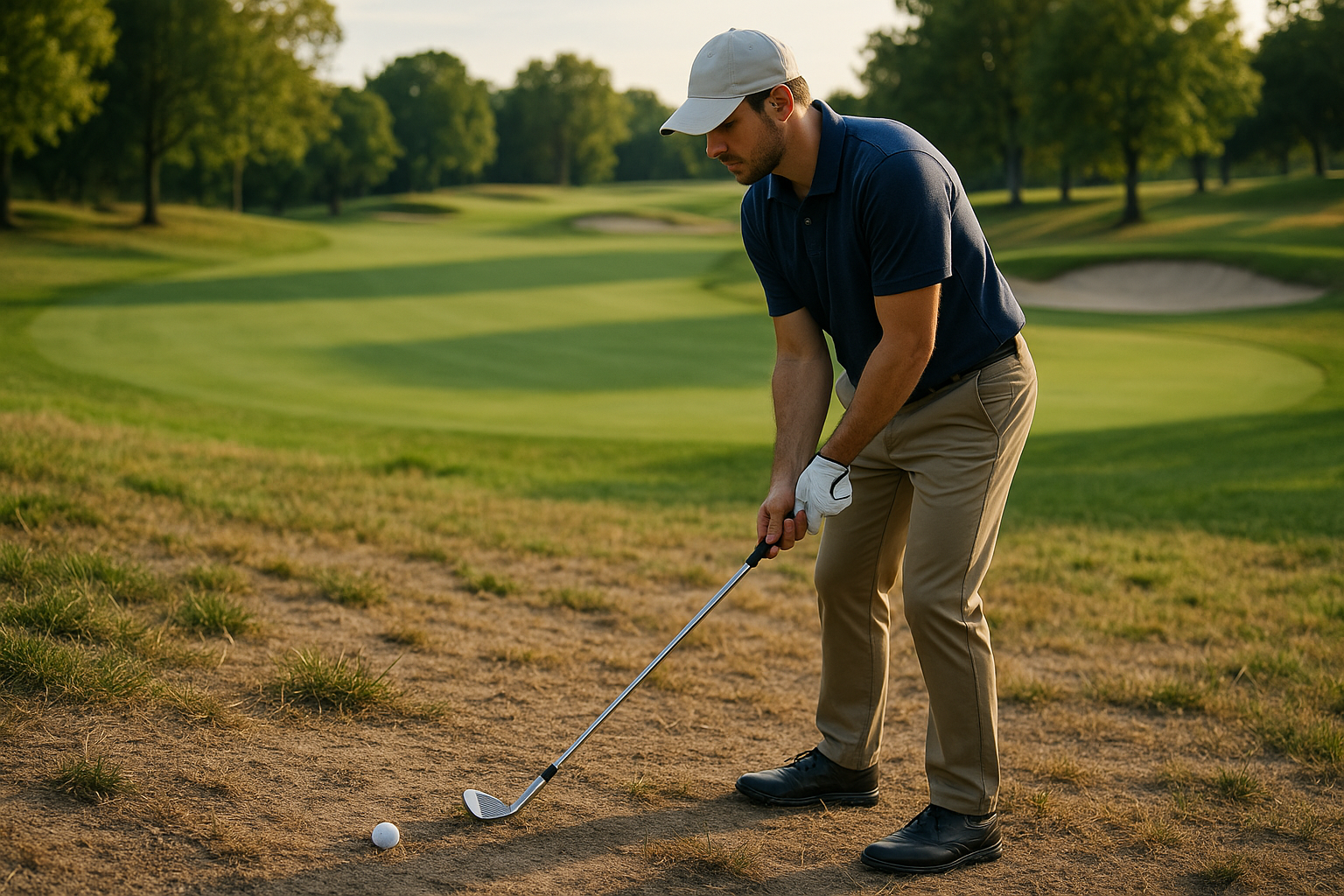
You find your ball sitting on a thin patch of grass, hard dirt, or a dry area beside the fairway. There is barely anything under it. You make a normal swing, expecting a soft iron shot, and the ball rockets across the green—or flies over it entirely.
Bare lies are not impossible, but they punish golfers who try to lift the ball into the air. The safest approach is to make clean contact with the ball first and let the club’s loft do the work.
Why Bare Lies Are So Difficult
On a normal fairway, grass gives the club a little room for error. If the club brushes the ground slightly behind the ball, the grass can prevent the club from digging too deeply.
A bare lie offers no such protection. The ground is firm, so the club can bounce into the ball if the sole strikes the ground first. That produces a thin shot, a low bullet, or a shot that travels much farther than expected.
There is also a mental trap. Golfers often see a poor lie and try to help the ball into the air by scooping or lifting the hands through impact. That usually makes contact less predictable.
Use Less Loft Than You Think
From a bare lie, many golfers automatically reach for a high-lofted wedge. That can be a mistake. A wedge has a wide sole and significant bounce—the angle on the bottom of the club that helps it glide through soft turf. On firm ground, too much bounce can cause the club to rebound into the ball.
Instead, consider a club with slightly less loft:
- Use a 7-iron or 8-iron when you might normally choose a 9-iron.
- Use a pitching wedge instead of a sand wedge when the shot allows it.
- A lower-lofted club can help create a more controlled, predictable flight.
You are not trying to hit the ball high. You are trying to get it safely moving toward the target. A lower shot that runs onto the green is often better than a high shot that finishes over it.
Make Three Simple Adjustments
1. Move the ball slightly back
Position the ball about one ball-width farther back than usual. This encourages contact with the ball before the ground and helps prevent the club from bouncing into it.
2. Stand with stable pressure
Keep your weight balanced, with a little more pressure on your front foot. Do not lean dramatically toward the target, but avoid hanging back. Excessive weight on your back foot encourages a shallow, scooping motion.
3. Make a shorter swing
A three-quarter swing is usually more reliable than a full-power swing. Keep the backswing controlled and finish with your chest facing the target. The goal is solid contact, not maximum speed.
Do not try to pick the ball cleanly with a rigid, arms-only motion. Make your normal swing with a slightly shorter length and a controlled finish.
Check the Lie Before Choosing the Shot
Look closely at the ground around the ball. Is it completely bare, or is there a thin layer of grass? Is the ground firm or soft? Is the ball sitting up slightly, or is it pressed down?
If the ball is on hardpan and you must carry a bunker or water, consider whether the shot is worth the risk. Sometimes the smart play is to aim for the front of the green, choose a lower-risk target, or pitch back into a better position.
Remember that a bare lie can produce a lower launch and extra roll. Aim for the shot’s entire journey, not just where it lands. If the ball is likely to release 15 or 20 feet, land it short of the target.
Try This Practice Exercise
At the range, find a firm patch of ground or use a very short tee pushed almost completely into the turf. Hit ten shots with a 7-iron using a three-quarter swing.
- Move the ball slightly back in your stance.
- Keep your weight balanced toward your front foot.
- Focus on striking the ball first.
- Judge success by contact and direction, not height.
Once you can produce a controlled flight, repeat the exercise with a pitching wedge. This teaches you when the higher-lofted club is useful and when it creates too much bounce.
One Thing to Remember
From a bare lie, do not try to lift the ball—make clean contact and let the club’s loft create the shot.