
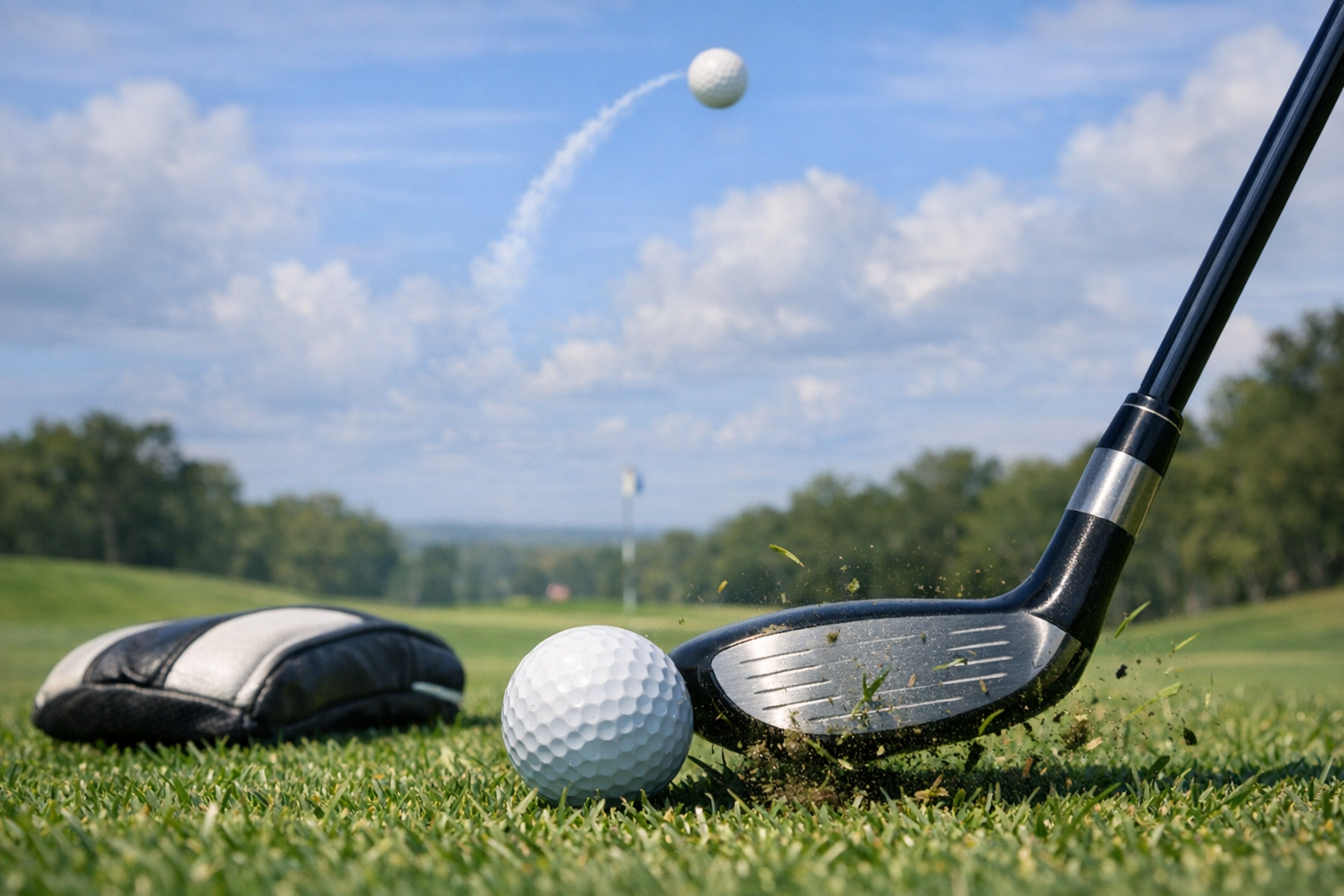
Why Your Hybrid Shots Balloon and Lose Distance
You make a comfortable swing with your hybrid, the ball launches high, and for a moment it looks perfect. Then it climbs, hangs in the air, and falls well short of your target. Sometimes the shot even curves left or right despite solid contact.
This is a common hybrid problem: the ball goes high without traveling forward. The good news is that you usually do not need a faster swing or a new club. A few setup and contact changes can help your hybrid produce a stronger, more useful ball flight.
Recognizing the Problem
A ballooning hybrid shot usually has a high starting flight, little forward penetration, and less carry than expected. You may also notice that the ball lands softly but does not roll much. On windy days, the shot can lose even more distance.
Check your strike before changing your swing. Use face spray or a dry-erase marker on the clubface. If contact is consistently low on the face or toward the heel, the club is not delivering its best energy to the ball.
Why Your Hybrid Ball Flight Gets Too High
The ball is too far forward
Many golfers play a hybrid like a fairway wood, positioning the ball near the inside of the front heel. That position can cause the club to reach the bottom of the swing too early. By the time it reaches the ball, the club may be traveling upward and adding loft.
The result is a high launch with less solid contact. For most golfers, a hybrid should be played slightly forward of the center of the stance, not as far forward as a driver.
You are trying to lift the ball
Because a hybrid looks like it should sweep the ball into the air, golfers often lean away from the target or try to scoop it upward. The club already has enough loft to launch the ball. Your job is to make a balanced swing and let the clubface do the lifting.
Leaning away from the target can move the lowest point of the swing behind the ball. That creates thin contact, extra spin, and a weak flight.
The club is adding dynamic loft
Dynamic loft is the amount of loft the club has at impact. If your hands are well behind the ball or the clubhead passes your hands too early, the hybrid can present more loft than intended. This often produces a shot that climbs instead of moving through the air.
Simple Fixes for a Stronger Hybrid Flight
- Move the ball back slightly. Start with the ball one or two inches forward of the center of your stance.
- Keep your chest centered. At address, feel pressure in both feet rather than leaning away from the target.
- Make a three-quarter swing. A shorter, controlled swing often improves contact more than trying to create extra speed.
- Feel the club brush the grass after the ball. You are not trying to hit down aggressively, but the bottom of the swing should be slightly in front of the ball.
- Finish balanced. If you fall backward or lose your posture, the club may be adding loft and missing the center of the face.
Your ideal ball position may vary depending on the hybrid’s length and your swing. If moving it back creates low hooks or heavy shots, move it forward a fraction. Make small changes and watch the strike and launch, not just the swing position.
Try This Drill: The Headcover Behind the Ball
Place a headcover about four inches behind the ball and slightly outside your target line. Address the ball normally, then hit shots without touching the headcover.
The headcover gives you feedback about the bottom of your swing. If you hit it, your swing is reaching its lowest point too far behind the ball or you are trying to scoop the shot upward. If you miss the headcover and strike the ball cleanly, your low point is moving forward.
Start with small half-swings. Once you can make five clean strikes in a row, increase to three-quarter swings. Successful shots should launch on a medium-high trajectory, start toward your target, and feel solid rather than floaty.
One Thing to Remember
A hybrid does not need help getting airborne. Play the ball slightly forward of center, keep your chest centered, and focus on solid contact with the club brushing the grass after the ball.