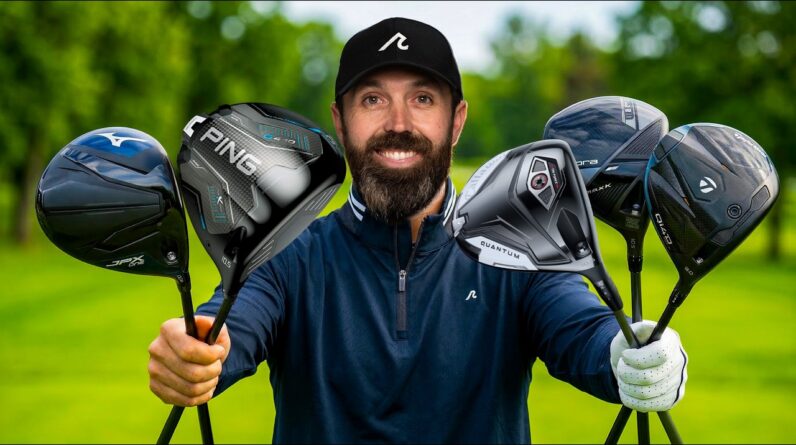

If I Was NEW To Golf, This Would Be My Golf Bag
Key principles for a beginner golf bag
When you’re new to golf, your bag should simplify practice, not complicate it. A well-balanced starter set prioritizes forgiveness, versatility, and value.The goal is steady progress: consistent contact, reliable misses, and a clear path to improving your distances as you learn swing fundamentals.
- Forgiveness first: choose clubs that help you hit straighter shots even on imperfect swings.
- Gaps matter: you want a logical yardage ladder to avoid big distance jumps between clubs.
- Feel and fit: grips, shafts, and head shapes should feel cozy in your hands and stance.
- Budget mindset: start with a practical bag, and upgrade as you see consistent improvement and needs.
Essential clubs for a beginner bag
Drivers and fairway woods
> The driver is your most significant long-play club, but it’s also the one that can cause the most dispersion if you’re not yet dialed in. For beginners, look for a forgiving driver with a larger sweet spot, adjustable features to learn with, and a shaft that suits your tempo. A 3-wood is optional but can help with fairways and long approaches as you gain confidence.
- Driver: 460cc head, perimeter-weighted, graphite shaft, lightweight swing weight.
- Fairway wood (optional): 3-wood or 5-wood with a forgiving profile to replace some long iron shots.
hybrid and long irons
> Hybrids are the bridge between fairway woods and long irons. Thay’re easier to launch with better turf interaction. For a beginner, one or two hybrids can compensate for inconsistent long-iron play and offer reliable distance control.
- Hybrid: Consider replacing 2- or 3-irons with a 17–19 degree hybrid for easy contact.
- Long irons: If you’re comfortable, a 4-iron or 5-iron can stay in the bag; otherwise, prefer hybrids.
mid irons and short irons
> A solid set of mid to short irons helps you dial in distance and accuracy for approach shots. choose cavity-back designs with a higher MOI (moment of inertia) for more forgiveness.
- 5- through 9-iron: Focus on forgiveness and consistency; look for a slightly larger sole and forgiving cavity back.
- Loft progression: Keep a logical loft gap (roughly 4–5 degrees between irons) to avoid large distance overlaps.
Wedges
> A single wedge isn’t enough for most beginners. Start with a pitching wedge and a sand wedge; if you only choose one, lean toward a pitching wedge with enough loft to elevate short approach shots and greenside chips.
- Pitching wedge (around 44–46 degrees) and sand wedge (around 54–56 degrees) as a practical starting duo.
- Consider a gap wedge later if you find your distance gaps become too wide between clubs.
Putter
> The putter is the one club you’ll use on every hole. A stable,confidence-building putter helps you convert distance control into lower scores. Try a face-balanced mallet if you tend to stroke faster; a blade can work well if you have a smooth tempo.
Starter bag configurations: budget-pleasant to mid-range
Below are two practical configurations you can adopt right away. Both are designed for beginners, with an emphasis on forgiveness, value, and room to grow. If you already own any of these clubs, feel free to mix and match. The goal is a coherent bag that’s easy to swing, promotes good contact, and covers essential distances.
Budget starter build
- Driver: 460cc forgiving model with a graphite shaft
- Hybrid: 1–2 hybrids replacing 2- and 3-irons
- Irons: 6–9 irons, cavity-back
- Wedges: Pitching wedge + sand wedge
- putter: center-shafted or heel-toe blade, depending on comfort
- Bag: Light, comfortable carry bag with decent straps
Mid-range upgrade path
- Driver: Adjustable or more forgiving model
- fairway wood: 3-wood or 5-wood for easier long game
- Irons: 5–9 irons with game-improvement design
- Wedges: 54° gap wedge added for more greenside versatility
- Putters: A model you genuinely enjoy looking over and lining up
- Bag: Durable stand bag with good storage and compartments
Practical tips for choosing gears that fit you
Fit and feel matter
Even a forgiving club won’t help if the grip size or shaft flex disagrees with your swing tempo.get fitted grips (or at least try several grip sizes in-store) and consider a shaft that matches your swing speed. A good fit reduces fatigue and improves shot dispersion, which is particularly helpful for beginners who are still learning.
Loft, bounce, and sole design
For wedges and irons, slight differences in loft and bounce can change your results dramatically. Beginners typically benefit from wedges with higher bounce to avoid digging into turf.when in doubt, choose cavity-back irons with a larger sweet spot and a forgiving sole profile.
Budget guidance and upgrades
Start with a practical bag and a single upgrade cycle per season if you play regularly. Track your performance over a couple of months and identify the gap that causes the most inconsistency—often it’s a combination of distance gaps and short-game accuracy. Upgrading the club that addresses that gap will yield the most noticeable improvement.
Table: Starter bag makeup — simple, clear guidance
| Club Type | Typical Distance range (for new golfers) | Key Benefit for Beginners | Recommended Feature |
|---|---|---|---|
| Driver | 150–230 yards (varies by individual) | Long distance with forgiveness | Large sweet spot; graphite shaft; adjustable settings |
| Hybrid | 120–200 yards | Easier turf interaction and launch | 2–3 hybrids to replace long irons |
| Irons (5–9) | 70–170 yards | Consistent approach shots | Cavity-back design with higher MOI |
| Wedges (PW, GW, SW) | 40–120 yards | Greenside versatility | Higher Loft, bounce appropriate for turf |
| Putter | N/A (on greens) | Consistent first putts | weight balance and stroke alignment |
case studies: first-hand experiences
Case Study 1 — The weekend player on a budget
Jordan is new to golf and plays about once a week. With a tight budget, Jordan built a basic starter bag: a forgiving driver, one hybrid, 5–9 irons, pitching wedge, sand wedge, and a reliable mallet putter. In three months of regular practice, contact improved, and distance gaps began to shrink. The simple club lineup helped Jordan focus on swing mechanics rather of chasing gear upgrades. The takeaway: start with a coherent set that matches your course and practice routine, not a “best-of” list you can’t afford.
Case Study 2 — The learner with limited practice time
Alex has a busy schedule.The bag that works best for Alex emphasizes consistency and playability: a driver with a forgiving profile, a single reliable hybrid, one set of irons, a compact pitching wedge, a sand wedge, and a putter that feels natural in the stance. Short-range practice, chipping, and putting sessions were prioritized to maximize improvement in a compact training window. The lesson: if time is scarce, build a bag that makes every practice session productive and repeatable.
Case Study 3 — The senior learner focusing on forgiveness
Mia started golf later in life and values ease of use. Mia’s bag centers on high-MOI irons, a forgiving driver, one or two hybrids, and a wedge set that’s comfortable to use from bunkers and the rough. With thoughtful practice and a smart bag, Mia gained confidence on the course and reduced fatigue. The message: forgiveness and confidence often trump raw distance when you’re starting out, especially if you prioritize a smooth, repeatable swing.
Maintainance, care, and speedy upgrades
A bag built for beginners should also be easy to maintain. Clean clubs after practice (especially after playing on wet turf), inspect grips for wear, and replace grips if they become slick. Keep an eye on headcovers and bag zippers. A single, purposeful upgrade per season—such as a graphite shaft driver or a single new wedge—can yield meaningful improvements without overwhelming your budget.
Common questions for new golfers about bags
- Q: Do I need a cart bag or a stand bag?
- A: Stand bags are versatile for practice and walking courses. If you ride a cart,a compact cart bag is enough,but ensure it has a good strap system and adequate pockets.
- Q: How many clubs should I start with?
- A: A practical starter set typically includes 8–12 clubs: driver, 1–2 hybrids, 5–9 irons, pitching wedge, sand wedge, and a putter. You can adjust based on comfort and budget.
- Q: Should I buy used or new?
- A: Used clubs can offer excellent value if inspected for wear. For beginners, focus on grip condition, shaft type, and overall club integrity rather than cosmetics.
- Q: How often should I upgrade?
- A: Plan upgrades when you consistently feel you’re outgrowing a club in terms of distance gaps or control.A yearly or biannual review is common for many players who practice regularly.
Rounding out your setup: accessories that help a beginner
- Gloves: one or two in rotation can help you find a consistent grip.
- Towel and cleaning kit: keep clubs clean to maintain grip and feel.
- Headcovers: protect your woods and hybrids during transport.
- Rangefinder or GPS watch: for understanding distances, but don’t over-rely on gadgets during actual play.
- Ball choice: choose a two- or three-piece ball designed for softer feel and straighter performance for beginners.
Checklist: what to bring on your first rounds
- your beginner bag fully assembled and checked (grips tacky, bag zippers functional)
- Two to three sleeves of golf balls suitable for beginners
- Tees in a comfortable length for your driver and irons
- Hat, sunscreen, water bottle, and a small towel
- Scorecard, pencil, and a plan for your practice routine (drives, mid-irons, short game, putting)
Conclusion: ongoing improvements without a heavy investment
This beginner-friendly golf bag blueprint emphasizes practicality, forgiveness, and growth. As you gain confidence and track your improvement, you can add a longer fairway wood, upgrade a wedge, or swap in a more refined putter. The key is to keep your bag coherent, easy to practice with, and aligned to your local course conditions. By focusing on the essentials first and upgrading thoughtfully, you’ll have a bag that serves you well from your first round to many seasons of golf.