Weight Transfer: The engine of consistent ball striking
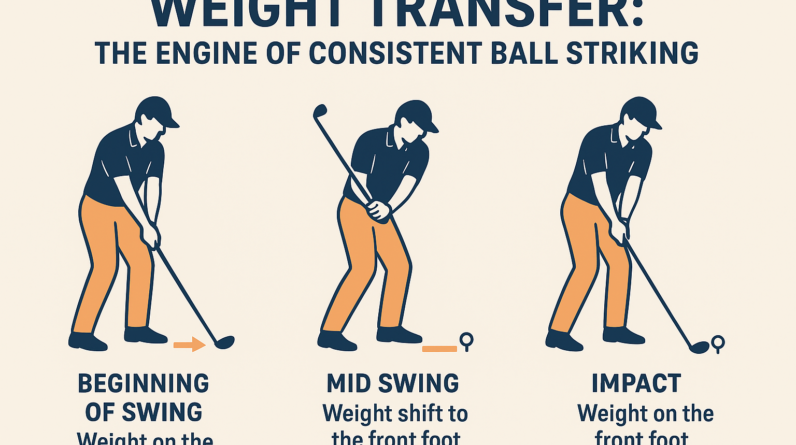
Your golf swing is powered by how you move your weight from the back foot to the front foot through impact. When weight transfer happens smoothly and at the right moment, you’ll make more solid contact, gain consistency, and produce cleaner ball flight. This post focuses on a single, critical aspect: weight transfer.
What the concept is
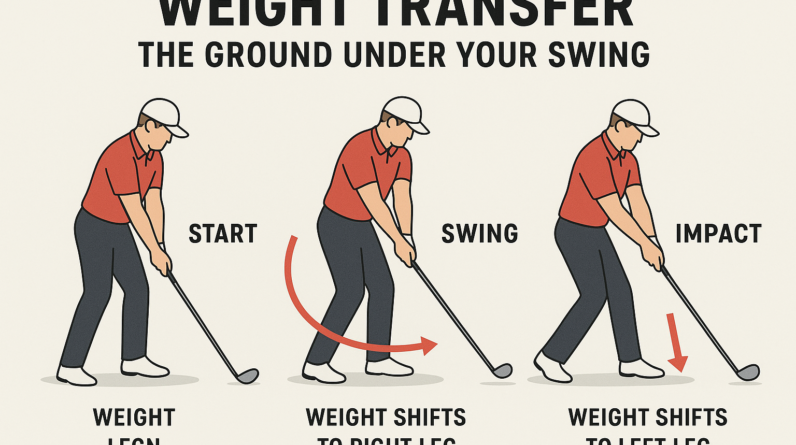
- Weight transfer is how you move your center of gravity from the trail (back) foot toward the lead (front) foot during the swing, especially from top of the backswing to impact.
- In a well-sequenced motion, the hips and torso rotate to help you guide pressure forward, and the feet, ankles, and knees support that shift without collapsing or hanging back.
- For most right-handed players, a successful impact position often features more weight on the lead foot than the trail foot, with the lead knee and hip actively guiding the move forward.
Why it matters to the golf swing
- Solid contact: Moving weight forward helps you strike the ball before your arms swing, reducing so-called “getting stuck” or early/ late strikes.
- Distance and control: Proper transfer increases forward shaft lean and clubhead speed through impact, promoting more consistent ball speed and trajectory.
- Path and face interaction: Weight forward supports a more predictable path and helps you close the face appropriately at impact, contributing to straighter shots.
What the golfer should feel when doing it correctly
- Feel your right (trail) hip and knee slowly guiding toward the target as you start the downswing.
- Pressure shifts from the middle of your right foot to the inside of your left foot as you approach and through impact.
- Your balance stays controlled; you don’t “fall back” or hang on the right foot. You finish with weight toward your left side and a solid, balanced finish.
- Mistake 1: Weight stays on the trail foot too long, causing a push or heavy heel strike.
- Fix: Imagine you’re stepping toward the target with your lead foot as you swing. Feel the weight gradually move onto the lead foot by impact; keep the trail leg (knee) flexible but not locked.
- Mistake 2: Weight shifts too early or too abruptly, disrupting sequencing and causing a loss of lag.
- Fix: Let the downswing initiate with the hips rotating and the body following, not by forcing the weight shift. Maintain steady, controlled transfer through impact.
- Mistake 3: The lead foot becomes a rigid platform, and balance is sacrificed at finish.
- Fix: Keep light foot contact with the ground and allow the weight to settle into the lead heel or instep as you finish. A relaxed, balanced finish is a sign you transferred weight well.
One easy practice drill you can do at home or on the range
Weight-Forward Half-Swing Drill (great for feel and timing). Do this with a mid-iron or a half-swing with a sand wedge.
- Set up as you normally would, but keep the swing to about 60–70% of a full swing.
- At address, distribute your weight slightly toward the trail foot. As you start the downswing, focus on shifting your weight forward and toward the lead foot, finishing with most of your weight on the lead side.
- Pause briefly at impact to check balance, then complete the swing to a comfortable finish. Repeat 8–12 reps, maintaining a steady tempo.
- Key cues: “step into the target,” “feel the weight move,” and “balance on the lead side.”
Practice plan: 2–3 sessions this week, 8–12 reps per session, with a clear focus on the forward shift. If you notice heavy contact or tipping back, ease up and redo with slower tempo and a shorter swing.
Consistency in ball striking often starts with a simple, repeatable weight transfer pattern. Use this focused approach to build a reliable sequence that translates into firmer contact and better control over your shots.
Weight Transfer: The Engine of Consistent Ball Striking
Weight Transfer: The engine of consistent ball striking
Your golf swing is powered by how you move your weight from the back foot to the front foot through impact. When weight transfer happens smoothly and at the right moment, you’ll make more solid contact, gain consistency, and produce cleaner ball flight.This post focuses on a single, critical aspect: weight transfer.
What the concept is
- Weight transfer is how you move your center of gravity from the trail (back) foot toward the lead (front) foot during the swing, especially from top of the backswing to impact.
- In a well-sequenced motion, the hips and torso rotate to help you guide pressure forward, and the feet, ankles, and knees support that shift without collapsing or hanging back.
- For moast right-handed players, a accomplished impact position often features more weight on the lead foot than the trail foot, with the lead knee and hip actively guiding the move forward.
Why it matters to the golf swing
- Solid contact: Moving weight forward helps you strike the ball before your arms swing, reducing so-called “getting stuck” or early/ late strikes.
- Distance and control: Proper transfer increases forward shaft lean and clubhead speed through impact,promoting more consistent ball speed and trajectory.
- Path and face interaction: Weight forward supports a more predictable path and helps you close the face appropriately at impact, contributing to straighter shots.
What the golfer should feel when doing it correctly
- Feel your right (trail) hip and knee slowly guiding toward the target as you start the downswing.
- Pressure shifts from the middle of your right foot to the inside of your left foot as you approach and through impact.
- Your balance stays controlled; you don’t “fall back” or hang on the right foot. You finish with weight toward your left side and a solid,balanced finish.
2–3 common mistakes golfers make with this concept
- Mistake 1: Weight stays on the trail foot too long, causing a push or heavy heel strike.
- Fix: Imagine you’re stepping toward the target with your lead foot as you swing.Feel the weight gradually move onto the lead foot by impact; keep the trail leg (knee) flexible but not locked.
- Mistake 2: Weight shifts too early or too abruptly, disrupting sequencing and causing a loss of lag.
- Fix: Let the downswing initiate with the hips rotating and the body following,not by forcing the weight shift. Maintain steady, controlled transfer through impact.
- Mistake 3: The lead foot becomes a rigid platform, and balance is sacrificed at finish.
- fix: Keep light foot contact with the ground and allow the weight to settle into the lead heel or instep as you finish. A relaxed,balanced finish is a sign you transferred weight well.
One easy practice drill you can do at home or on the range
Weight-Forward Half-Swing Drill (great for feel and timing). Do this with a mid-iron or a half-swing with a sand wedge.
- Set up as you normally would, but keep the swing to about 60–70% of a full swing.
- At address, distribute your weight slightly toward the trail foot. As you start the downswing, focus on shifting your weight forward and toward the lead foot, finishing with most of your weight on the lead side.
- Pause briefly at impact to check balance, then complete the swing to a comfortable finish. Repeat 8–12 reps, maintaining a steady tempo.
- Key cues: “step into the target,” “feel the weight move,” and “balance on the lead side.”
Practice plan: 2–3 sessions this week, 8–12 reps per session, with a clear focus on the forward shift. If you notice heavy contact or tipping back, ease up and redo with slower tempo and a shorter swing.
Consistency in ball striking often starts with a simple,repeatable weight transfer pattern. use this focused approach to build a reliable sequence that translates into firmer contact and better control over your shots.
Benefits of proper weight transfer
- Enhanced contact quality: A forward-leaning impact promotes a cleaner strike and reduces the chance of “blading” or “thinning” shots.
- Improved distance and trajectory control: Moving pressure forward through impact helps optimize shaft lean, increasing ball speed at the moment of contact.
- Better launch and spin dynamics: Proper weight transfer can promote a more penetrating ball flight and more consistent spin, aiding carry and roll.
- Consistent swing path: As you transfer weight smoothly, your pelvis and torso rotation help guide the downswing on a stable arc, reducing lateral sway.
- injury prevention and longevity: Efficient weight transfer reduces abrupt forces through the hips and spine, supporting a sustainable golf workout and practice routine.
Practical tips and cues for mastering weight transfer
- Use floor-based cues: Imagine your trail foot pressing into the ground, then gradually rising as you shift weight forward. Think of pressing from the inside edge of the trail foot toward the lead side.
- Tempo and sequence: initiate the downswing with your hips rotating toward the target, followed by the torso and arms. The weight shift should be a result of this sequence, not a forced action.
- Maintain knee flexibility: Keep the trail knee slightly flexed to absorb the transition. Don’t lock the knee or force full extension too early.
- finish balanced: A successful transfer ends with weight predominantly on the lead foot, but with a comfortable, stable finish rather than a rigid pose.
- Breath and tension control: Exhale through impact to stay relaxed. Tension around the jaw, shoulders, or wrists can hinder smooth weight transfer.
- Key phrases to verbalize: “step into the target,” “feel the weight move,” “stay balanced on the lead side,” and “drive through impact.”
Fast reference: Weight transfer cues table
| Cue |
What to feel |
| Step into the target |
Lead foot becomes the dominant base as you start the downswing |
| Feel the weight move |
Pressure shifts from the trail foot toward the lead foot through impact |
| Balance on the lead side |
Most weight on the lead heel or instep at finish, with a relaxed lead leg |
| Lead knee and hip guide forward |
stability and forward momentum without collapsing or hanging back |
Training progress: a simple 4-week plan
| Week |
Focus |
Drills & Reps |
notes |
| Week 1 |
Foundation and feel |
Weight-forward half-swings 8–12 reps, 4 days |
Emphasize slow tempo and balance |
| Week 2 |
Sequencing |
Full swings at 60–70% with emphasis on downswing initiation by hips |
Pause at impact briefly to check weight |
| Week 3 |
Consistency |
8–12 reps with a mid-iron, add a 10-minute tempo block |
Light on days with signs of fatigue |
| Week 4 |
Integration |
On-course practice, 20–30 minutes focused on weight transfer cues |
Record a few swings to compare carry and ball flight |
Case studies and first-hand experiences
Case Study 1: Small changes, big gains — A 22-handicap player struggled with inconsistent contact and a blocking miss to the right. After four weeks of focusing on the Weight-Forward Half-Swing drill and the down-sequence cues, their average carry distance increased by 12 yards, with a noticeable improvement in landing angle and tighter dispersion. The player reported feeling a clearer “start line” and less upper-body crowding at impact.
Case study 2: From overlap to balance — A mid-teen handicap golfer carried a tendency to hang back on the trail leg and struggled with late releases. Implementing the weight-transfer cues and the “step into the target” drill helped them shift weight earlier in the downswing, resulting in a more penetrating ball flight and fewer left-right deviations.After six weeks, they saw a measurable increase in fairway hits and a more consistent dynamic loft at impact.
First-hand experience: a coach’s perspective
As a coach, I frequently enough see players misinterpret weight transfer as a “push” with the lead foot. In reality, successful transfer is a coordinated, in-sequence action driven by rotational energy from the hips and torso. The weight shift should feel like a natural consequence of a well-timed downswing, not a forced step.When learners embrace the idea that the trail-to-lead transfer is the result of proper sequencing, contact improves, and the swing becomes more repeatable. The most dramatic improvements tend to come when players combine the drill work with mindful, relaxed practice that prioritizes tempo and balance over brute force.
Common mistakes (extras) and fixes
- Mistake 4: Over-rotation of the upper body without corresponding weight transfer, leading to a “blocked” shot.
- Fix: Allow the hips to lead the downswing and maintain a soft, connected trail leg to support the transfer.
- Mistake 5: Over-reliance on the lead foot after impact, causing a loss of footing and balance during the finish.
- Fix: Maintain light contact with the ground on the lead foot, and finish with a stable, athletic posture.
Through consistent practice,most golfers notice that weight transfer is less about forcing a move and more about enabling the body’s natural sequence. The right cues, a patient tempo, and a clear practice plan can make the transfer feel effortless while delivering meaningful gains in distance, direction, and consistency.
Practical tips recap for quick reference
- Start the downswing with hip rotation; let the body follow with the arms.
- Shift weight smoothly from the trail foot to the lead foot, aiming to be mostly on the lead side at impact.
- Maintain knee flex and avoid locking the trail knee.
- Finish with balance and relaxed hold, not a rigid pose.
- use targeted drills weekly to reinforce the right sequencing and timing.
By integrating the weight-transfer concept into your practice routine, you’ll create a reliable pattern that translates into firmer contact, more consistent trajectories, and improved scoring potential on the course. Remember, the goal is a smooth, repeatable transfer that supports solid contact at impact, not a dramatic shift that disrupts rhythm.