
Introduction
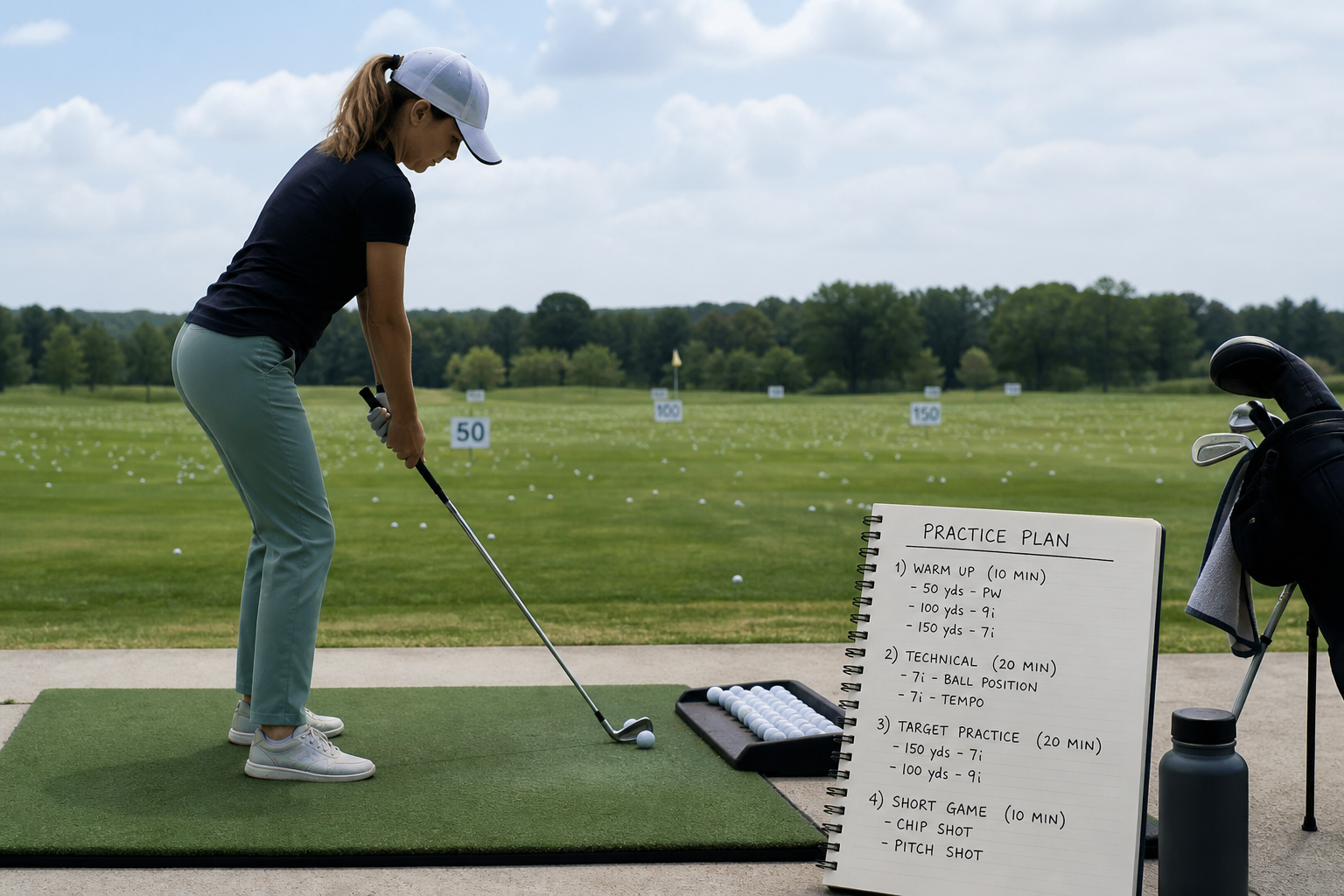
Practice is how beginners become confident golfers — but only if practice is purposeful. Hitting fifty balls with no plan can be entertaining and still leave you stuck. Structured practice, even for twenty or thirty minutes, builds skills that actually show up on the course.
The good news is you do not need to practice like a tour pro. You need a simple routine, realistic goals, and patience. This lesson gives you a framework you can use at the range, the practice green, or even at home.
What You're Going to Learn
- How to practice with intention instead of hope
- Where beginners should spend their practice time
- How to structure a short, effective session
- How to track progress without obsessing over every shot
Practice With a Goal
Before every session, ask yourself one question: What am I trying to improve today? Maybe it is making cleaner contact with your irons. Maybe it is lag putting. Maybe it is simply building a pre-shot routine you can trust.
Write the goal down or say it out loud. One goal is enough. When you have a clear focus, you stop chasing random fixes and start building repeatable habits.
Where Beginners Should Spend Their Time
Many new golfers spend ninety percent of practice time on full swings and almost none on short game. On the course, the opposite often matters more — especially early on. A balanced beginner split might look like this:
- 40% short game: chipping and putting
- 40% full swings: irons and controlled tee shots
- 20% skills and routine: alignment, grip checks, pre-shot routine
If you only have thirty minutes, spend fifteen on putting and chipping and fifteen on irons. Your score will thank you faster than another bucket of drivers alone.
Structure a 30-Minute Practice Session
Here is a simple template you can repeat twice a week:
- 5 minutes — warm up: stretch lightly, make slow practice swings, hit five easy wedge shots
- 10 minutes — putting: short putts first, then one lag putting drill from twenty to thirty feet
- 10 minutes — chipping: pick a landing spot on the practice green and try to hit it consistently
- 5 minutes — one full-swing focus: pick one iron and hit five to eight balls with one swing thought — like smooth tempo or balanced finish
End on a good rep if you can. Your brain remembers the last thing you do. Finishing with a solid chip or putt leaves you motivated to come back.
Quality Over Volume
Twenty focused shots beat a hundred rushed ones. Between swings, step back, breathe, and reset. Use the same routine you want on the course: pick a target, set up, commit, swing, evaluate.
If you feel tired, frustrated, or scattered, stop. Bad reps train bad habits. Short, fresh sessions a few times per week outperform marathon grind sessions where your technique falls apart at the end.
Practice at Home
Putt on carpet toward a mug, practice your grip while watching TV, or make slow-motion swings in the backyard. Home practice keeps your fundamentals sharp between range visits — and it costs nothing.
Why It Matters
Golf rewards consistent, thoughtful practice more than occasional heroics. Beginners who practice with a plan improve steadily, show up to the first tee calmer, and avoid the frustration of working hard without results. Good practice also makes lessons and instructional content stick — you are not just learning ideas, you are training your body to repeat them.
What Should It Feel Like?
Productive practice feels focused, not frantic. You should finish knowing what went well and what to work on next time. Some days will feel great. Others will feel clunky. Both are part of learning. What matters is whether you gave honest effort to a clear goal — not whether every ball was perfect.
Common Beginner Mistakes
Changing Something Every Session
It is tempting to try a new YouTube tip every time you practice. Constant changes never let one skill settle. Stick with one swing thought or one short-game focus for at least three sessions before you decide it is not working.
Measuring Success Only by Distance
Hitting it farther is exciting, but beginners improve scores faster through putting, chipping, and straighter iron play. Track how often you hit your target line or how many three-foot putts you make — not just how far your driver flew.
Skipping Practice When You Play
Playing rounds is fun, but it is not the same as practice. If you only play and never train, bad habits become permanent. Even one short practice session per week makes your weekend round more enjoyable.
Try This Simple Drill
Create a weekly practice log on your phone or in a notebook. After each session, write three lines: your goal, what went well, and one thing to focus on next time. Over a month, you will see patterns — maybe putting improves quickly while iron contact needs more reps — and you can adjust your time accordingly.
This takes two minutes and turns vague practice into a plan you can actually follow.
One Thing to Remember
Great golfers are built through small, consistent improvements — not one perfect range session. Pick one goal, practice with focus, and trust that steady work adds up.