
Introduction
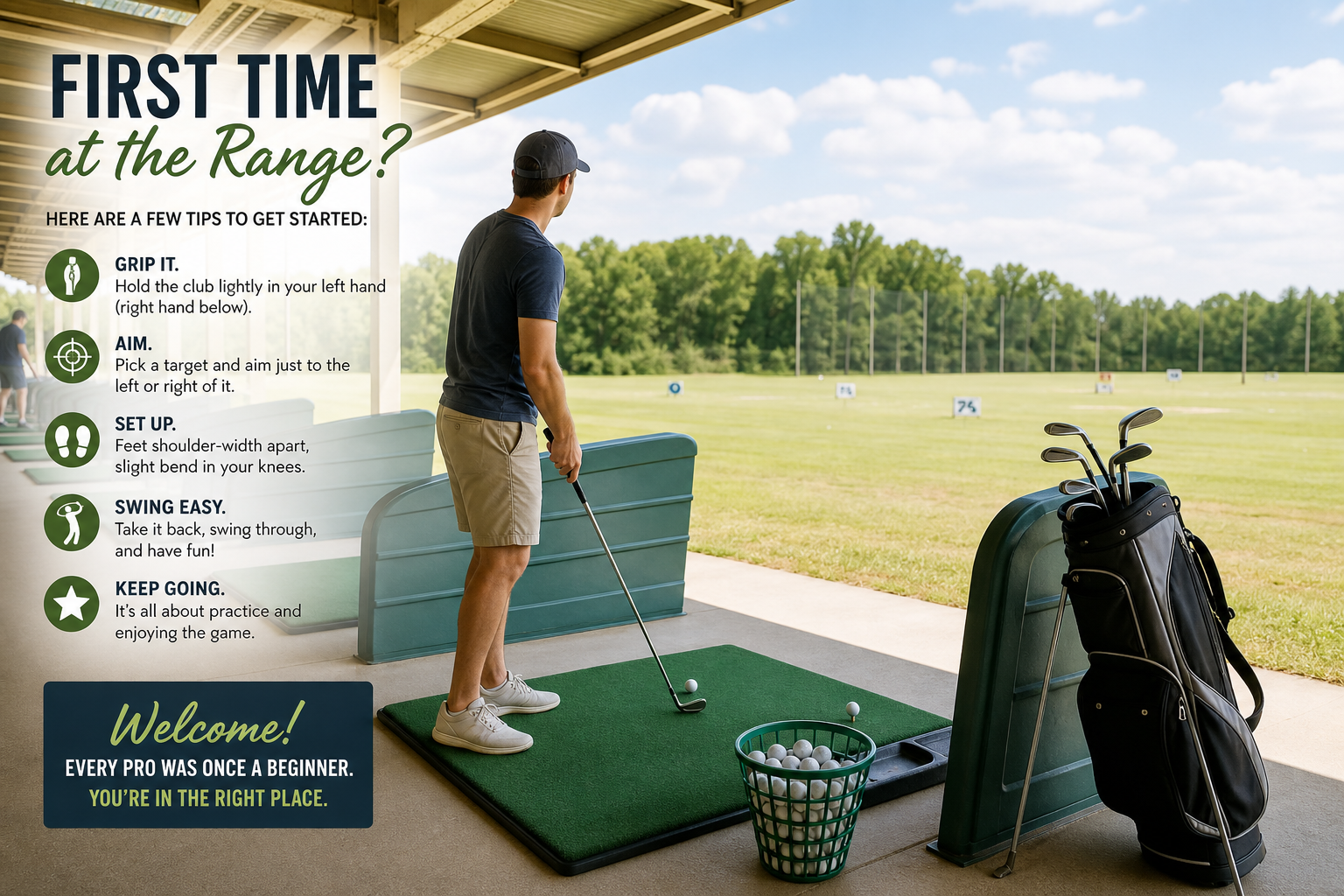
Your first trip to the driving range is a big milestone. It is where you get to hit real golf balls, hear the satisfying crack of contact, and start building the swing you have been learning. It can also feel a little intimidating if you are not sure what to do or where to go.
Relax — every golfer in those stalls was a beginner once. With a little preparation and a simple plan, your first range session can be fun, productive, and something you actually look forward to repeating.
What You're Going to Learn
- What to bring to the driving range
- How a typical range works
- Basic etiquette so you feel confident
- A simple practice plan for your first bucket
What to Bring
You do not need much for your first visit. Here is a practical checklist:
- Your clubs: start with a wedge, a mid-iron like a 7-iron, and maybe your driver — you do not need the full bag yet
- Golf balls: most ranges sell buckets, so you usually do not bring your own
- Comfortable shoes: athletic shoes or golf shoes with good grip
- Water: especially on warm days
- Golf glove (optional): helpful if you have one, but not required for your first trip
- Tees: many ranges provide them, but tossing a few in your pocket is smart
Wear clothes you can move in. The range is casual. Nobody expects you to look like a tour pro.
How the Driving Range Works
Check in at the front desk or use a machine to buy a bucket of balls. Grab your bucket, find an open stall, and set your balls in the tray. Ranges use grass tees or artificial mats — follow whatever setup your range uses, and tee the ball up on mats since the surface is less forgiving.
Range Etiquette: The Basics
- Hit only from your own stall, aimed at the targets in front of you
- Wait until the stall beside you is clear before you swing
- Do not walk onto the field to collect balls
- Keep a reasonable pace and return equipment when you finish
If you are unsure about something, watch what others do or ask a staff member.
A Simple Plan for Your First Bucket
Do not dump all your balls and start smashing driver. A focused plan beats mindless hitting every time. Here is a beginner-friendly order for a medium bucket:
- Warm up with half swings: use a pitching wedge or 9-iron. Make ten to fifteen easy swings to loosen up
- Build to a 7-iron: hit ten balls with a smooth, three-quarter swing. Focus on contact and balance, not distance
- Try a few drivers: tee the ball up and hit five to eight drives with the goal of making solid contact — not max power
- Finish with wedges: end with another ten short-iron shots to leave on a good note
Between shots, take a breath, reset your grip and posture, and pick a target. Quality beats quantity, especially on day one.
Why It Matters
The range is where practice becomes real. Lessons and videos give you ideas, but you need reps to build feel. Your first trip teaches you how far you hit each club, what a good shot feels like, and how to recover when things go wrong. It also builds the confidence to eventually play on a course.
What Should It Feel Like?
Your first range session should feel exploratory, not perfect. Some shots will be great, others messy — that is normal. Finish a little tired but encouraged, with one clear goal for your next visit.
Common Beginner Mistakes
Only Hitting Driver
The driver is fun, but it is also the hardest club to hit. Beginners who hit driver for an entire bucket often leave frustrated with nothing to show for it. Start with shorter clubs, build rhythm, and treat driver as dessert — not the whole meal.
Ignoring Setup
At the range, it is easy to slap down a ball and swing without aiming or settling into your posture. That creates bad habits. Treat every shot like it matters. Pick a target, set up carefully, and use the same routine you would on the course.
Judging Yourself Too Harshly
Your first bucket is not a performance review. Some balls will curve, some will top, and a few will feel amazing. Celebrate the good ones, note what caused the bad ones, and move on. Progress at the range is measured over weeks, not in a single visit.
Try This Simple Drill
Choose a target flag or yardage marker on the range. With your 7-iron, try to hit three balls in a row that would land within a reasonable distance of that target — do not worry about perfection. Focus on balance and finishing your swing facing the target.
After three decent shots, switch to a different target and repeat. This drill teaches you to aim, commit, and reset — skills you will use on every hole when you play for real.
One Thing to Remember
Your first range trip is about showing up, staying safe, and learning what to work on next. Keep it simple, be kind to yourself, and leave with one clear goal for your next visit.