
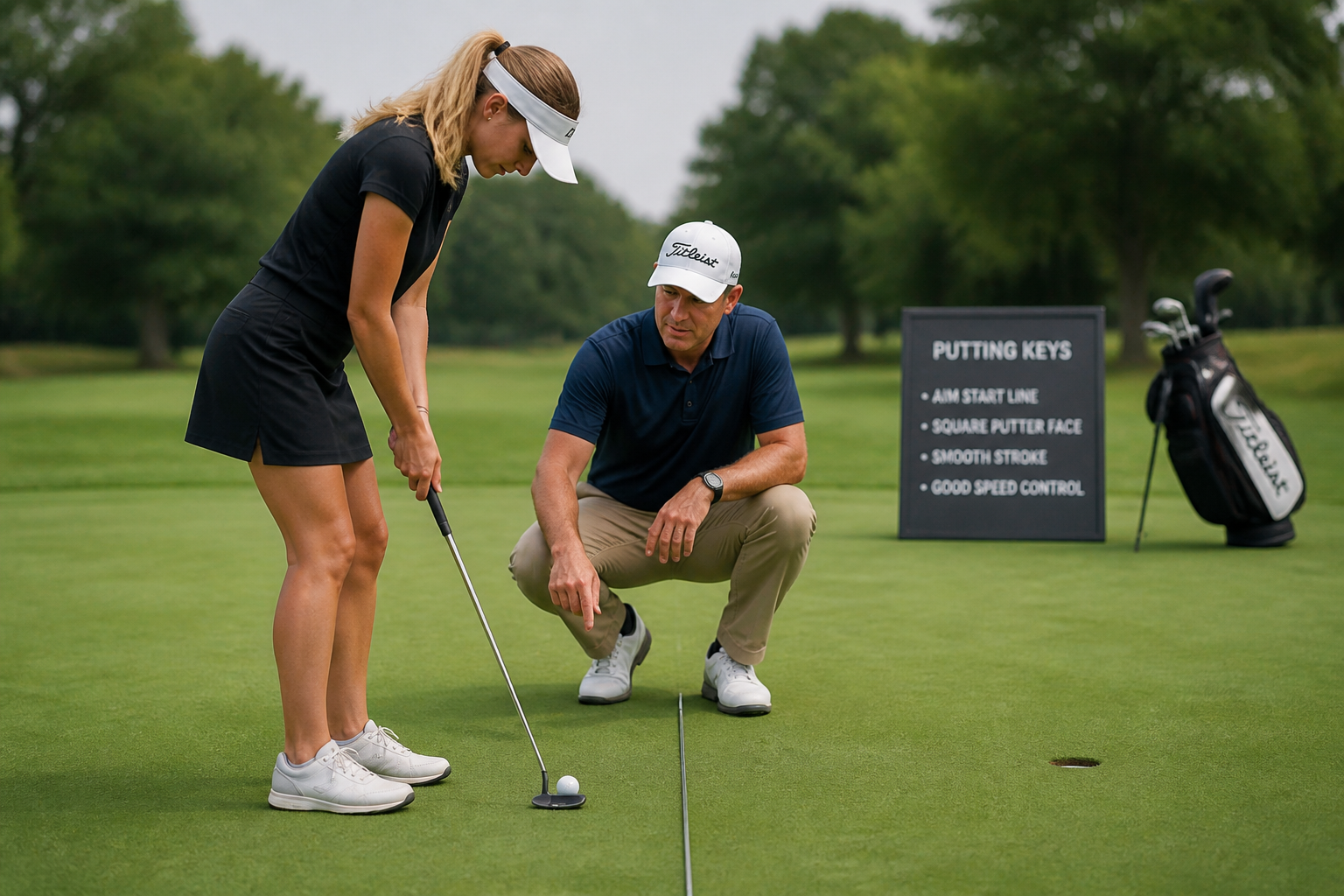
Introduction
Putting is the part of golf where the ball finally rolls into the hole — and it is where beginners can improve faster than almost anywhere else. You do not need speed or strength. You need a repeatable stroke, a calm mindset, and a simple way to aim.
If chipping gets you onto the green, putting finishes the job. Even on your very first round, solid putting can save you from frustration and make the game feel more fun.
What You're Going to Learn
- How to set up comfortably over the ball
- The basics of a smooth putting stroke
- Simple green-reading without getting overwhelmed
- How to practice putting as a beginner
Putting Setup: Keep It Comfortable
Stand with your feet about shoulder-width apart, roughly parallel to your target line. The ball should sit slightly forward of center in your stance — many golfers place it just ahead of the middle. Bend slightly from your hips so your eyes are roughly over the ball or just inside the line. This helps you see where you are aiming.
Hold the putter lightly. Your grip pressure should feel like a 3 out of 10 — firm enough to control the club, loose enough that your hands and forearms stay relaxed. Let your arms hang naturally. There is no need to crouch or freeze into a rigid pose.
The Putting Stroke
A good putting stroke is a pendulum motion driven by your shoulders, not your wrists. Rock your shoulders back and through while keeping your lower body quiet. The putter should move straight back and straight through along your target line, with a slight arc if that feels natural to you.
Distance control comes from the length of your stroke, not from jabbing at the ball. Short putts need a short stroke. Longer putts need a longer stroke with the same smooth tempo. Try to keep your rhythm steady — back and through at the same pace.
Aiming Without Overthinking
Pick a spot a few inches in front of your ball on your intended line. Align the ball to that spot, then align your putter face to it. Step back once, confirm your line looks right, and commit. Staring at the hole from twenty feet away while standing over the ball usually creates doubt. Trust your read and focus on rolling the ball over your chosen spot.
Reading Greens: Start Simple
Look at the slope as you walk up to your ball. Is the putt uphill or downhill? Does it break left or right? Crouch on the low side of the putt — the slope is often easier to see from there. Aim for the safe side of the hole so a miss leaves an easy second putt.
Why It Matters
You will use your putter more than any other club in your bag. Roughly half your strokes on a typical round happen on the green. Putting is also the easiest skill to practice — at home, on a practice green, or even on carpet with a mug as a target.
What Should It Feel Like?
Putting should feel smooth and unhurried. Your body stays still while your shoulders rock the putter. There is no tension in your hands or jaw. On a good putt, you hear a clean roll and watch the ball track along your line. Even when you miss, a solid stroke gives you useful feedback instead of random results.
Common Beginner Mistakes
Gripping Too Tight
A tight grip locks up your wrists and forearms, making it hard to feel distance. If your putts feel jerky or you lose control on short putts, loosen your grip. Breathe, soften your hands, and let the putter swing.
Peeking Too Early
Many beginners lift their head right after contact to see where the ball went. That tiny movement can pull the putter off line. Keep your eyes steady over the ball until you feel the putter pass through impact. The ball will tell you where it went soon enough.
Only Practicing Long Putts
It is fun to hit putts from across the green, but most strokes inside ten feet are short putts. Beginners improve fastest by practicing three-foot and six-foot putts until they feel automatic. Make those, and your score drops quickly.
Try This Simple Drill
Set up four balls in a circle about three feet from the hole. Try to make all four in a row — if you miss one, start over. When you can complete the circle consistently, move back to six feet and repeat with the same routine before every putt.
One Thing to Remember
Putting rewards patience and repetition, not power. A smooth stroke, a clear aim point, and a steady tempo will take you farther than any fancy technique.