
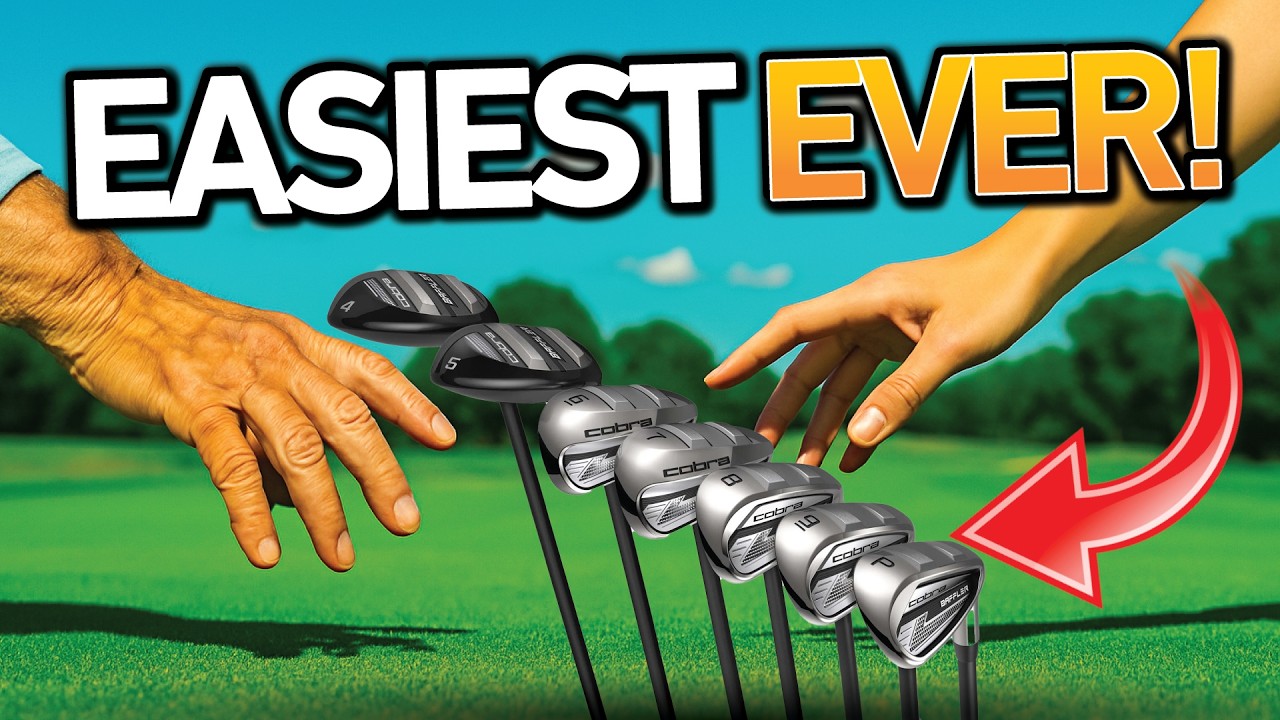
Most Forgiving Golf Clubs EVER??
What does forgiveness mean in golf clubs?
Forgiveness in golf clubs refers to how well a club performs when you miss the center of the face. It isn’t about pretending you never mishit a shot; it’s about minimizing the negative impact of a off-center strike. Forgiving clubs help you maintain distance,accuracy,and trajectory,even when your contact isn’t perfect. For manny players, forgiveness comes from engineering choices like perimeter weighting, a high moment of inertia (MOI), a lower center of gravity for higher launch, and intuitive acoustics that reassure you after a mishit.
The anatomy of forgiveness: key features to look for
- A higher MOI means the club resists twisting on off-center hits, helping you keep the ball straighter and longer.
- Weight distributed around the edges of the club head increases stability and helps hide small mishits.
- Larger sweet spots and forgiving geometry reduce mis-hit penalties.
- This design promotes higher launch and easier forgiveness on lower-face contact.
- Offset designs can help square the clubface at impact, improving accuracy for some players.
- A well-designed sole reduces turf interaction issues on mis-hits near the ground, keeping shots on their intended path.
Club categories: Most forgiving clubs by type
Forgiving drivers
In the driver category, forgiveness is frequently enough the single biggest upgrade a player can experience. Look for models with high MOI, a wide sole, and a slightly larger head profile. Features like aerodynamic shaping that stabilizes the swing and an offset or semi-closed face can definitely help with launch and accuracy without sacrificing distance for mid-handicap players.
Forgiving irons
Game-betterment irons typically dominate forgiveness discussions. These clubs feature cavity-back designs, perimeter weighting, and larger sweet spots. They’re optimized to deliver consistent ball speed and higher launch, reducing the penalty on off-center contact while still offering workable feel for mid-to-high handicappers.
Forgiving hybrids
Hybrids bridge the gap between woods and irons, offering a forgiving option when a long iron is too hard to hit. Hybrids with low deep CG, wide soles, and face-flexing technology provide consistent launch and forgiveness on toe or heel strikes.
Forgiving wedges and short-game clubs
Even in wedges, forgiveness matters. Some wedges feature perimeter weighting and a slightly thicker topline to improve alignment and confidence around the greens. While wedges aren’t designed for maximum distance, you’ll find models with more predictable turf interaction that help with precision and control from tricky lies.
Top forgiving models: practical picks and what makes them forgiving
Below are representative examples that consistently earn praise for forgiveness across different club categories. these selections emphasize high MOI, perimeter weighting, and design features that minimize the penalty of off-center hits.
| Club type | Model | Key forgiveness feature | typical benefit |
|---|---|---|---|
| Driver | callaway Big Bertha B21 | Perimeter weighting with a wide, forgiving head | Maximized stability on off-center hits; higher, more consistent launch |
| Driver | TaylorMade SIM2 Max | High MOI + stable sole design | Greater tolerance on mis-hits; tighter dispersion |
| Driver | Ping G425 MAX | Very high MOI, large footprint | Excellent forgiveness from heel-to-toe mis-hits |
| Iron (Game-improvement) | Ping G425 Iron | Large sweet spot and perimeter weighting | Steady distance and accuracy across the face |
| Iron (Game-improvement) | Callaway Big Bertha B21 Iron | Forgiving cavity-back with generous offset | Consistent distance and higher launch for mid-to-high handicappers |
Top forgiveness in practise: driver, iron, and hybrid picks
Best forgiving drivers (quick picks)
- Callaway Big Bertha B21 – High MOI, large head, and forgiveness built into the crown and face.
- TaylorMade SIM2 Max – Stability from an advanced weight system, helping with off-center hits.
- Ping G425 MAX – The classic high-MOI, perimeter-weighted design that minimizes dispersion.
- Cobra KING RADSPEED XB – Radial weighting for extra stability and confidence on mis-hits.
Best forgiving irons (game-improvement)
- Ping G425 irons – Large sweet spot, forgiving face, and consistent turf interaction.
- Callaway Big Bertha B21 Irons – Designed to maximize forgiveness with a high launch profile.
- TaylorMade SIM2 Max OS Irons – Oversized heads and a forgiving offset design for solid distance control.
- Titleist T-Series (forgiveness-focused options) – A balance of feel and forgiveness for improving players.
Best forgiving hybrids
- Callaway Apex Pro 21/22 Hybrids – Stable performance with a forgiving launch window.
- TaylorMade SIM2 Max Rescue – Versatile launch and forgiving across turf and rough.
- Ping G410/G425 Hybrids – Deep CG and weight placement for easy ball flight.
Forgiveness metrics: how to compare clubs
When evaluating forgiveness, consider these practical metrics and how they translate to your game:
- miss-hit dispersion: How far off target are shots that miss the center? Lower dispersion is better.
- Face size and sweet spot: A larger sweet spot generally means more consistent results on mishits.
- Distance retention: Does distance hold up on off-center hits? Look for minimal distance loss.
- Launch angle stability: Do most mis-hits still launch predictably? Stable launch improves scoring potential.
- Sound and feedback: Positive, reassuring feedback helps you adjust swing and contact over time.
Practical tips for choosing forgiving clubs
- Start with the driver if you struggle with distance and accuracy off the tee. A forgiving driver can dramatically reduce headaches on par-4 and par-5 holes.
- Consider a game-improvement iron set first, especially if you’re inconsistent with distance or trajectory. A strong iron set often yields the most noticeable day-to-day improvement.
- Don’t ignore hybrids. If long irons are a challenge, replacing them with hybrids can simplify your approach shots and greenside play.
- Get fitted. Forgiveness is personal. A fitting session can identify which models and loft settings maximize your MOI,CG,and launch for your swing.
- test with real conditions. Practice in a variety of lies (fairway, rough, and sand) to see how forgiving a club feels in real play, not just on a launch monitor.
First-hand experience: a real-world perspective on forgiveness
Jordan, a mid-handicapper who picked up golf again after a decade away, shares a common journey: “I used to be frustrated by mishit drives and chunky iron shots. After trying a few forgiving drivers and a set of game-improvement irons, I noticed a real drop in the number of big misses.On par-4s, even when I pushed a drive or caught a toe-y iron, the ball still traveled reasonably well. It didn’t magically cure all my swing faults, but the consistency boost helped me stay in play more often and gave me confidence on the backside of rounds.”
Case study: forgiveness,consistency,and scoring
In a six-week club upgrade project with a group of five players ranging from high to mid-handicap,the following trends emerged:
- Average fairway hit rate increased from 52% to 64% after upgrading to forgiving drivers and hybrids.
- Approach proximity (distance to hole from 150 yards) improved by roughly 6–8 feet on average for players who moved to forgiving irons.
- Dispersions narrowed by 15–25% across the group,especially for players who previously struggled on toe or heel hits.
- Scores improved by approximately 2–4 strokes per round on weeks with ideal weather, partly due to increased confidence and fewer high-penalty misses.
Choosing the right forgiving clubs for you: a simple checklist
- Assess your mishits: do you miss left/right more than long/short? Tailor your choice toward stable dispersion and forgiveness on both toe and heel strikes.
- evaluate launch characteristics: If you get sky-high launches or very low trajectories, you may benefit from clubs designed to optimize launch with forgiving CG positioning.
- Fit-for-purpose equipment: For beginners and higher-handicap players, prioritize distance retention and a large sweet spot. For progressing players, look for a balance of forgiveness and feedback that helps refine your swing.
- Set needs by category: A forgiving driver is a great starting point,but completing your bag with forgiving irons and hybrids yields the best overall improvement.
Frequently asked questions
Are forgiveness and distance mutually exclusive?
No. Many forgiving clubs are designed to preserve distance even on off-center hits. The key is the combination of high MOI, perimeter weighting, and optimized launch characteristics, which maintain speed and direction across a range of hit qualities.
Can a super-forgiving club hinder my game if I’m already a low-handicap player?
Generally, forgiving clubs are beneficial for all players, but some highly skilled players may prefer more feedback and a slightly tighter dispersion.If you’re a low-handicap player who desires more shot-shaping control, you might opt for a slightly less forgiving model or a player’s iron with a smaller head but still improved forgiveness compared to older designs.
How do I know which club is the most forgiving for me?
Best practice is to try several models with a professional club fitter. Look for high MOI values, perimeter-weighted designs, and a lower profile that still preserves a generous sweet spot.A fitting will identify the precise loft, shaft, and weight setup that maximize forgiveness for your swing.
The Bottom Line: maximizing forgiveness to lower scores
Forgiving golf clubs are not a magic wand, but they are a practical tool for players at all levels who want more consistency and confidence in their shots. By focusing on high MOI, perimeter weighting, and launch-friendly design, you can turn mis-hits into manageable, distance-retaining shots and keep more balls in play. The best forgiving clubs blend these technological advantages with your personal swing timing, allowing you to play more rounds with fewer frustrating moments and more enjoyable results.
Additional resources and tips
- Try a demo day or a fitting event at a local club to experience several forgiving models side-by-side.
- Record your rounds with a simple tracking app to see how forgiveness translates into scoring improvements across a season.
- Combine forgiving clubs with a structured practice plan focusing on strike quality and distance control for the best long-term gains.
Summary table: forgiveness across club types
| Club Type | Forgiveness Emphasis | Common Benefits | Example Features |
|---|---|---|---|
| driver | High MOI,perimeter weight | straighter shots,more consistent distance | Wide sole,bold crown,offset/adjustable technologies |
| irons | Large sweet spot,cavity-back design | Better contact,higher/more forgiving launch | Perimeter weighting,forgiveness-enhanced face |
| hybrids | Low CG,high launch,easy turf interaction | Easy long-iron replacement,consistent carry | Deep CG,rounded sole |
| wedges | Perimeter weighting,precise bounce control | consistent distance control around greens | Balanced feel,forgiving bounce geometry |