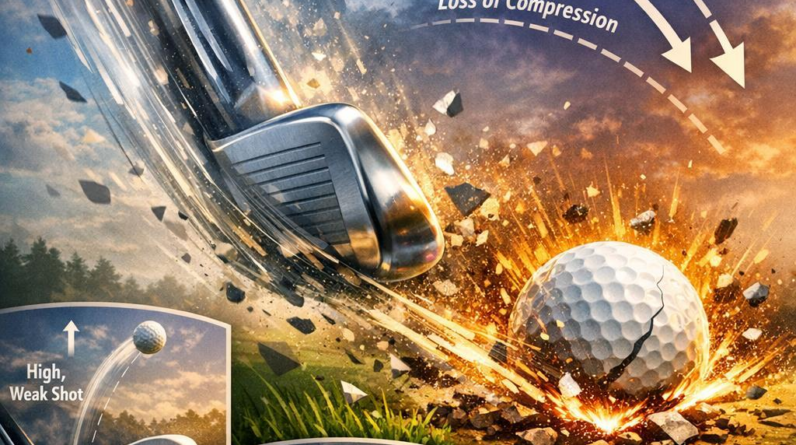

Open Clubface at the Top and Inconsistent Contact: A Complete Guide to Fixing Your Golf Swing
If you’ve ever looked at your ball flight and wondered why your shots seem to go left, right, or fade with uneven contact, you’re not alone. Many golfers battle an open clubface at the top of the backswing and struggle with inconsistent contact as a result. in this comprehensive guide, we’ll decode what it means to have an open clubface at the top, explain why it happens, reveal how it affects contact and ball flight, and share practical drills and tips that actually work. Weather you’re a weekend warrior or a budding player, this article will help you regain control of your clubface, squared impact, and more consistent ball striking.
Understanding what “open clubface at the top” means
In golf, the clubface’s position relative to your target at the top of the backswing sets the stage for the rest of the swing. An open clubface at the top means the face is rotated to the left (for right-handed players) relative to the target line. At impact, if the face remains open, you’ll often see shots that start to the right of your intended line or curve in unusual ways. This situation is closely tied to inconsistent contact—you might fat (hit too low on the club), thin (hit too high on the face), or strike the ball off-center because your body and arms aren’t coordinating the clubface properly through the downswing.
Why it happens: common causes of an open clubface at the top
Several interact to produce an open clubface at the top. Understanding the root causes helps you design targeted fixes rather than chasing symptoms.Here are the most common factors:
- grip and release timing: A grip that’s too weak or a late release of the wrists can leave the clubface open as you swing into the downswing.
- Wrist and forearm position at the top: If the lead wrist is cupped or the trailing hand loses tab-on control,the face orientation can point open relative to your target.
- Swing path interaction: A path that’s steep or outside-to-inside can make an open face look even more pronounced at the top and magnify misalignment at impact.
- tension and tempo: tense arms and a rushed transition frequently enough prevent the hands from delivering a clean, square face through impact.
- Posture and alignment: If your shoulders are misaligned or you’re standing too upright, the face can appear open as you reach the top.
- Ball position and equipment: Placing the ball too far forward or using overly upright shafts can affect how the face aligns at the top.
Impact on contact and ball flight
Open clubface at the top is not just a theoretical issue—it translates into real,measurable changes in contact and flight. Here are the typical outcomes:
- Inconsistent contact: You may experience fat shots, thin shots, or mis-struck punches because the face orientation disrupts your sweet spot timing.
- Ball flight variation: Shots can start to the right or fade, with less predictable curvature when the clubface doesn’t square up to impact.
- Distance loss: A face that’s open through impact frequently enough produces less efficient energy transfer, reducing distance consistency.
- Left-right dispersion: Without a stable face angle, your dispersion grows as your swing path and face orientation drift apart.
How to diagnose the issue on the range or at home
Diagnosing an open clubface at the top involves a combination of self-checks, drills, and sometimes video analysis.Here are practical steps you can take:
- Face alignment check: At address,use alignment sticks or a club to ensure the face is square to your target.Repeat with a mirror if needed.
- Slow-motion backswing: In a slow,controlled swing,pause at the top and observe the clubface relative to your spine and target line. If the face looks open,you’re on the right track for corrective work.
- Impact tape or spray: Place impact tape on the face to see where you’re striking the ball. An open face at top often correlates with inconsistent contact at impact.
- Video review: Record a down-the-line and face-on view. Look for face orientation at the top, wrist angle, and how the face aligns through the downswing.
- Grip and setup check: Reassess grip pressure and alignment. A too-tense grip or misaligned setup frequently contributes to a face that doesn’t square up at impact.
Drills and practise routines to fix an open face at the top and improve contact
The following drills are designed to address the core mechanics behind an open clubface at the top and the resulting inconsistent contact. Practice them in short blocks, focusing on quality over quantity.
1) the face-to-spine pause drill
- Take your normal address position with a neutral grip.
- Slowly take the club back, making sure the clubface tracks toward square to your spine—avoid early flipping or aggressive cupping.
- Pause at the top for 2 seconds, visualizing the face staying square to your spine angle and target line.
- Smoothly complete the downswing and return to impact, focusing on maintaining a square face through impact.
2) The two-ball drill for path and face control
- Place two balls on the ground: one slightly ahead of the other, aligned with your target line.
- With a slow takeaway,monitor your handle and face alignment,aiming to keep the clubface square to the target as you swing the first ball.
- As you reach the top, ensure the face is not overtly open and then swing through to the second ball, focusing on a clean strike and square contact.
3) The towel-under-arm connection drill
- Place a towel under your left armpit (for right-handed golfers). This promotes a connected swing and reduces excessive hand manipulation that can open the face.
- Make small, controlled swings, keeping the towel in place as you rotate to the top and through impact.
- Progress to full-speed swings as you feel the face remaining in a more neutral, square position at impact.
4) The impact tape feedback drill
- Apply impact tape or use a dona-friendly impact marker on the face.
- Hit a series of balls focusing on achieving a centered impact with the face oriented toward the target at contact.
- Review the markings to ensure the face is not consistently open at impact, which often correlates with the top-face orientation.
5) Grip reset and neutral posture drill
- Reassess grip pressure to a light, cozy hold—avoid gripping too tightly.
- Practice a few half-swings with a focus on keeping the face square to the target through the top and into impact.
- Gradually reintroduce full swings while maintaining the neutral grip and square-face awareness.
Practical tips for ongoing enhancement
- Consistency over force: Prioritize a smooth, repeatable swing over trying to smash the ball.A controlled tempo reduces the tendency to flip the face open at the top.
- Check your ball position: If the ball is too far forward, the club may reach the top with the face angled open relative to the line. Experiment with ball position by a small amount to see if contact improves.
- Focus on alignment and spine angle: Keep your spine angle steady throughout the swing. A loss of spine angle can cause the face to appear open at the top and mislead the path at impact.
- Relax the grip: A relaxed grip reduces tension that can cause early wrist release and an open face through impact.
- Video feedback: Work with a buddy or coach to review video footage weekly. Small adjustments often compound into big gains.
- Progressive practice: Start with slow, deliberate swings and gradually increase speed while maintaining face control.
case studies and first-hand experiences
Real-world examples can illustrate how these concepts translate to on-course results. Here are two concise scenarios based on common patterns seen at the range and on the course:
Case Study A: the open face at the top causing rightward miss
A 42-year-old recreational player noticed a persistent push-to-the-right with a mistimed fade. Video analysis showed the clubface was indeed open at the top, and the player’s grip tended toward the weak side. After resetting the grip to a neutral position, incorporating the pause-at-top drill, and integrating the towel-under-arm connection drill, the player reported improved contact and a more consistent ball flight within two weeks. The key takeaway is that identifying the face orientation at the top guided a targeted corrective plan, rather than chasing generic swing fixes.
Case Study B: Inconsistent contact tied to path and face interaction
Another golfer struggled with both fat and thin shots, especially with longer irons. Analysis revealed an outside-to-inside path that frequently enough left the face open at impact. The coach introduced the two-ball drill and a grip-neutral routine, then gradually added tempo-focused practice. Within a month,the golfer experienced fewer mis-hits and a more predictable strike pattern,with more square contact at impact.
Benefits of fixing open clubface at the top and inconsistent contact
- Improved ball-striking consistency and strike location
- More predictable ball flight and distance control
- Better on-course scoring opportunities due to tightened dispersion
- Reduced swing-tension and increased confidence during rounds
Common questions (FAQ)
- Q: Can I fix an open clubface at the top quickly?
- A: Rapid fixes are possible with focused drills, but lasting change usually requires a structured practice plan over several weeks. Consistency is the key.
- Q: Shoudl I adjust my grip or swing path first?
- A: Start with the grip and setup, then address swing path and face awareness. Small, progressive changes tend to yield better results than large, abrupt adjustments.
- Q: Can equipment changes help?
- A: Sometimes. Ball type, shaft flex, and lie angle can influence the feel and behavior of your clubface. Consult a pro for a personalized equipment check if you suspect equipment is contributing to the issue.
Table: Quick reference for faults and fixes
| Fault | Effect on contact | Fix |
|---|---|---|
| Open clubface at the top | Inconsistent contact; rightward start; weak impact | Neutral grip, pause at top, check face alignment, use towel-under-arm drill |
| Path outside-to-inside | Steeper impact; misalignment | Two-ball drill; improve swing path awareness; align face to target |
| Excess wrist flip | Open face through impact | Grip-neutralize; practice pause-and-hold at top |
| Tension and tempo issues | Inconsistent contact and pressure | Relax grip; slow-motion practice; progressive speed |
| Ball position miscue | Face orientation changes at contact | Realign ball position; test forward and back variations |
Conclusion: Start with awareness, finish with consistency
Open clubface at the top and inconsistent contact are connected phenomena—one often signals the other. By understanding the root causes, you can design a targeted practice routine that improves face control, contact consistency, and ball flight. The Key actions are:
- Assess grip, setup, and alignment for a neutral starting point.
- Incorporate drills that isolate face orientation: pause at the top, towel-under-arm, and two-ball path drills.
- Use impact feedback and video review to guide progress and maintain accountability.
- Adopt a relaxed, repeatable tempo and gradual speed progression to reinforce new habits.
with patience and deliberate practice, you’ll notice your open clubface at the top diminishing, and your inconsistent contact giving way to a more reliable, repeatable golf swing. if you want personalized coaching or a tailored drill plan, consider booking a session with a PGA professional who can assess your grip, path, and face orientation in real time and guide you toward a square face at impact and a steadier ball-striking pattern.