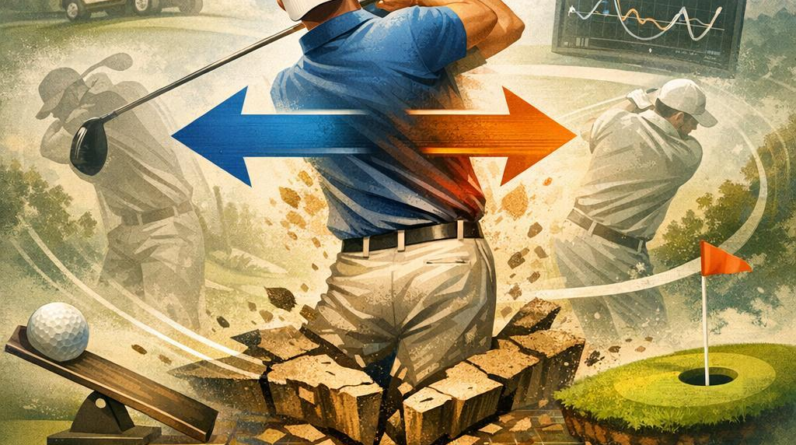

Reverse Pivot and Why It Kills Power: A Complete Guide for Athletes
Power to move quickly and efficiently comes from a well-timed, well-sequenced pivot. When that pivot goes in the wrong direction, it can drain speed, reduce force, and leave you feeling flat at impact. This article delves into the reverse pivot—what it is, why it kills power, how to identify it, and practical drills to fix it.Whether you’re a golfer, tennis player, baseball hitter, or sprinter, understanding reverse pivot can help you unlock more speed and consistency.
What is a reverse pivot?
A reverse pivot occurs when the hips rotate in the opposite direction of the intended power sequence during a swing or rotational movement. In many sports, the ideal motion uses a forward, linear transfer of energy from the ground up through the hips and torso to the upper body. A reverse pivot interrupts that sequence: the hips spin too soon or too aggressively in the wrong direction, the torso unwinds later or in an overly constrained way, and the weight shifts away from the target. The result is a loss of stored elastic energy and suboptimal torque at impact.
Key mechanics to recognize
- Early hip rotation in the opposite direction of the intended swing path
- Excess weight transfer to the back foot or an over-rotation of the trail leg
- Torso and shoulder alignment that fights the target line rather than follows through smoothly
- loss of ground reaction force (GRF) transfer through the feet
- Decoupled upper and lower body timing – poor sequencing
Why reverse pivot kills power
Power in athletic movements, whether swinging a bat, a club, or a racket, comes from the kinetic chain: ground reaction forces drive up through the legs, hips, torso, and finally the arms and implement. When a reverse pivot happens, several power-killing mechanisms kick in:
Energy is released too late or in the wrong direction, so peak force doesn’t meet the impact window. Muscles and tendons store energy during the loading phase; a reverse pivot dissipates that energy rather of storing and releasing it efficiently. Torque produced by the hips isn’t aligned with the intended arc, reducing clubhead, bat, or racquet speed. The wrong weight transfer reduces push-off from the ground, leading to slower acceleration. A misaligned path creates a longer deceleration phase before impact, sapping speed.
Biomechanics in simple terms
Think of the body as a spring-muse system. When you load correctly, your hips and legs store energy like a coiled spring. The energy then unwinds in the correct direction,transferring through the torso to the arms and implement. A reverse pivot disrupts this chain, causing premature rotation, improper hip-to-torque transfer, and a flattish or decelerated moment at impact.
Symptoms and how to detect reverse pivot
Spotting a reverse pivot early can save you from months of power leaks. Look for these signs:
- Your hips open toward the target faster than your shoulders or arms in the downswing.
- Weight shifts too far onto the back foot during the loading phase and does not transfer cleanly forward.
- Wooden or delayed trunk rotation relative to hip movement, resulting in late contact.
- Loss of clubhead speed or racket speed at impact with inconsistent ball flight.
- Feeling like you’re “fighting” your own body to square the face or racquet at impact.
Common causes of reverse pivot
understanding the root causes helps you select the right fix. Common culprits include:
An overly narrow or overly wide stance can encourage improper hip angle and rotation direction. Poor alignment to the target or grip that promotes an aggressive upper-body pull can trigger a reverse pivot. If the hips start rotating before the arms and torso dominate the swing path, energy is misdirected. Muscular imbalances or tiredness can shift the pivot direction unintentionally. Incorrect shaft lean, club length, or ball position can force compensations that promote reverse pivot.
Drills and practical fixes to correct reverse pivot
below are accessible drills designed to promote proper sequencing, improve hip-shoulder connection, and restore forward energy transfer. Practice with intent, and gradually integrate into your regular routine.
1) Toe-Tap Drill for sequencing
- Set up in your normal stance with light balance on the front foot.
- As you initiate the swing, briefly tap the back toe on the ground to cue correct weight transfer to the front foot before the hips rotate.
- Gradually increase swing speed while maintaining the toe-tap cue to reinforce the correct order: legs → hips → torso → arms.
2) Wall-Drive Drill to lock in hip timing
- Stand perpendicular to a wall with your lead shoulder facing it.
- Place a small ball or marker between your hips and the wall. As you rotate, ensure your hip movement does not collapse toward the wall; rather, you push through the ground to drive the swing forward.
- This helps emphasize forward momentum and prevents early reverse pivoting.
3) Hip-Flexion and torso-Tracking Drill
- Set up with a gentle knee bend and a relaxed spine angle.
- During the downswing, track your hips to lead the rotation while your shoulders and arms follow in sequence.Use a mirror or video to confirm the hip-first movement.
- Progress to full speed once you’re consistently maintaining forward pivot.
4) Cable or Band Resistance Drill
- Attach a resistance band to a stable anchor near waist height.
- Hold the band with the trail hand and perform a diagonal rotate toward the target, ensuring the hips lead and the torso follows without reverse rotation.
- Gradually increase resistance to build motor memory for proper sequencing.
5) Simple impact-check drill
- Take a light swing with a focus on striking the ball (or impact pad) with the momentum forward rather than backward rotation.
- Pause briefly at impact to confirm that the hips are closing toward the target and that the weight stays driven forward.
Practical tips to prevent reverse pivot in daily training
- Focus on forward pressure: imagine pushing the ground away with the lead foot to initiate the sequence, not pulling with the upper body.
- Use slow-motion practice to ingrain timing. Slow, deliberate reps help your nervous system learn the correct sequence before speed increases.
- Video analysis: shoot a simple side view to verify that hips lead and shoulders follow in the correct order.
- Consistency is king: perform the same warm-up and drills in the same order to develop reliable motor memory.
- Strength balance: incorporate hip hinge, glute bridges, and trunk stability work to support proper pivot mechanics.
Case studies: real-world examples of reverse pivot issues
Case studies illustrate how small mechanical changes can produce big power gains. Here are two simplified examples:
Case Study A: Golf swing and reverse pivot
A recreational golfer noticed a drop in drive distance and inconsistent ball flight. Video analysis showed early hip rotation toward the target, with the trail foot flattening and the shoulders opening ahead of the hips. After integrating toe-tap and wall-drive drills, along with daily mini-swing practice emphasizing sequencing, the golfer regained 8-12 yards on average and reported more consistent ball flight within four weeks.
Case Study B: Tennis forehand stability
A club-level player experienced erratic forehands and lower pace due to a reverse pivot during the forehand wind-up. By focusing on hip-led rotation and torso tracking, and using resistance-band drills, the player achieved more stable contact, higher ball speed, and improved shot-to-shot consistency within a couple of practice cycles.
Firsthand experience: what athletes say about reverse pivot
Many players report that once they identify the reverse pivot, the path to improvement becomes clearer. Common feedback includes:
- “I felt the energy get wasted before it reached my arms.”
- “When my hips lead, I can feel the ground driving my swing.”
- “Slow motion helped me connect the dots between hip rotation and impact.”
Table: Speedy diagnosis and fixes
| Symptom | Likely Cause | Fix |
|---|---|---|
| Early hip rotation toward target | reverse pivot or mis-timed sequencing | Drills: toe-tap, wall-drive; cue: lead with hips, slow down impact |
| Weight staying on back foot | Inefficient weight transfer | Feel push into the ground; practice with light steps toward target |
| Late trunk rotation | torso lagging behind hips; upper body overcompensates | Torso-tracking drills; pause at impact to ensure sequencing |
Table: Drills at a glance
| Drill | Focus | How to do |
|---|---|---|
| Toe-Tap Drill | Sequencing | Hit with a small toe tap cue to maintain weight transfer forward |
| Wall-Drive Drill | Hip lead | Keep hips moving toward target while torso follows; avoid over-rotating toward wall |
| Hip-Flexion Drill | Hip-first rotation | Practice hips driving rotation; monitor with mirror or video |
Benefits of a proper pivot
- Increased clubhead or racquet speed through better energy transfer
- Improved accuracy and consistency due to cleaner sequencing
- Greater acceleration from the ground up, reducing injury risk by promoting balanced mechanics
- More efficient power with less energy leakage, enabling better endurance during long sessions
Frequently asked questions (FAQ)
Q: Can a reverse pivot be fixed quickly, or does it require long-term training?
A: It varies by athlete, but many players notice improvements within a few weeks of focused drills and mindful practice. Consistency is key.
Q: Are there sports where a slight reverse pivot might be beneficial?
A: For most rotational sports, the optimal path is a forward, controlled sequence. However, some athletes may temporarily adjust pivot during specific plays. The goal is to maintain overall power transfer and control.
Q: Should I work with a coach or use video analysis?
A: Yes. A coach or experienced player can provide cues, and video analysis helps you see the exact sequence and timing, making it easier to correct reverse pivot patterns.
Q: What role does footwear or surface play in pivot mechanics?
A: Footwear and surface can influence stability and traction,which affect weight transfer and pivot quality. Use appropriate footwear for your sport and training surface to support solid mechanics.
Conclusion
The reverse pivot is more than a quirky swing fault—it’s a real blocker to your athletic power. By understanding the mechanics, recognizing symptoms, and applying targeted drills, you can restore efficient energy transfer, improve speed, and enjoy more consistent performance. Remember, the goal is to optimize the kinetic chain: push off the ground with the lead leg, let the hips lead the rotation, and allow the torso and arms to follow smoothly toward the target. With deliberate practice, feedback, and patience, you can transform a reverse pivot into a powerful, repeatable pivot that amplifies your performance across sports.