
Introduction
There is no feeling in golf quite like hitting the ball solidly — the club connects cleanly, the ball jumps off the face, and you know you did something right. Many beginners experience the opposite: shots that feel thin, fat, or inconsistent. Making solid contact is the number one challenge for most new golfers, and it starts with a few simple ideas — not swinging harder.
What You're Going to Learn
- What solid contact actually means
- Why the club must hit the ball before the ground
- Why trying to lift the ball is a common beginner trap
- How setup and swing help you strike the ball cleanly
- One primary thought for better contact
What Is Solid Contact?
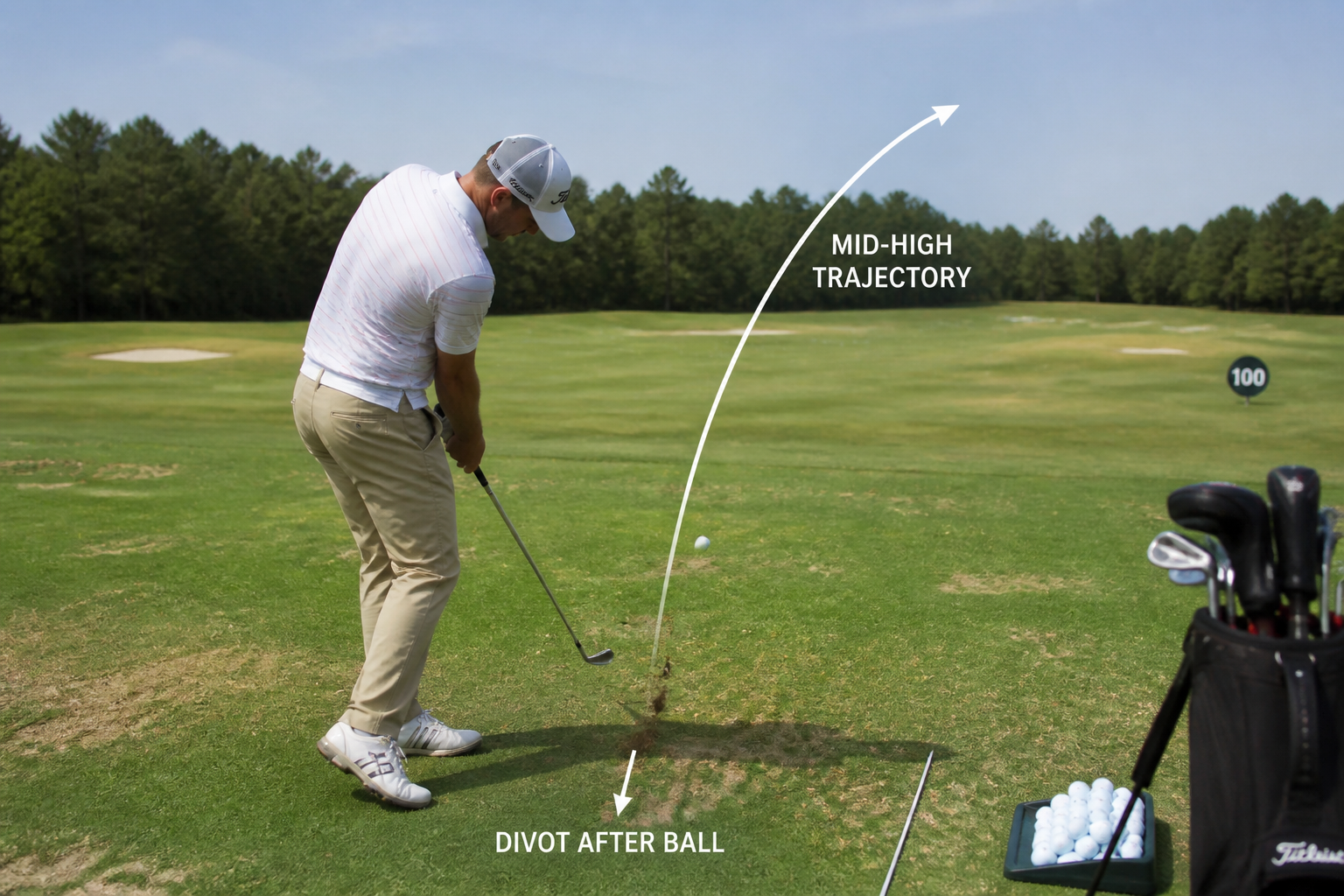
Solid contact means the clubface meets the ball cleanly at the right moment. For most iron shots, the club hits the ball first, then brushes the ground. This is called hitting down on the ball — the club is still moving downward when it reaches the ball.
Here is something that surprises many beginners: the club is designed to get the ball in the air. You do not need to scoop or lift it with your hands. The loft — the angled face of the clubhead — sends the ball upward when you make solid contact.
Poor contact produces dribblers, low flyers, or a stinging feeling in your hands. Good contact feels crisp, with a predictable ball flight.
Stop Trying to Help the Ball Into the Air
The most common contact problem is trying to lift the ball. Beginners lean back, flip their wrists, or scoop under the ball — leading to thin shots (bottom of the club) or fat shots (ground first). Trust the club's loft. Keep your chest over the ball at impact and turn your body through the shot. The ball gets airborne on its own with clean contact.
Why It Matters
Solid contact is the foundation of everything in golf. Before distance or shot shaping, you want to hit the ball cleanly and consistently. Good contact gives you predictable distance, better ball flight, and confidence over the ball. Even pros hit poor shots — but they know what solid contact feels like and can return to it.
What Should It Feel Like?
Solid contact feels crisp and stable — no flipping or fighting the club. Hit the back of the ball with the clubface, then let the club continue toward the ground. Feel your weight shift to your front foot and your chest turn toward the target. You will not reproduce it every shot yet, and that is normal.
Common Beginner Mistakes
Mistake 1: Scooping or lifting the ball
The Mistake: You lean back and flip your wrists to help the ball airborne.
What You Might Notice: Thin or fat shots that never get off the ground properly.
Simple Fix: Trust the loft. Keep your chest over the ball through impact and turn toward the target.
Mistake 2: Standing up during the swing
The Mistake: You rise out of your posture on the way down.
What You Might Notice: Thin contact and shots that fly lower than expected.
Simple Fix: Maintain the posture from address. Feel your chest stay over the ball through impact.
Mistake 3: Gripping too tightly
The Mistake: You squeeze the club and swing with stiff arms.
What You Might Notice: Jerky swings and inconsistent contact despite swinging hard.
Simple Fix: Soften grip pressure — firm enough to control the club, not a death grip. Breathe and let your arms hang naturally.
Try This Simple Drill
What You Need
A mid-iron (7-iron or 9-iron), golf balls, and a tee.
How to Do It
- Place a ball in your normal iron position.
- Push a tee into the ground about two inches in front of the ball.
- Take a smooth half swing and try to hit the ball first, then clip the tee.
- Repeat for 10 to 15 balls, focusing on contact — not distance.
What to Feel
The ball struck cleanly before the club reaches the tee — a brush through the ball, not a scoop upward.
How Much to Practice
Hit 20 to 30 balls using only this drill. Do not worry about direction at first.
One Thing to Remember
Let the club hit the ball — then the ground.