
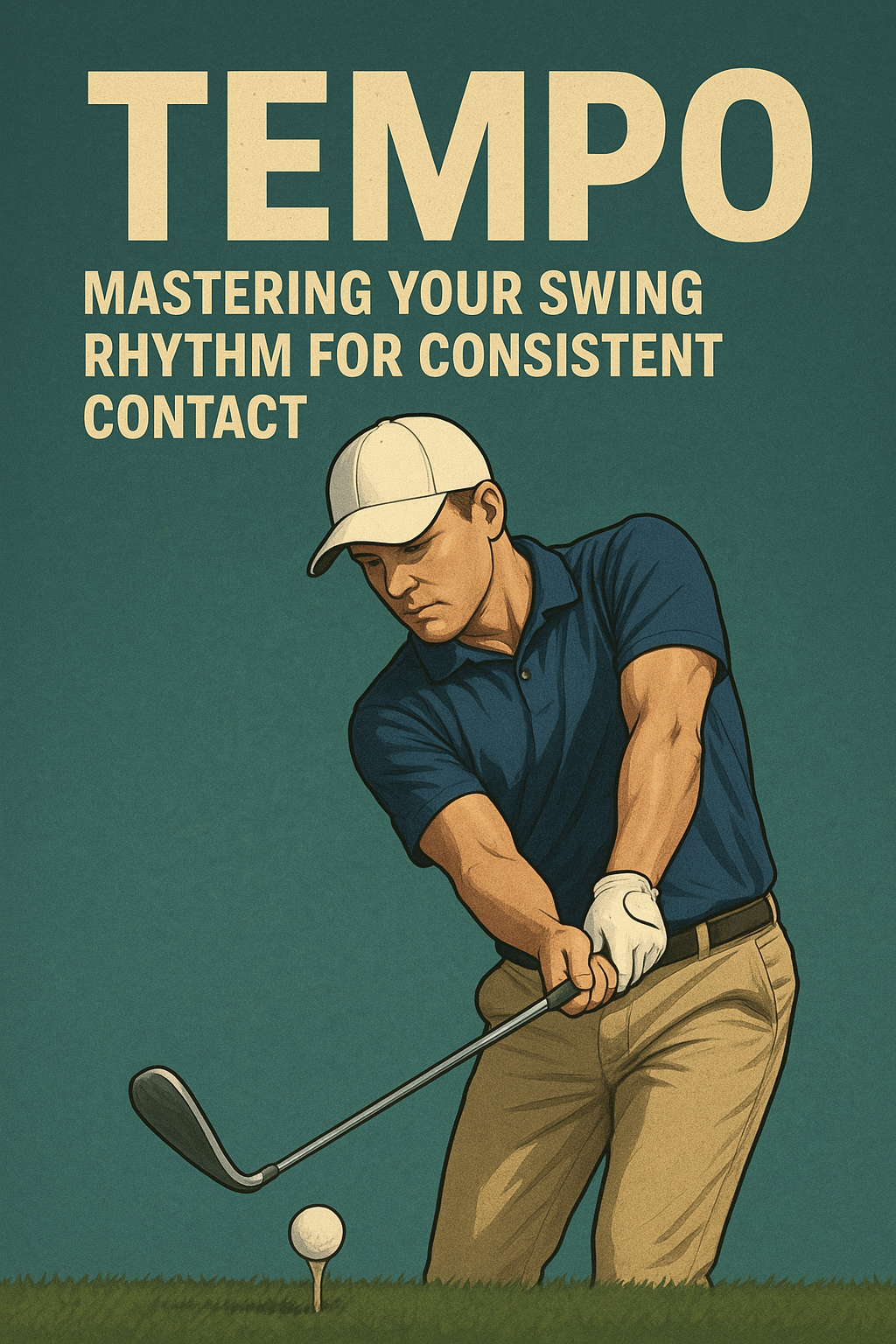
Tempo: Mastering Your Swing Rhythm for Consistent Contact
Tempo is the heartbeat of your golf swing. It’s the overall rhythm and speed balance from the moment you start your backswing to the moment you release through impact. For most beginners to intermediates, a smooth, steady tempo—not raw power—produces more solid contact and more repeatable results.
- What the concept is: Tempo is the feel of your swing’s timing. It’s not a fixed number or a single cue; it’s the consistent relationship between the backswing and the downswing, followed by a balanced finish. Think of it as a calm, continuous motion rather than a sequence of jerky, separate movements.
- Why it matters to the golf swing: When tempo is consistent, your brain can time the clubface squarely to the ball, your body can transfer weight smoothly, and you’ll minimize wild timing errors. Good tempo helps you stay on plane, strike the ball more often, and control distance and direction more reliably.
- What you should feel when doing it correctly: You feel a smooth, unhurried takeaway, a steady transition, and a controlled downswing that accelerates gently into impact. Balance should stay solid, your arms feel connected to your torso, and the finish is full but not overdone. In short: rhythm, not force.
2–3 common mistakes and simple fixes
- Mistake 1: The downswing is rushed or jerky.
- Fix: Slow the start of the downswing. Use a small, deliberate move with the lower body to initiate the downswing, then let the arms follow. Practicing with a steady tempo helps the clubface stay square at impact.
- Mistake 2: Tempo wildly changes shot to shot.
- Fix: Establish a consistent pre-shot routine that emphasizes rhythm. Use a simple counting cue (for example, two-count backswing, one-count transition, one-count through) and stick with it for every shot.
- Mistake 3: Swing feels “overly fast” with distance shots and “too slow” with short shots.
- Fix: Treat all full swings with the same tempo. Distances come from club selection and timing, not from wildly swinging harder. If a longer shot is needed, maintain the same rhythm but accelerate slightly through impact rather than at the start of the swing.
Simple, actionable drill you can do at home or on the range
Metronome Tempo Drill
- Set a metronome to a comfortable tempo (60–70 BPM works well for most players). If you don’t have a metronome, you can count aloud in a steady, repeatable rhythm: “1-2-3-4” at a calm pace.
- Take a few practice swings, aiming to complete the backswing on beats 1–2 and the downswing through impact on beat 3, finishing on beat 4. Focus on a smooth, continuous motion rather than speed.
- Gradually increase the tempo only as you can maintain the same rhythm. Keep balance, grip pressure light to medium, and the feeling of “rhythm first, power second.”
- Apply the same tempo to a real ball after you’re comfortable with smooth practice swings.
Tips for best results
- Keep your grip pressure light to moderate; tension robs tempo and timing.
- Finish tall and balanced. A controlled finish reinforces a good tempo through the shot.
- Record a couple of your swings or work with a mirror to confirm your rhythm looks and feels the same each time.
Tempo isn’t about hitting harder; it’s about delivering the club with a dependable rhythm. Practice the drill, trust the rhythm, and you’ll see more consistent ball striking and more enjoyable rounds ahead.
Tempo: Mastering Your Swing Rhythm for Consistent Contact
Tempo: mastering Your Swing Rhythm for Consistent contact
What Tempo Is, and Why It Matters
Tempo is the cadence of your swing—the pace at which you load, initiate, and finish the motion. It’s not just how fast you swing; it’s how consistently you move through each phase of the swing. When tempo is steady, your body and bat or club align with your intended contact point, making it easier to hit a ball or groundstroke where you want it. In sports that demand precise timing—baseball batting, golf swings, or tennis groundstrokes—tempo acts like an internal metronome that keeps your sequence in sync even under pressure.
Key elements that tempo governs include the load (pre-swing readiness), the stride (or weight transfer), the trigger (the move initiating the swing), the swing path (arc), and the timing of contact. If any of these elements drift out of rhythm, contact quality tends to degrade. By developing a reliable tempo, you create a repeatable rhythm that supports consistent zone entry, better hand-eye coordination, and more reliable contact on pitches, balls, or loads.
SEO-friendly takeaway: consistent tempo improves rhythm, timing, and contact quality across swing sports. Practicing tempo builds muscle memory, which translates to steadier results during live game situations.
Tempo and Contact: The Mechanics
Great contact isn’t about swinging faster; it’s about synchronizing your entire body with the shaft of your instrument—bat, club, or racket—and the incoming ball.Tempo helps synchronize hips, torso, arms, and hands so that your hands reach the ball at the moment your swing path is optimally aligned with the ball’s flight path. When tempo is off, premature or delayed hand action can tilt the bat or club, reducing the chance for solid contact.
- Load timing sets the initial rhythm, preparing the body for acceleration.
- Stride timing ensures your center of gravity moves smoothly into the hitting zone.
- Trigger timing coordinates the moment of activation with the pace of the ball’s approach.
- Follow-through tempo carries momentum through contact, stabilizing the finish.
- Breath and focus work as internal tempo cues, reducing tension that can interfere with rhythm.
By thinking in terms of tempo cues rather than raw power, athletes often gain more consistent contact without increasing effort. Practitioners report higher strike rates and increased confidence in the box, on the tee, or at the baseline when tempo is reliably maintained.
How to Measure and Build Your Tempo
- Choose a tempo anchor: start with a comfortable pace that allows you to complete your entire swing with clean form. Use a metronome or tempo app to mark the beats.
- Use a four-beat cadence: typical cues are Load (beat 1),Set/Stride (beat 2),Initiate (beat 3),Contact/Finish (beat 4).This four-beat cycle helps you organise the swing sequence in a repeatable rhythm.
- Set an initial BPM range: beginners can start around 60–75 BPM for slow-motion feel, then gradually move to 80–100 BPM as control improves. Golf swings may drift toward the higher end, baseball toward midspeed, depending on comfort and skill level.
- Scale tempo with practice steps: practice with a tee or soft toss first, then progress to live pitches or faster volleys once your tempo holds consistently.
- Record and review: use video to ensure you’re maintaining cadence from load to contact, not just “swinging hard.”
Tip: tempo isn’t fixed. Adapt the pace to your sport, your physique, and your current skill level, but keep the four-beat cadence intact to preserve rhythm.
Tempo Cues and Cues to Maintain Rhythm
- Breath cue: exhale through the trigger to reduce tension and keep timing even.
- Shoulder-to-hands cue: let shoulder turn lead into the hands so the swing stays on plane.
- Arm extension cue: complete extension at impact while maintaining a loose grip to avoid timing drift.
- Footwork cue: settle weight gradually into the front foot; avoid rushing the stride.
Using these cues during practice can help you internalize tempo without overthinking mechanics in the moment of action. Consistency comes from repeating the same rhythm, not from chasing a single “perfect” swing in every situation.
Drills and Practice Plans to Build Tempo
- Metronome Swing Drill: Set a metronome to a comfortable tempo within your target range. Perform four-beat cycles: Load, Set, Swing, Hit. Focus on making each beat visible in your movement.Gradually increase BPM while preserving form.
- Four-Beat Shadow Swings: Without a ball, perform slow-motion swings to match four evenly spaced beats. Concentrate on maintaining a smooth arc and even acceleration through the entire sequence.
- Pause-and-Release drill: Load and pause briefly (0.2–0.3 seconds) before initiating the swing. The pause reinforces tempo control and helps prevent rushing to contact.
- One-Hand Tempo: Use a lighter grip or one-handed swing (if appropriate) to emphasize rhythm of the upper body and hand timing. This builds feel for cadence independent of full-power execution.
- Video Feedback: Record 10–15 swings per session and compare with baseline footage. Look for consistent start-to-finish cadence and a stable contact window.
Benefits of Consistent Tempo
- Improved contact accuracy across different pitch speeds and trajectories.
- Better balance and weight transfer, reducing swing fatigue and injury risk.
- Higher confidence under pressure due to repeatable rhythm and timing cues.
- Enhanced transfer of energy from legs and hips to the bat/club, resulting in smoother power delivery.
Tempo as a Training Discipline
Including tempo work in your routine builds discipline around timing. It also helps you adapt to varying speeds—an essential skill in sports where the pace of the ball changes with speed, spin, or pace of the game. tempo training translates into more consistent practice outcomes and better real-game results, as you’re practicing the exact cadence your body should reproduce when momentum and game speed rise.
Tempo in Different Swing Disciplines
While tempo is a universal concept, the target cadence varies by sport and the typical swing duration.Golf swings require a longer, smoother rhythm to preserve swing plane and sequencing through the impact zone. Baseball swings demand a more compact, explosive cadence that clocks through the pitch’s arrival. Tennis forehands and backhands rely on a balanced tempo that coordinates footwork and upper-body rotation to maintain control through the contact point. across all these disciplines, the common thread is a repeatable cadence that keeps the body and implement in sync with the ball.
First-Hand Experience: A brief Case Study
Alex, a high school baseball hitter, struggled with consistency against faster pitches. After three weeks of tempo-focused training, including four-beat cadence drills and metronome-based tee sessions, Alex noticed a clearer contact window and less swing-and-miss.The key change wasn’t just swinging faster; it was feeling a steady rhythm that guided hips and hands through the swing arc. Within a month, Alex reported more solid contact in live batting practice and a noticeable betterment in batting average as timing stabilized across different pitchers.
Tempo toolkit: Tools, Apps, and Cues
- Metronome apps at various BPM ranges (easy to adjust during practice).
- Swing analysis apps that synchronize video with tempo cues.
- Wearable swing sensors that provide cadence feedback (e.g., hip rotation timing, arm extension timing).
- Simple cue cards with Load, Set, Initiate, Hit labels to keep rhythm in focus during practice.
Tempo Ranges for Common Swings
| Swing Type | Typical Tempo Range (BPM) | Rhythm Benefit | Recommended Drills |
|---|---|---|---|
| Baseball Batting | 60–90 | Promotes quick, reliable contact in the hitting zone | 4-beat metronome, tee drills, soft toss |
| Golf Swing | 70–110 | Supports smooth transition and consistent timing through the downswing | Slow-motion reps with tempo cues, weighted club |
| Tennis Forehand | 70–100 | Stabilizes racket acceleration and follow-through | Shadow swings with metronome, wall drills |
Quick-Start plan: 10-Minute Daily Routine
- Set a metronome to a comfortable tempo in the 60–90 BPM range (adjust up as you improve).
- Do a four-beat cycle: Load (beat 1), set/Stride (beat 2), Initiate (beat 3), Contact/Finish (beat 4).
- Perform 5 minutes of shadow swings focusing on cadence, then 3 sets of 1-handed tempo swings.
- Finish with 2 minutes of video review to verify cadence consistency.
Frequently Asked Questions
Q: Can tempo fix bad mechanics?
A: Tempo helps stabilize timing, but it should complement solid mechanics. If fundamentals are flawed, tempo training should be paired with technique work.
Q: How do I choose the right tempo for my sport?
A: Start with a comfortable baseline that allows clean form and then incrementally increase the tempo as control improves. Your sport’s typical swing duration and the ball’s approach speed guide the range.
Q: How long before tempo training shows results?
A: Most athletes notice changes after 2–4 weeks of consistent practice, with continued gains as the cadence becomes more automatic in live play.
Key Takeaways
- tempo is the rhythm of your swing, aligning body parts for consistent contact.
- Use a four-beat cadence to organize the swing sequence: Load, Stride, initiate, Contact.
- Start with a conservative tempo range and progressively increase BPM as control improves.
- Combine tempo drills with video feedback for measurable improvements.
- Adapt tempo cues to your sport and personal mechanics while maintaining the cadence.