
Introduction
Walk into any golf shop and you will see rows of clubs with numbers, letters, and shapes that make little sense at first. Driver, 7-iron, sand wedge, putter — what do they all do, and why do you need so many?
The good news: you do not need to understand every club on day one. This lesson breaks down the main categories, explains what each one is for, and helps you figure out which clubs matter most when you are just starting out.
What You're Going to Learn
- The main types of golf clubs and what they do
- What the numbers on irons and wedges mean
- How club design affects the ball (loft, length, and lie)
- Which clubs you actually need as a beginner
- How to choose clubs when you are on the course
The Main Types of Golf Clubs
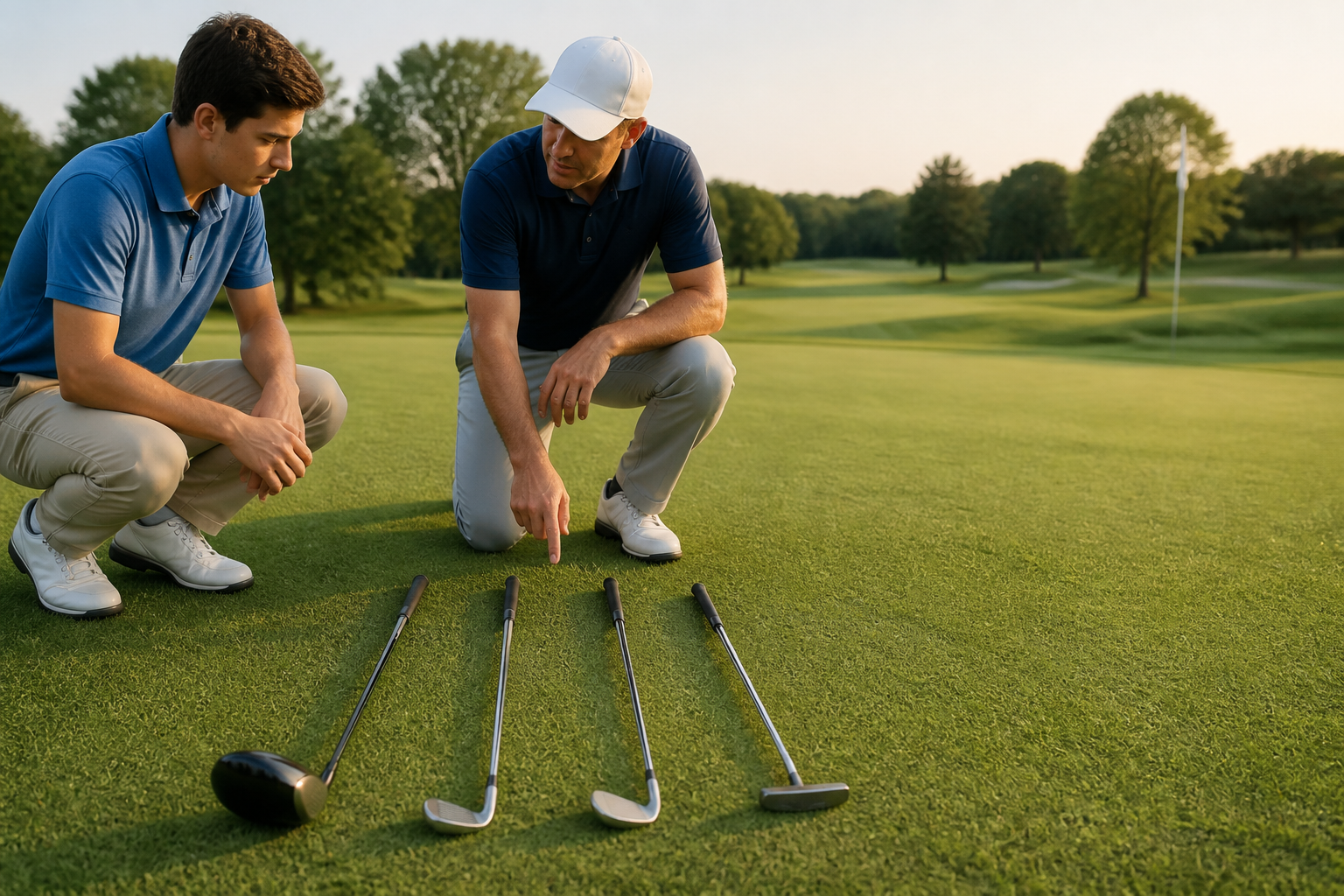
Every golf bag is built around a few core categories. Think of them as tools for different jobs:
- Driver: The biggest club in your bag. Used off the tee on long holes to hit the ball as far as possible.
- Fairway woods: Slightly smaller than a driver, with a higher number (3-wood, 5-wood). Used for long shots from the fairway or tee when you want more control than a driver.
- Irons: Numbered clubs (5-iron through 9-iron) with flat, angled faces. Used for approach shots to the green from various distances.
- Wedges: Specialized irons with the most loft. Used for short, high shots near the green — chips, pitches, and bunker shots.
- Putter: A flat-faced club used on the green to roll the ball into the hole.
What the Numbers Mean
The numbers on irons tell you how much loft (angle) the clubface has. Lower numbers mean less loft and longer distance. Higher numbers mean more loft and shorter, higher shots.
Here is a rough guide for a typical golfer:
- 5-iron: Longer approach shots, roughly 160–180 yards
- 7-iron: Medium approach shots, roughly 140–160 yards
- 9-iron: Shorter approach shots, roughly 120–140 yards
- Pitching wedge: Short shots near the green, roughly 100–120 yards
- Sand wedge: Bunker shots and very short chips, roughly 80–100 yards
These distances vary by player. The key idea: lower numbers go farther, higher numbers go shorter and higher.
What Clubs Do You Actually Need?
A full set can have 14 clubs, but beginners do not need all of them. Here is a practical starter set:
- Driver (or skip it at first and use a 3-wood off the tee)
- 7-iron (your most versatile practice club)
- Pitching wedge
- Putter
With these four clubs, you can practice every essential skill. Add more as you learn which distances you need.
How to Choose the Right Club on the Course
Club selection is about distance and situation. Need maximum distance off the tee? Grab the driver. About 150 yards to the green? A 7-iron is a safe choice. Just off the green? Use a wedge.
At first, you will guess wrong sometimes. Over time, you will learn your personal distances with each club.
Why It Matters
Using the wrong club makes golf harder than it needs to be. Understanding what each club does gives you a clear starting point for every shot.
Common Beginner Mistakes
Using the Driver for Everything
The driver is fun to hit, but it is the hardest club to control. Many beginners pull it out in situations where a shorter club would produce a better result. Learn to love your irons and wedges — they save more strokes than any driver ever will.
Carrying Too Many Clubs Too Soon
A 14-club set looks impressive, but if you do not know what each club does, extra clubs just create confusion. Start with fewer clubs, learn them well, and expand your set as your game develops.
Ignoring the Putter
The putter is used more often than any other club in your bag. Yet many beginners spend 90 percent of practice time on full swings and almost none on putting. Give your putter the attention it deserves.
Try This Simple Drill
Head to the driving range with your 7-iron and hit 10 balls. After each shot, estimate how far the ball traveled. Do not worry about accuracy — just observe distance. Write down your best guess for each shot. After 10 balls, calculate your average.
That average is your starting distance for the 7-iron. Repeat with other clubs as you add them to your bag.
One Thing to Remember
Clubs are tools, not magic wands. The best club in the world will not help if your fundamentals — grip, stance, and alignment — are off. Learn what each club does, but spend most of your energy on how you swing them.