
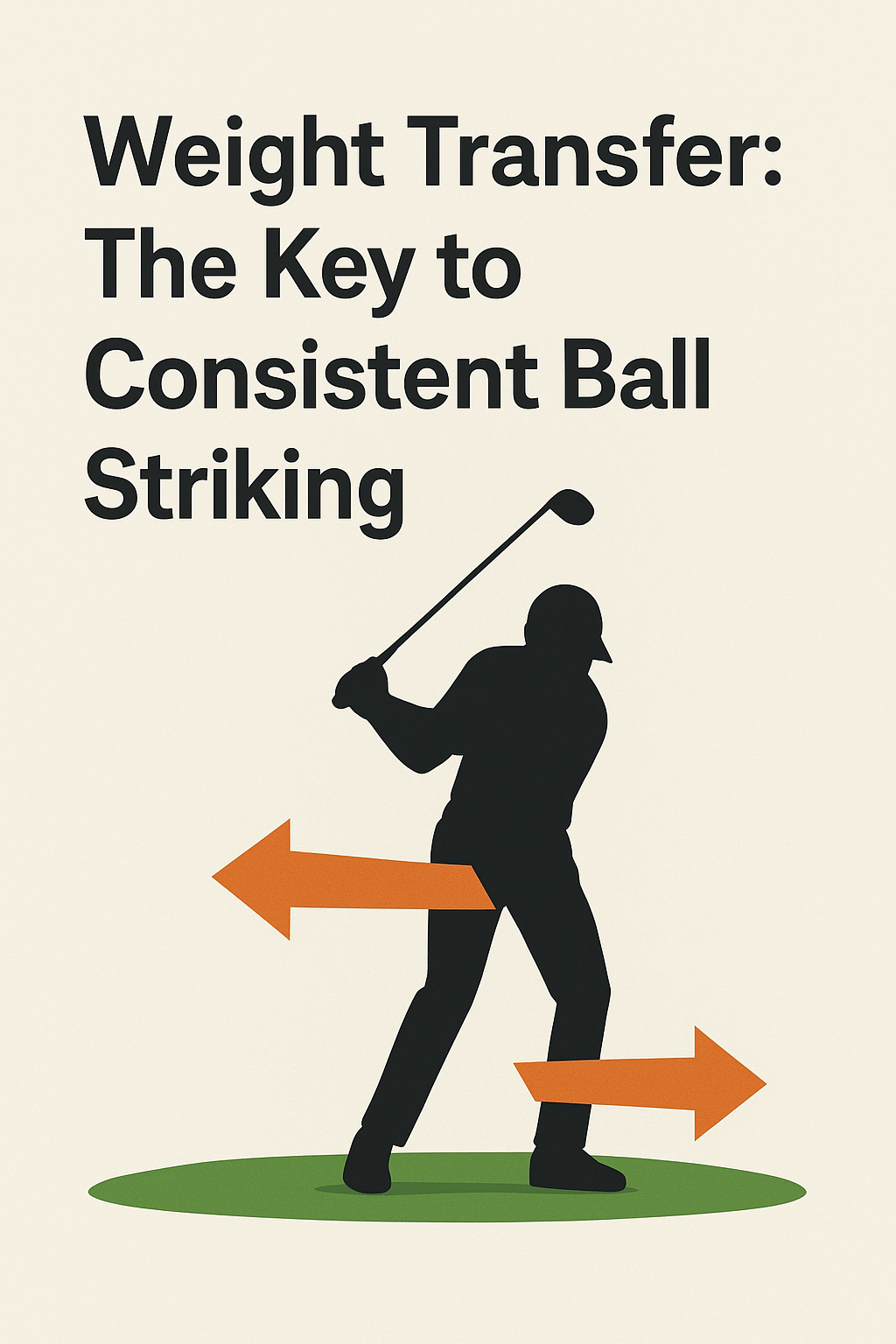
Weight Transfer: The Key to Consistent Ball Striking
In this focused lesson, we’ll lock in on one essential aspect: weight transfer. Think of it as the engine that powers solid contact. Properly moving your weight from the trail (back) foot to the lead (front) foot through impact helps you compress the ball, square the clubface, and finish with balance.
What the concept is
Weight transfer is the deliberate shift of your body’s mass from your back foot to your front foot as you swing. In a typical full swing for a right-handed golfer, you start with most of your weight on the right foot at address, gradually move toward the left foot through the downswing and impact, and finish with most weight on the left foot. The goal isn’t to “lift off” or jump, but to smoothly rotate and move in a coordinated, ground-connected way that allows the club to strike the ball cleanly.
Why it matters to the golf swing
- Promotes solid contact. Forward weight at impact helps compress the ball and keep the clubface through the ball square to the target.
- Enhances control and consistency. A guided, balanced weight shift reduces wandering paths and mis-hits.
- Supports lag and power. Proper sequencing lets the arms release naturally while the hips and torso drive the swing.
What the golfer should feel when doing it correctly
- Start with solid footing; feel the trail knee bending slightly as you rotate, then gradually press weight toward the lead foot as you approach impact.
- Chest and hips turn toward the target, while the head stays relatively still over the ball.
- Finish in balance with weight mostly on the lead foot and a quiet, level spine angle.
2–3 common mistakes golfers make with this concept
- Hanging back too long on the trail leg. The weight stays on the right foot past impact, leading to fat shots, loss of distance, and inconsistent contact.
- Rushing weight onto the lead foot too early. The weight shift happens before or too soon in the downswing, causing thin shots and a loss of lag and power.
- Lack of balance or sway. The body slides sideways rather than rotates and transfers weight, producing off-center hits and poor direction control.
Simple, actionable fixes for each mistake
- Practice a deliberate downswing start with hip and torso rotation initiated from the back foot. Feel your weight gradually move toward the lead foot around impact, not before. Use a small balance check: at impact, imagine you’re trying to touch the left heel to the ground without lifting the right heel.
- Slow down the transition and pause slightly at the top of the backswing, then start the downswing with the hips leading toward the target. Keep the chest over the ball a fraction longer and allow the arms to follow instead of pulling the weight forward too soon.
- Emphasize rotation over lateral slide. A good drill is to practice with your feet close together and focus on turning the hips and torso to the target while keeping the head in place. Finish with a crisp, balanced pose on the lead side.
One easy practice drill you can do at home or at the range
- Step-Through Weight Transfer Drill (no ball): Take your normal stance, but instead of hitting a ball, swing to a comfortable three-quarter speed and then step forward with your lead foot after impact. Your trail foot should briefly come off the ground as your weight shifts forward. This creates a tactile sense of transferring weight through impact and helps you land in balance on your lead foot.
Tip: perform the drill slowly at first, then gradually increase speed while maintaining balance and the feeling of a smooth, forward weight transfer. If you notice you’re falling off balance, regress to slower tempos and shorter swings until the feel becomes automatic.
By focusing on one key idea—weight transfer—you can build a repeatable foundation for better contact, direction, and distance. Practice with intent, stay patient with the process, and you’ll see your ball striking improve more quickly than you expect.
weight Transfer: The Key to Consistent ball Striking
Weight Transfer: The Key to Consistent Ball Striking
Weight transfer is the backbone of every reliable swing. Whether you’re teeing off in golf, returning a tennis ball, or taking a fast pitch in baseball, the ability to move your weight efficiently from one foot to the other – and in the right sequence – determines both power and precision. In this article, we break down the science behind weight transfer, explain how it partners with your kinetic chain, and provide practical drills you can start using today to maximize distance, accuracy, and control.
Weight Transfer: the Key to Consistent Ball Striking
When players talk about “weight transfer,” they’re referring to how the body shifts its center of gravity during a swing or strike.The goal is to load energy in the backswing or preparation phase and unload it through contact, transferring energy from the ground up to the ball. Proper weight transfer reduces over-rotation, minimizes timing errors, and helps the swing remain balanced through impact. A mismanaged weight transfer often leads to slices, pulls, off-center contact, or inconsistent ball flight. By focusing on how, when, and where you move your weight, you can create repeatable mechanics that translate into better scoring odds on the course, court, or field.
Understanding the Fundamentals of Weight Transfer
- The body’s center of gravity moves within a dynamic base of support.The goal is to keep this movement controlled, not chaotic, so the body can direct force into the ball.
- Your connection to the ground (feet and legs) generates the force that travels through the hips and torso to the upper body and,to the implement or ball.
- Energy flows from the ground up: feet → legs → hips → torso → arms → implement. Poor sequencing dampens power and accuracy.
- In many swings,the hips rotate and the weight shifts forward toward the lead foot after the backswing,facilitating a strong,stable impact.
- A smooth tempo supports reliable weight transfer. Jerky or rushed movements disrupt timing and contact quality.
Biomechanics of Weight Transfer Across Sports
Different sports require slightly different emphasis, but the core principles stay the same: load energy in the trail side and unload through the lead side at impact. Here’s how it plays out in common ball-striking activities:
Golf
- Backswing: Weight shifts slightly to the trail foot (right foot for right-handed players) to load the ground reaction forces.
- Downswing and impact: The weight shifts onto the lead foot as the hips rotate through the ball, maximizing transfer of energy into the clubhead.
- Post-impact: Re-center and reset for the next shot, maintaining balance and readiness.
Tennis
- Groundstroke: Weight loads on the back foot during preparation, then shifts forward through contact to drive velocity from the legs up through the torso and arm.
- Serve: A pronounced weight transfer—from the back foot onto the front foot—parallels efficient hip rotation and trunk extension for power.
Baseball / Softball
- Hitting stance: Load weight on the backside and then step or rotate into contact to promote bat speed.
- Swing timing: A controlled weight transfer helps synchronize hip, torso, and arm movement for cleaner, harder contact.
benefits of Proper Weight Transfer
- Efficient weight transfer unlocks more kinetic energy from the ground, translating to higher clubhead or bat velocity.
- A stable transfer reduces lateral drift and swing path inconsistencies, resulting in crisper contact.
- Repetition of a accomplished transfer pattern builds dependable timing and results, shot after shot.
- Proper weight shift helps you maintain posture and control during rapid exchanges or on off-centered balls.
- When energy flows efficiently through the kinetic chain, you’re less likely to overuse a single joint or compensate with awkward movements.
Common mistakes and How to Fix Them
- If weight moves too soon or too late, timing suffers. Practice clues: maintain a tall posture, feel a slight delay before shifting forward and focus on a clean, audible contact moment.
- Excess rotation can rob energy from the lower body. Work on grounding the swing with hip rotation first,then let the torso follow.
- Lifting the back heel too early disrupts balance and weight transfer—the fix is a steady weight sink and controlled hip action.
- Leaning away from the target impedes forward transfer. Keep eyes level and a slight forward tilt of the center of gravity toward the target line.
- A higher center of gravity can destabilize transfer. Maintain knee flexion and a slightly athletic stance to support smooth loading and unloading.
How to Train Effective Weight Transfer: Drills and Progressions
Progressive practice helps you build a repeatable pattern. Begin with slow, controlled repetitions and add speed as your body becomes cozy with the sequence.
Drill 1: Slow-Mast Weight Shift (Golf/General Swing)
- Stand in your natural stance with the ball (or target point clear).
- Take a slight step back with your trail foot and lightly shift your weight onto it.
- Pause for a count of two, then gradually shift weight forward onto the lead foot while maintaining balance.
- Repeat 8–12 times, focusing on a smooth, even transfer with minimal sway.
Drill 2: Step-Through Shadow Swings
- Perform swings without striking a ball, emphasizing a deliberate weight transfer from back foot to front foot during the downswing.
- As you step through, imagine pushing energy from the ground up, finishing with your weight on the lead leg and a stable posture.
Drill 3: Pause at Impact
- Take a slow backswing, pause for a beat at top, then execute a controlled downswing with a forward weight shift.
- Hold impact moment for a brief moment to feel balanced,then reset for the next rep.
Drill 4: medicine Ball Rotational Throws
- Stand with hips square, feet shoulder-width apart, light knee bend.
- Hold a light medicine ball and rotate from the hips, stepping forward into a forward-weight shift as you release the ball.
- Feel how power transfers from the ground up and through your torso into the ball.
Drill 5: Video Feedback with a Simple Checklist
- Record your swing from the side and note three cues: trail-foot pressure, hip-rotation sequencing, and lead-foot stability at impact.
- Make one mechanical adjustment per week based on the audit.
Case Study: transforming a Weekend Golfer’s Consistency
Jamie, a weekend golfer who struggled with inconsistent drives, started focusing on weight transfer as a core pattern.Over eight weeks, her approach changed:
- Week 1–2: Introduced slow-weight transfer drills and paused impact practice; found a more stable base with slight knee flex.
- Week 3–4: Implemented step-through shadow swings; brushed away early weight shifts that caused pushes to the right.
- Week 5–6: Added medicine ball rotational throws to unlock hip-led power.
- Week 7–8: Combined drills in a full swing sequence, achieving a more consistent ball flight and a measurable increase in driving distance.
Firsthand Experience: From frustration to Fluidity
Donna,a tennis player transitioning to more powerful groundstrokes,shares her takeaway: “The moment I stopped trying to muscle the ball and started trusting my weight transfer,I got cleaner contact and more pace. My returns started landing deeper and with more stable flight.”
- What changed: She learned to load weight on the back foot during preparation and to visibly shift weight toward the front foot through contact, keeping the center of gravity centered and the swing path on track.
- Practical tip: Use a mirror to observe whether your hips are leading your downswing and whether your front foot bears most of your weight at impact.
practical Tips for Everyday Training
- mobility in the ankles and hips supports smoother weight transfer and reduces excess torso sway.
- A tall posture with a slight forward tilt keeps the energy channel aligned from the ground to the ball.
- Prioritize balance and timing; power will naturally follow as weight shifts correctly.
- Inhale during the back swing, exhale through contact to support coordinated weight shift.
- Start with slow-motion drills, then ramp to real-speed practice as control improves.
A Swift Reference: Weight Transfer Checklist
- Is your weight loading onto the trail foot during preparation? Yes / No
- Are you maintaining knee flexion and a stable spine through the backswing?
- Do you feel the hips initiating the downswing before the torso and arms?
- Is the majority of your weight on the lead foot at impact?
- Is your finish balanced with the chest pointing toward the target?
Quick Reference Table: Drills at a Glance
| Drill | Purpose | How to Do It | Key Feedback |
|---|---|---|---|
| Slow-Mast Weight shift | Load and unload energy | Back weight on trail foot, pause, shift to lead foot | Smooth transfer, stable balance |
| step-Through Shadow Swings | Sequence and timing | swings without ball, emphasize forward transfer | Lead foot lands firmly, no excessive jump |
| pause at Impact | Contact quality | Backswing, pause, downswing with forward transfer | Clean contact, minimal wobble |
Frequently Asked Questions (FAQ)
Why is weight transfer so important for ball striking?
Weight transfer ensures that energy generated from the ground is efficiently transferred through the body to the ball, resulting in greater power, better control, and more consistent contact.
Can I improve weight transfer without specialized equipment?
Yes. You can improve through body-weight drills, balance work, hip-rotation practice, and tempo-focused swings. Adding a medicine ball and light resistance can accelerate progress without heavy gear.
Is weight transfer different for beginners versus advanced players?
Beginners often struggle with timing and balance. For advanced players, fine-tuning weight transfer can unlock more speed and precision.In both cases, consistent practice with a clear sequence matters most.
How long does it take to see improvements in weight transfer?
Many players notice improvements within 2–6 weeks of focused practice, especially when drills are structured, progressive, and tailored to their sport and swing style.
Sport-Specific Implementation: A Quick Guide
- Emphasize a smooth loading of the trail leg, deliberate hip rotation, and a decisive shift to the lead foot at impact.Use pauses to feel the exact moment of weight transfer.
- Focus on transferring weight from the back leg to the front leg as contact occurs, maintaining a stable base and avoiding upper-body overreach.
- Practice loading on the back leg, then stepping into the swing with a strong lead-foot push to drive the bat through the zone.
Final Thoughts: Building a Transfer-Centric Practice Plan
Weight transfer is not a one-size-fits-all technique but a set of repeatable principles that apply across sports. Start with the basics: a solid athletic stance, controlled loading on the trail side, and a deliberate, energy-forward transfer through contact.Use the drills, checklists, and case studies above to tailor your practice sessions. With consistent work, the body learns a more efficient path of energy—from the ground up—so you can deliver consistent, powerful ball striking every time.