
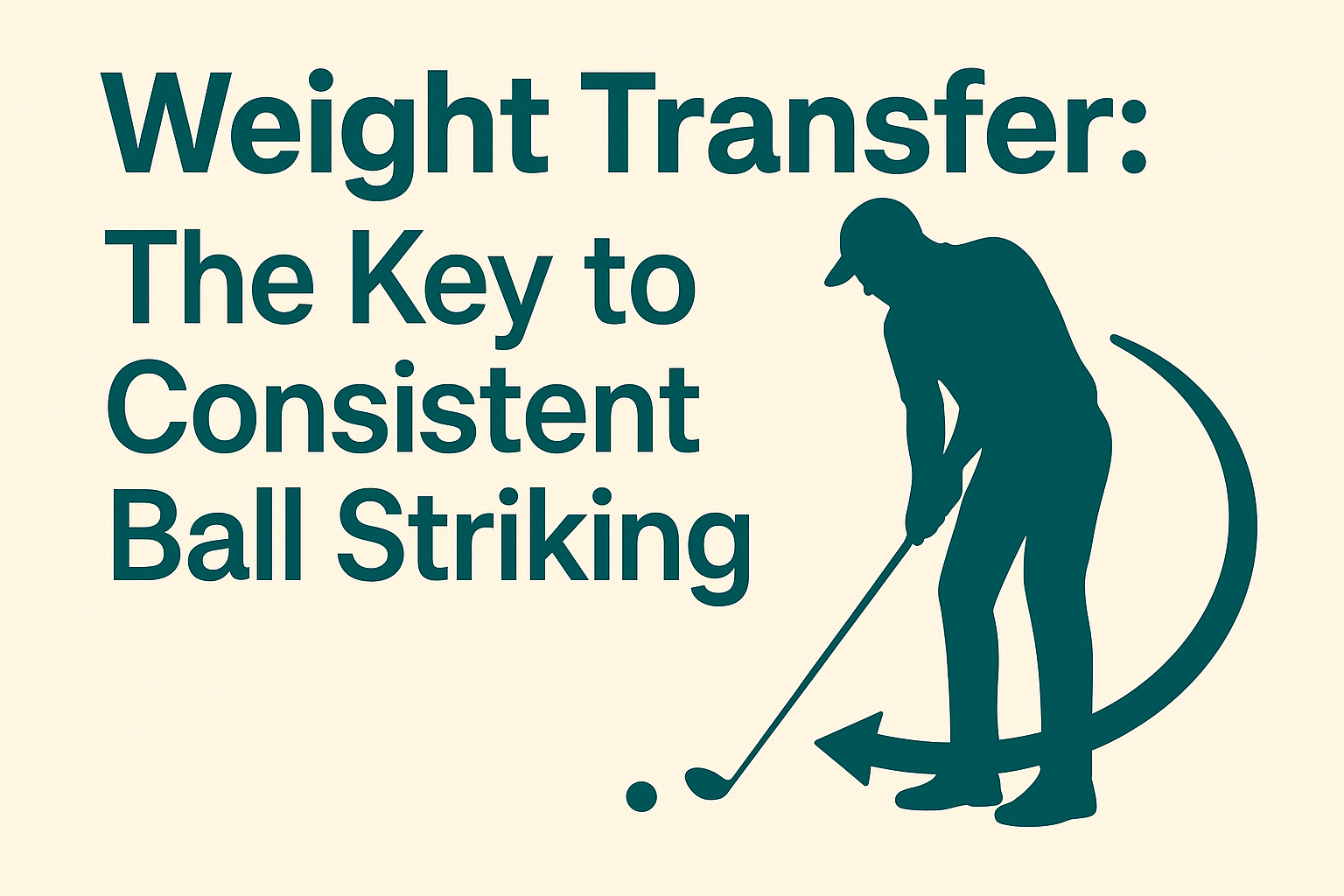
Weight Transfer: The Key to Consistent Ball Striking
Focusing on weight transfer is one of the simplest, most powerful ways to improve contact and consistency. It isn’t a flashy swing fix—it’s how you move your body’s center of gravity through the shot. When done well, you’ll feel energy building from your back foot, through your hips and torso, and into your lead foot at impact.
What the concept is
Weight transfer means shifting your weight from the trail foot (the right foot for right-handed players) to the lead foot (the left foot) as you move from the backswing into the downswing and through impact. The transfer should be controlled, timed with hip and torso rotation, and finished with most of your weight resting on the lead foot. Think of it as loading energy on the backswing and releasing it through the ball with a balanced finish.
Why it matters to the golf swing
- Improves contact. When weight moves properly, the clubface meets the ball consistently, reducing fat shots (hitting behind the ball) and thin shots (hitting too high on the face).
- Promotes solid strikes at different distances. Proper transfer helps you hit down on the ball and compress it, which translates to better ball speed and distance control.
- Aids in swing sequencing. The hips and torso drive weight forward first, followed by the arms, creating a smoother, repeatable arc.
What you should feel when doing it correctly
- Early in the downswing, you feel pressure building from the trail foot toward the lead foot.
- Your hips rotate toward the target, and your chest turns with them, guiding the weight forward.
- At impact, the bulk of your weight is over the lead foot, with a stable lower body and a quiet head relative to the spine.
- Finish with a tall posture and the majority of your weight on the lead foot, not hanging back on the trail foot.
2–3 common mistakes and how to fix them
- Mistake 1: Staying back on the trail foot
Why it hurts: You bottom out behind the ball, leading to fat shots or weak misses.
Fix: Focus on feeling a gradual shift of weight from the trail foot to the lead foot through impact. Practice with a small, deliberate step toward the target on the downswing to cue the transfer. Keeping your head steady and your center over the lead foot helps reinforce the move. - Mistake 2: Excessive lateral sway instead of rotation
Why it hurts: The lower body slides sideways, losing connection with the arms and producing inconsistency.
Fix: Emphasize hip rotation over shifting your hips forward only. A simple cue: “rotate, don’t slide.” Practicing with a wall or chair behind you can help limit sideways movement while you learn to rotate more fully through impact. - Mistake 3: Weight shifts too early or too late
Why it hurts: If weight moves before you strike the ball, contact can suffer. If it moves too late, you may catch the ball on the upswing.
Fix: Pause your hips slightly at the top, then initiate the downswing with a deliberate rotation toward the target. Keep your upper body quiet until the hips have provided the forward momentum, then release into the shot.
One easy drill you can do at home or on the range
Step-Through Weight Transfer Drill
- Set up in a normal stance, but keep your feet close together (or even touch your toes lightly) to limit wide movement.
- Take a half backswing, then start the downswing by turning your hips toward the target and stepping forward with your lead foot as you rotate. Think “step into the ball” rather than “shuffle your feet.”
- Finish with most of your weight on the lead foot and your chest facing the target. Do 8–12 reps, focusing on a smooth, coordinated transfer rather than speed.
Tips for success: keep your head relatively still, let the hips lead the move, and practice with a soft knee bend in both legs. As you become more comfortable, increase the turn and the step length gradually while maintaining balance.
Weight Transfer: The Key to Consistent ball Striking
Weight Transfer: The Key to Consistent Ball Striking
Understanding the Concept: What Is Weight Transfer?
Weight transfer is the deliberate and coordinated movement of your body’s mass from one support area to another—usually from the back foot toward the front foot—through the stance and into impact. In ball-striking disciplines like golf, baseball, tennis, and even cricket, the way you shift weight influences the trajectory, speed, and direction of the ball. Proper weight transfer aligns the kinetic chain—from the ground up—so energy generated in the legs and hips flows smoothly into the torso, arms, and ultimately the club or bat.
Think of weight transfer as the engine for consistency. when your weight moves efficiently,you create stable contact,reduce excess movement,and minimize deceleration that robs power. Conversely, mis-timed or incomplete weight transfer can lead to fat or thin shots, loss of balance, and high variability in ball flight.
Why Weight Transfer Matters for Accuracy, Power, and Consistency
- Power delivery: Shifting weight into the forward leg on impact converts stored elastic energy from the legs and hips into forward momentum through the club or bat head.
- Contact quality: A well-timed transfer keeps the hands ahead of the ball or maintains a solid impact window, reducing mishits.
- Balance and posture: Efficient transfer stabilizes the body’s center of gravity, helping you maintain the correct spine angle and prevent over-rotation or swaying.
- Shot dispersion: Consistent weight transfer creates repeatable motion, narrowing the spread of ball flights and making it easier to lock in a target line.
- Injury prevention: Proper loading and unloading patterns reduce undue stress on the lower back,hips,and shoulders by distributing workload across the kinetic chain.
Across sports, the principles converge: load, load release, and forward drive. In golf, for example, most players benefit from a controlled shift of roughly 60–70% of their weight to the front foot through impact, with only a brief moment of contact before and after impact where balance is maintained. In baseball or softball,the same sequencing exists,but the timing is sport-specific. The goal is the same: use your legs and hips to generate force that travels through the torso and arms into the implement with minimal wasted movement.
The Kinetic Chain: How Weight Transfer Feels When It’s Working
The kinetic chain is the linked sequence of body segments that transfer energy from the ground up. When you initiate weight transfer correctly, you’re leveraging ground reaction forces through the feet, ankles, knees, hips, and core before the arms meet the ball. A clean transfer produces a more consistent impact position and reduces lateral drift.
- Ground reaction forces: The ground provides resistance that your feet convert into forward momentum.
- Hip torque: The hips initiate the frist real storage of energy,helping to unwind the torso at the right moment.
- torso and shoulder sequencing: the torso leads the arms in a controlled rotation, keeping the hands from getting overly passive at impact.
- Arm and club/bat path: With proper transfer, the arms meet the ball with optimized angle and speed, resulting in solid contact.
Core Mechanics: A Step-by-Step Path to Effective Weight Transfer
Below is a practical, sport-agnostic sequence you can adapt to golf swings, baseball swings, tennis strokes, or other ball-striking actions. The emphasis is on timing and balance, not on brute force.
- Stand in a cozy athletic posture. Distribute your weight evenly or slightly toward the back foot,maintaining light,athletic knees and a stable spine.
- Begin by coiling through the hips and torso. Allow a natural loading of weight onto the back foot without collapsing the front knee or swaying the upper body.
- Initiate the move by rotating the hips toward the target and shifting weight to the front foot. Your back foot gradually releases contact with the ground as the torso unwinds.
- The front foot absorbs weight and becomes the primary reaction point. Keep the head steady and the eyes on the ball (or contact point) while maintaining balance.
- ground reaction forces drive the club/bat head through the ball. Your weight should be on the lead leg, with the hips leading the sequence and the torso following with controlled rotation.
- Finish with a balanced, forward-directed finish. Your center of gravity should settle over the lead foot, indicating a complete transfer.
practical cueing can definitely help internalize this sequence. use phrases like “load, coil, drive,” or “hips first, hands second” to reinforce the intended order. The exact timings will vary by sport and individual biomechanics,but the principle remains consistent: the legs and hips initiate the motion,the torso and arms complete it,and the energy transfers through the center toward the target.
Common Faults and How to correct Them
- Early forward weight shift or standing up too early, leading to loss of coil and thin shots.
Fix: Pause the upper body slightly longer in the backswing to maintain coil, then initiate weight transfer with a deliberate hip rotation just before impact.
- Fault: Weight staying on the back foot too long, causing fat shots and a steep path.
Fix: Practice a step-and-attack drill that forces the weight to transfer forward before contacting the ball, ensuring a shallower path.
- Fault: Over-rotation or loss of spine angle during transfer, resulting in off-plane contact.
Fix: Focus on keeping a stable spine angle by bracing the core and using a quiet, controlled hip movement rather than a sheer pivot.
- Fault: Excess lateral sway (moving the head or torso away from the target line).
Fix: build balance drills that emphasize staying vertical over the lead foot with a light rear-leg push during the downswing.
Drills and Practice Routines to Build Consistent Weight Transfer
Integrate these drills into your regular practice to ingrain the transfer sequence. Start slowly, then gradually increase speed as your neuromuscular adaptation improves.
- Place a landing mat or small obstacle under the back foot. Practice loading onto the back foot during the backswing and stepping into a forward weight transfer through impact, all while keeping contact with the obstacle minimal.
- Stand close to a wall with normal stance. As you swing, imagine driving weight toward the wall with your lead foot. The wall acts as a balance cue to prevent excessive backward lean.
- Use a tracking stick or alignment rod across your shoulders. Move the stick in a controlled arc that mirrors the weight transfer, reinforcing the sequence from hips to hands.
- Perform swings while stepping forward through a ladder-like pattern that forces a progressive transfer of weight without collapsing into the front foot too early.
- Take 10 slow swings focusing on feeling the exact moment the weight shifts. Document the sensation and aim to reproduce it at normal speed.
Benefits and Practical Tips for Everyday Athletes
- Consistency boost: Rehearsed transfer improves contact consistency, reducing dispersion in practice and on the course or field.
- Distance and control balance: Proper weighting often yields both more distance and improved control, because the energy transfer is more efficient and repeatable.
- Injury risk reduction: A smooth transfer reduces stacking or overloading in the lower back and shoulders, promoting sustainable performance.
- Adaptability: The same principles apply whether you’re using a golf club, baseball bat, tennis racquet, or football kicking leg—the essentials of loading and unloading energy stay constant.
Tips for getting the most from weight transfer:
- Start with a stable, athletic stance and a neutral spine. Avoid excessive stiffness; allow a natural micro-movement that doesn’t disrupt balance.
- Practice with mirrors or video to observe your weight shift. Look for excessive sway or early commitments to the front foot.
- Use cue words that match your sport’s tempo, such as “load-rotate-drive” or “coil-then-catch.”
- Progress from slower tempos to full speed, only increasing pace when you can maintain a clean transfer sequence.
First-Hand Experience: A Coach’s Outlook
A veteran coach once described weight transfer as “the quiet engine behind loud outcomes.” In his players, the ones who improved most quickly were those who replaced overly arm-dominant swings with a clear, audible pattern of loading through the hips and transferring momentum into the ball. The players who struggled frequently enough tried to overpower the shot with arm strength, leading to inconsistent contact and erratic ball flights. The fix wasn’t more force; it was better sequencing.
In practice, the coach emphasized three anchor cues: stay grounded in the back foot during the loading phase; lead with the hips as you move forward; and finish with a balanced, forward-weighted finish that confirms the transfer occurred.The result was not only more solid contact but also a reduction in injuries stemming from abrupt deceleration and compensations.
Case Studies: weight Transfer in Action
Here are two concise examples that illustrate how weight transfer mechanics manifest in real-world performance.The data are qualitative, focusing on observable changes in balance, contact quality, and ball flight.
| Case | Initial Challenge | Weight-Transfer Adjustment | observed Result |
|---|---|---|---|
| Golf Am Tour Player | Inconsistent impact, hooks at times, loss of balance in late downswing. | Added front-foot emphasis and hip-first sequencing; slower transition from backswing to forward swing. | Cleaner contact, improved ball flight, more stable finish. |
| Baseball Power Hitter | Late weight shift, reliance on arm speed, frequent tops or pops. | Load into back hip, then accelerate weight toward front foot just before contact. | Increased bat speed through contact, more consistent line drives. |
Progress Tracking: Simple Metrics to Monitor Weight Transfer
Tracking progress helps you stay accountable and adjust drills as needed. Use these fast metrics during practice or coaching sessions.
| Metric | What It Shows | How to Measure |
|---|---|---|
| Ground Contact Shift | Ratio of weight on lead foot at impact | Film the swing; frame-by-frame, note the lead foot loading near impact. |
| Contact Consistency | Frequency of clean hits vs. mis-hits | Track shot quality over a block of swings, aiming for a rising percentage of solid contacts. |
| Finish Balance | How well you finish over the lead foot | Assess whether you finish with weight forward and a stable base for at least 2–3 seconds after impact. |
Putting It All Together: Realistic Tips for Daily Practice
- Prioritize quality over speed. Without clean transfer, trying to swing harder won’t help long-term.
- Use slow-motion practice to connect cues with sensations: “load,” “pivot,” “drive.”
- incorporate balance work: single-leg stands or wobble board drills to strengthen stabilizers used in weight transfer.
- Film your swing from multiple angles. Look for early extension,lateral tilt,or an over-rotated torso that disrupts transfer timing.
- Seek feedback after practicing drills. A coach or learned training partner can confirm whether your weight shift occurs in the intended sequence.
Frequently Asked Questions
Here are quick answers to common questions about weight transfer in ball-striking sports.
- Q: Do you always want all your weight on the front foot at impact? A: Not always. The goal is a controlled transfer through impact, with front-foot pressure indicating energy transfer and balance, not a complete sprint onto the lead foot.
- Q: How long should weight transfer take? A: It should occur in the decisive downswing window, timed to impact, but the exact duration varies by sport, club/bat speed, and player biomechanics.
- Q: Can weight transfer compensate for poor technique? A: It can mitigate some issues, but it’s not a substitute for proper alignment, swing path, and timing. weight transfer works best when paired with solid fundamentals.