
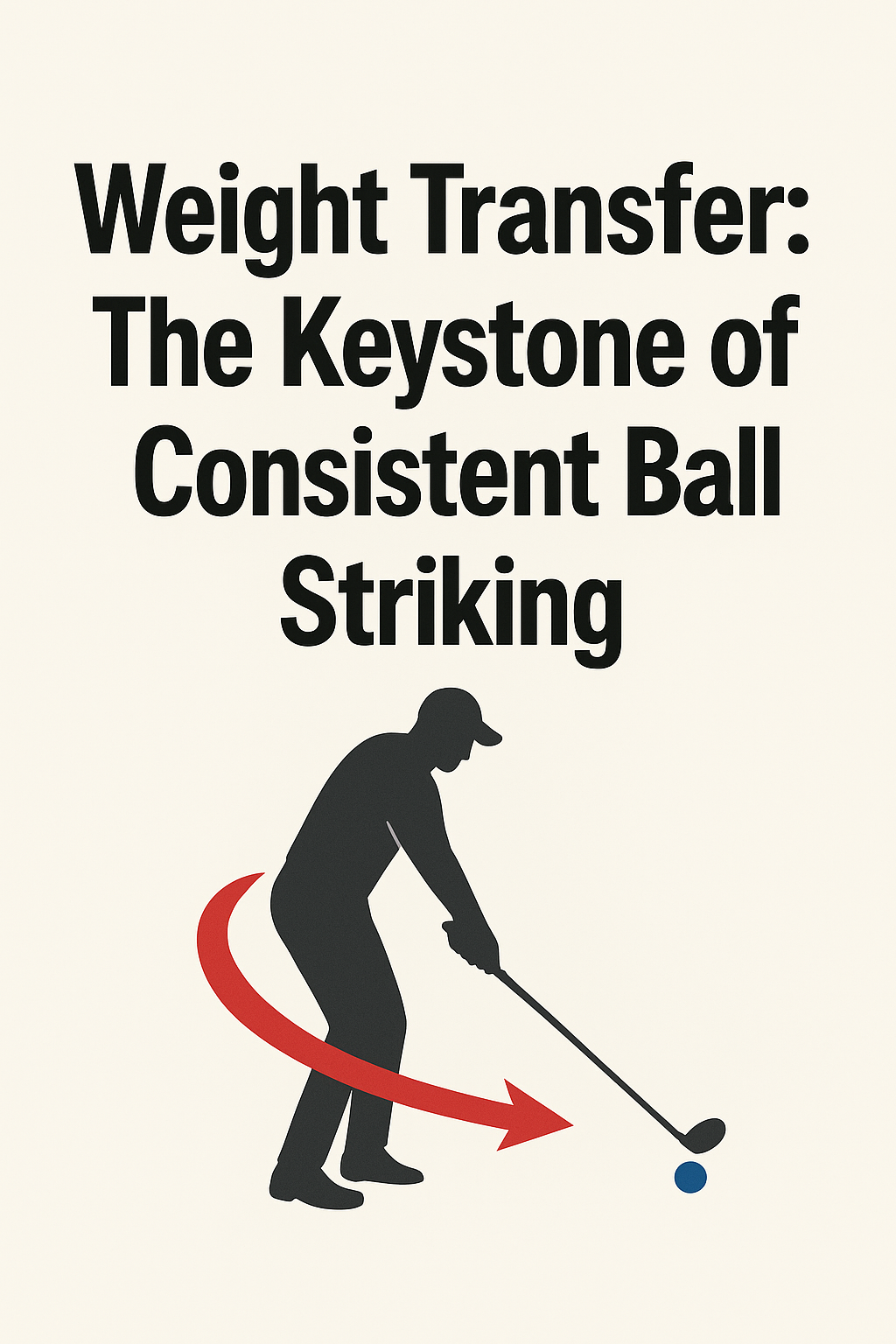
Weight Transfer: The Keystone of Consistent Ball Striking
As a PGA professional, I see this one element make the biggest difference for beginners and longtime players alike: how you move your weight from the back foot to the front foot during the swing. When done correctly, it creates cleaner contact, better ball flight, and more reliable distance. Let’s focus on weight transfer and how to train it.
What weight transfer is
Weight transfer is the deliberate movement of your body’s pressure from the trail (back) foot toward the lead (front) foot as you move from backswing through impact and into the follow-through. In a good sequence, your hips and torso turn to create room for the shift, and the ground reaction forces help drive the club through the ball with solid contact.
Why it matters to the golf swing
- Creates solid contact by delivering the club to the ball with the correct shaft angle and compression.
- Controls timing and sequencing, so the clubface remains stable at impact.
- Produces a consistent lower body drive that helps you with distance control and accuracy.
What the golfer should feel when doing it correctly
- During the downswing, you feel pressure building under the lead foot as the trail foot releases pressure.
- Your weight shifts forward gradually, not all at once, and finishes with most of the weight on the lead foot at impact.
- Chest and hips stay balanced over the lead leg as you strike the ball, with a stable spine angle.
2–3 common mistakes golfers make with this concept
- Not transferring weight at all — you stay predominantly on the back foot through impact.
- Over-rotating or sliding early without letting the weight move naturally to the lead foot.
- Reverse weight shift at impact — pushing into the back foot just as you strike, which robs the shot of speed and solid contact.
Simple, actionable fixes for each mistake
- Staying on the back foot: Initiate the downswing with your hips and legs driving toward the target. Feel your trail knee start to straighten and your lead knee flex slightly as you transfer weight. Practice a slow, half-speed sequence focusing on moving weight forward first, then swinging the arms.
- Over-rotating without weight transfer: Keep the sequence in mind: turn your hips, then shift weight to the lead foot. Don’t rush the shift or let the torso “over-rotate” ahead of the feet. Pause briefly at the top of the downswing to confirm you’ve started the weight shift before the hands accelerate.
- Reverse weight shift at impact: Aim to feel pressure move into the lead foot just before impact and maintain that lead-side pressure through contact. Shorten the time your weight stays on the trail foot at impact and finish tall with your chest over the lead knee.
One easy practice drill you can do at home or on the range
3-Count Weight Shift Drill
- Stand with feet shoulder-width apart, knees softly bent. Take a half swing with the club, then pause at the top for a moment.
- On the count of “1,” shift your weight toward the lead foot and hold for one count. Feel the lead foot press into the ground while the trail foot lightens.
- On the count of “2,” feel your hips rotate toward the target while maintaining balance. On the count of “3,” swing through and finish with most of your weight on the lead foot.
Repeat 8–12 times, slowly increasing to a full swing as you gain the feel. Focus on a smooth, scheduled transfer of weight rather than a rushed, forceful move.
Remember, weight transfer is about sequencing and balance. Practice with a calm tempo, and use your feet and hips to drive the move before the arms acceleration. With consistent reps, you’ll notice crisper contact and more predictable ball flight—even with a simple swing.
Weight Transfer Mastery: The Keystone of Consistent Ball Striking
Weight Transfer: The Keystone of Consistent Ball Striking
In any sport that involves contacting a ball—golf, baseball, tennis, or even cricket—how you move your body weight during the approach, swing, and impact is the difference between an inconsistent miss and a repeatable, solid strike. Weight transfer refers to the deliberate shifting of your center of gravity over the base of support from the back side to the lead side through efficient sequencing.When executed well, weight transfer fuels faster clubhead or bat speed, improves impact location, and reduces compensations that lead to off-center contacts. This article breaks down the science, cues, and practical steps to make weight transfer a reliable keystone in your ball-striking routine.
Benefits of Proper Weight Transfer
- Enhanced consistency: A repeatable weight shift reduces the variability of were the clubhead meets the ball.
- Increased distance with better control: Efficient transfer stores and releases energy through the kinetic chain, maximizing speed at impact.
- Improved contact quality: Pressure progression from back foot to front foot helps square the face at impact and promote a solid strike.
- Better center of gravity management: Proper transfer helps you maintain balance through aggressive moves or under fatigue.
- Reduced stress on joints and injuries: A smooth transfer pattern minimizes sudden decelerations and compensations that strain knees, hips, and back.
Key Principles of Effective Weight Transfer
- Ground reaction forces drive the transfer: The way your feet push into the ground dictates how quickly and how far weight moves forward.
- Sequential sequencing matters: The typical order is from the trail leg to the lead leg, with coordinated hip and torso rotation.
- Maintain posture and spine angle: Don’t collapse into a slide; preserve posture to avoid compensations at impact.
- Keep the head stable relative to the spine: A stable head helps maintain timing and improves strike consistency.
- Feel the load, not just the move: A cue-driven approach (feel the back heel load, then shift weight smoothly) usually translates to better execution.
Biomechanics of Weight Transfer in Ball Striking
Biometrics and teaching cues converge on a simple reality: your body is a kinetic chain. The transfer begins with the ground and travels up through the legs, hips, torso, and finally the arms and club or bat. During a typical forward-dominant strike, the sequence looks like this:
- Weight loads onto the trail foot during the backswing, creating stored elastic energy in the legs and hips.
- As you initiate the downswing, the hips rotate toward the target, and the trail-to-lead weight shift accelerates.
- The torso and arms co-rotate in sequence, leading to the clubhead or bat reaching the ball with forward shaft lean and a square face or contact surface.
- At impact, majority of weight should be over the lead foot, with a controlled transfer continuing into the follow-through to complete the cycle.
Understanding this chain helps you diagnose why a shot slices, hooks, or leaks energy. If any link is broken—excessive early extension, late knee bend, or an incomplete transfer—the strike quality suffers.The good news: with deliberate drills and mindful cues, you can rewire your sequencing for reliable ball striking.
Practical Cues and Fundamentals
- Load into the back foot early: Begin your backswing with slight knee flex on the trail leg to encourage a gradual weight shift.
- Feel the “push” from the ground: Imagine pushing the ground away with your back foot as you start the downswing.
- Drive with the hips, then rotate: Hip turn initiates the transfer; upper body and arms follow in sequence.
- Keep head steady and eyes on the ball: Stability supports accurate timing of weight shift and impact.
- Finish with forward-mleaning momentum: A balanced finish with most weight on the lead foot signals a complete transfer.
Common Faults and How to Fix Them
- Too much weight kept on the back foot, leading to fat or toe-heavy strikes. Fix: Practice a gradual, early ground reaction load into the lead foot and feel a smooth front-foot finish.
- Early extension or reverse spine tilt during the downswing. Fix: Emphasize rotation first,then transfer weight—avoid rushing the arms to the ball.
- Weight never fully shifts to the lead side at impact. Fix: Use drills that encourage lead-side finish with controlled momentum forward.
- Over-rotating the hips without a corresponding shift in weight. Fix: Synchronize hip rotation with a deliberate, stepwise weight transfer to the lead foot.
Drills and Practice Routines to Improve Weight Transfer
Incorporate these drills into your weekly practice to train the motor patterns behind effective weight transfer.Start slow, then progressively increase speed as your body learns the sequence.
- Trail-to-Lead Weight Swap Drill: Set up an alignment stick on the ground from your back foot to your lead foot. Start with your weight on the trail foot, then swing while gradually transferring weight across the line to the lead foot, finishing with the majority of weight forward. Focus on a smooth transfer without abrupt stops.
- Hip-Drive and Transfer Drill: Place a tennis ball under your trail foot’s arch. As you swing, focus on driving the hips toward the target first, then allow the weight to shift toward the lead foot, ensuring the ball remains in contact with the floor during the early phase of the downswing.
- Pause at Impact Drill: Take a slow backswing, pause momentarily at the moment of contact, then complete the swing. This trains timing and ensures the weight is already shifting toward the lead foot at impact.
- Wall-Pressure Drill: Stand facing a wall with your lead foot slightly forward.Press your lead heel into the wall during the downswing to feel forward weight transfer and a stable platform for impact.
- Floor-Triction Drill (Slide Board/Balance Pad optional): On a balance surface, practice a controlled lateral shift from the trail foot to the lead foot while maintaining posture. This builds balance and reduces compensations during real swings.
Case Studies and First-Hand Experiences
Real-world examples help illustrate how weight transfer impacts ball striking across different skill levels and sports. Each case highlights a common challenge and a practical betterment approach.
- Case Study 1 – Amateur Golf Player: A 14-handicap player struggled with heel-first contact and inconsistent distance. After emphasizing a smoother trail-heel load and a deliberate forward weight shift through the downswing, they recorded a 6-8% increase in clubhead speed and a more consistent strike location over four weeks.
- Case Study 2 – Baseball Hitter: A high-school batter who kept weight on the back foot in early contact noticed loss of bat speed. Implementing a cue to “drive the hips and shift weight toward the front foot before contact” led to earlier bat path contact and improved line drive frequency.
Quick Reference Table: weight Transfer Cues and Fixes
Use this at the range or on the field as a fast diagnostic tool. The table uses WordPress-kind styling for easy embedding.
| Cue | What It Feels Like | Common Faults Addressed | Practical Fix |
|---|---|---|---|
| Load into trail foot | Feeling pressure building under the back foot at the start of the swing | Back-foot dominance, fat shots | Soft knee and controlled trail-edge pressure; initiate transfer with torso rotation |
| Shift weight forward late downswing | Lead foot becoming loaded just before impact | Early release, off-center hits | Sync hip rotation with weight move; imagine stepping into the ball with the lead foot |
| Lead foot finish | Most weight finished on the lead foot | Incomplete transfer | Aim for a balanced, forward-leaning finish; review impact position on video |
First-Hand Experience: A Simple Narrative
When I first started coaching players on weight transfer, the toughest part was translating abstract concepts into tangible cues. A key turning point came from teaching players to “feel the ground”—to sense the reaction forces under the back foot as the swing begins. With this cue, players reported a more consistent loading pattern and fewer compensations. One player—an amateur golfer—described the moment as a switch from aimless swaying to a deliberate shift that “loads the spring” and releases energy through impact. The result was more center contact, improved carry distance, and a more confident finish.
SEO-Ready Takeaways and Keywords to Keep in Mind
For readers and search engines, several terms consistently appear as signals of high-quality content related to weight transfer in ball-striking sports. Naturally integrating these keywords helps visibility without sacrificing readability:
- Weight transfer in golf
- Ball striking mechanics
- Ground reaction forces
- Center of gravity in swing
- Sequential kinetic chain
- Impact position cues
- Drills for weight transfer
- Posture and balance in swing
Closing