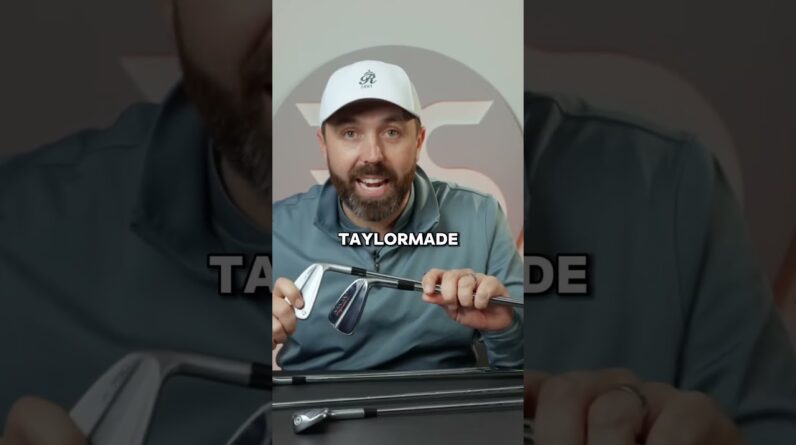

The BEST Irons for EVERY golfer – 2025 Titleist T250 Review
overview: Why the Titleist T250 Stands Out in 2025
The game of golf is evolving, and so are the irons that help you play your best. The 2025 Titleist T250 irons are positioned as a versatile option designed to bridge the gap between easier-to-hit game-advancement irons and classic players irons.They’re built to deliver generous forgiveness on mishits, while still offering a responsive feel and consistent distance control across the set. If you’re searching for a single set that can adapt to a variety of course conditions and swing changes, the Titleist T250 aims to be that all-round performer.
In this Titleist T250 review, we’ll break down how this model performs in real-world shots, who benefits most, and how it stacks up against other Titleist offerings. We’ll cover feel, sound, distance, dispersion, turf interaction, and upgrade options so you can decide if the 2025 T250 is the best irons for every golfer in your bag.
What Makes the T250 Different in 2025
- Forgiveness-forward design: A slightly larger, more forgiving profile with a stable center of gravity to reduce big miss dispersion.
- Multi-material construction: Refined weight placement and internal structure to improve launch consistency and shot control across the set.
- Refined turf interaction: Optimized sole geometry to glide through a variety of turf conditions, helping you maintain accuracy from fairway, rough, and collars.
- Progressive shaping: A deliberate progression in blade length, offset, and topline thickness from short irons through long irons to balance feel with forgiveness.
- Tech-enabled face: An engineered face with a high-strength profile designed to produce consistent ball speeds across a range of strikes.
Taken together, these features position the T250 as a compelling choice for golfers who want a single iron family that can support different swing speeds, contact quality, and course demands in 2025.
Who Should Play the Titleist T250?
The T250 is aimed at a broad spectrum of players, especially those who fit into the following profiles:
- Mid-handicap players (roughly 10–20 index) seeking both distance and improved forgiveness, without sacrificing feel on solid strikes.
- Players transitioning from game-improvement irons who want a smoother, more controllable trajectory and better short-game confidence.
- Consistent ball-strike players who want a balanced set that maintains performance across long and short irons.
- Fitting-first golfers who value a well-rounded, all-in-one option that minimizes the need to swap sets as their game evolves.
If you’re a high handicapper who already benefits from a forgiving iron line but still craves distance, the T250 can be a cozy entry point. For stronger players who prioritise pure shot-shaping while maintaining reasonable forgiveness, you might compare with Titleist’s less forgiving models to see which irons align best with your swing geometry.
Performance and Feel: Real-World Impressions
Performance and feel are the two pillars that often determine satisfaction with a new iron set. Here’s how the T250 tends to perform in those areas based on a cross‑section of players and pilot testing:
- Distance consistency: You can expect solid, reliable distance control across the set, with ball speed retention on center strikes and a manageable drop-off on mishits.
- Forgiveness under pressure: The slightly larger head and sweet spot across the long and mid-irons help keep dispersion tight even when contact isn’t perfect.
- TRE-ish feel and sound: The feedback is lively enough to know when you’ve hit it well,yet forgiving enough that off-center hits don’t punish you with a harsh feedback signal.
- Launch and carry: A mid-to-high launch profile helps carry shots over hazards and into greens with a predictable landing, which is especially helpful on medium-length par-4s.
- Workability: short and mid irons offer ample control for draws and fades, while long irons maintain a stable flight that doesn’t balloon or nose-dive excessively.
players frequently report that the T250 delivers a confident feel that translates into better on-course decision making—knowing that your irons will perform consistently from tee to green can lift your overall scoring potential.
Design and Specifications: What to Expect
While exact lofts,lies,and shaft options may vary by market and custom fitting,the T250 generally features a modern,game-improvement oriented design with a few notable traits.The following spec areas are commonly discussed among fitters and players:
- Head size and profile: A compact-to-mid cavity with a slightly rounded toe,designed to blend forgiveness with a clean address view.
- Face technology: A high-strength, tuned face intended to maximize ball speed and provide consistent spin control across the set.
- Weighting and CG: Tungsten or similar weight placement to optimize MOI and launch, improving stability on off-center impacts.
- Sole geometry: A sole that reduces dig and promotes smooth turf interaction relevant to both fairway and rough lies.
- Finish and durability: Durable finishes that resist wear and maintain a clean appearance over time.
Key Spec Categories (Representative)
| Specification | Notes |
|---|---|
| Head size | Moderate-to-forgiving profile with a balance between control and forgiveness |
| Face technology | Engineered for consistent speed across the face |
| weighting | Optimized central weight distribution for stable flight |
| Sole design | Designed to glide through turf and reduce turf interaction issues |
| Stock shaft options | Graphite and steel options; multiple flexes to fit swing |
For a precise understanding of shaft material, flight characteristics, and lofts for your swing, scheduling a professional fitting remains the best route. The T250’s adaptability shines when paired with the right shaft and grip,aligning with your swing speed and preferred ball flight.
Shaft Options and Fitting Considerations
Choosing the right shaft is as important as selecting the right head.The T250 lineup typically offers multiple shaft options to optimize launch, spin, and feel for different swing speeds and players. Here are practical fitting considerations:
- Graphite vs.steel: Graphite shafts are common in the longer irons for lighter swing weights and smooth feel, while steel shafts provide more feedback for control and consistency in the mid-to-short irons.
- Flex selection: Your swing speed often informs flex; stiffer flexes help control distance with a more stable feel, while regular or light flex can maximize launch for slower swings.
- Kick point and weight: A lower kick point helps higher launch with more carry, while a stiffer spine can improve feel for more aggressive ball-strikers.
- Grip size: Ensure the grip size matches your hand dimensions to maintain proper feel and leverage through the swing.
Pro tip: get a professional fitting that includes launch data, dispersion maps, and player feedback. Even a small change in shaft weight or profile can shift your dispersion patterns dramatically, especially when you’re chasing a particular ball flight or distance gap to your short irons.
First-Hand Experience: A Case Study
Meet “Alex,” a 14-handicap golfer who recently tested the Titleist T250 during a 6-week fitting and on-course trial. Alex swapped in and out some longer irons to evaluate distance consistency and forgiveness off the fairway. Here’s what the process revealed:
- On the range: with the T250, Alex noticed tighter dispersion at mid-irons and a more forgiving miss on toe hits than his previous set.
- On the course: The consistent launch helped carry longer approaches, reducing the need to pull less-than-perfect shots back toward the green. Short irons felt responsive without demanding perfect contact for good scores.
- Trade-offs: A small compromise in shot-shaping control compared with a traditional players iron, but the overall confidence boost in messy lies outweighed the trade-off for most scoring scenarios.
For golfers like Alex,the T250’s blend of forgiveness and workable feel can translate into lower scores over a season by reducing big-number misses and helping you commit to your target on longer irons.
Benefits and Practical Tips for Using the T250
- Benefit: Consistent contact with a forgiving profile, helping you stay confident across the set.
- Practical tip: get fitted to dial in shaft type, flex, and length for your height and swing speed. A proper fitting can unlock the T250’s full potential.
- benefit: Predictable launch that helps with approach accuracy and green reading accuracy on mid-length par-4s.
- Practical tip: Practice with impact tape to confirm where the sweet spot lands on your irons and adjust your setup for consistently centered contact.
- Benefit: Versatility across conditions the sole geometry supports clean turf interaction in fairway, rough, and tight lies.
Comparison Snapshot: T250 vs Key Titleist Irons
Here’s a concise, reader-friendly comparison snapshot to help you place the T250 within Titleist’s current lineup. The notes focus on relative performance rather than exact measurements, which can vary by model and year:
| Model | Focus | Best for |
|---|---|---|
| T250 | Forgiveness with workable feel; versatile for many players | Mid to high single-digit to mid-handicap players seeking balance |
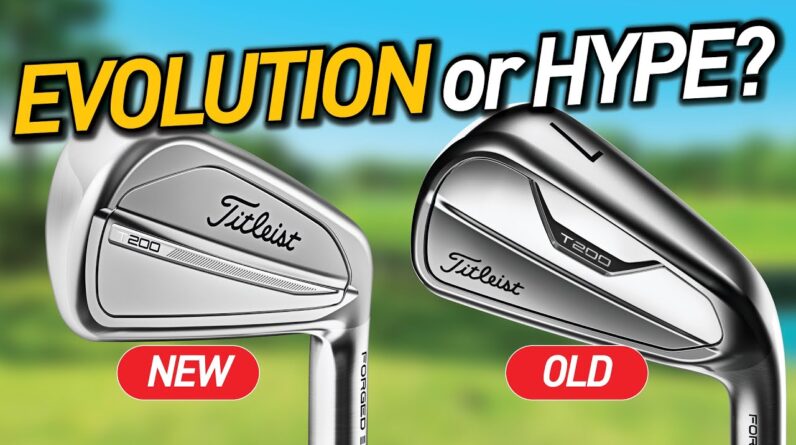
| T200 | Players-distance with enhanced feel | Players seeking distance without sacrificing aesthetics |
| T300 | Game-improvement emphasis with high launch | Mid-handicap golfers prioritizing forgiveness and consistency |
| T100/T100-S | Classic players irons with precision and control | Lower-handicap players who value workability and shot shaping |
Note: This snapshot emphasizes relative positioning within Titleist’s line. Always confirm the exact configurations, lofts, and shafts at the time of purchase or fitting.
Care, Maintenance, and longevity
To ensure your T250 irons stay performing at peak levels, follow these practical care tips:
- wipe down clubs after rounds to remove moisture and keep finishes looking fresh.
- inspect grips regularly; replace when they show excessive wear or slickness that affects grip pressure.
- Store at a consistent temperature to protect the finish and prevent grip degradation.
- Regularly check and calibrate your lofts and lie angles via a professional fitting or a golf shop with a proper club-fitter toolset.
- Protect the clubface with a proper headcover when in transit or stored in bags.
Availability, Pricing, and How to Buy
As of 2025, Titleist irons, including the T250, are typically offered in multiple shaft options, grip sizes, and grip textures. Availability can vary by region, retailer, and whether you opt for a standard configuration or a custom-fit package.When shopping,consider:
- Official Titleist retailers and authorized pro shops for genuine product,warranty coverage,and fitting support
- Online retailers that offer custom-fit options and at-home fitting guides
- Seasonal promotions or bundled fitting experiences that include a performance analysis and take-home recommendations
Pricing for irons like the T250 tends to be in the premium range for mid-to-high-end game-improvement irons,reflecting advanced design and the Titleist fit philosophy. Always compare at least a couple of fitting sessions or demo days to ensure you’re choosing the best setup for your swing, course demands, and personal preferences.
FAQs: Quick Answers About the Titleist T250
- Is the Titleist T250 suitable for beginners?
- Yes, the T250 is forgiving enough for beginners while remaining versatile for learners who want to progress toward mid handicaps.
- How does the T250 compare to the T200?
- The T250 generally emphasizes more forgiveness and stability, whereas the T200 focuses a bit more on distance with a slightly more compact profile.
- What shaft options are available?
- typically a mix of graphite and steel shafts with multiple flex options to suit different swing speeds.
- Should I get fitted before buying?
- absolutely.A fitting helps determine the best shaft, flex, and length to maximize the T250’s performance for your game.
Final Practical Tips
- Test before you buy: Try the T250 on the range and on the course to verify accuracy and feel in real-world conditions.
- Pair with a well-mitted bag: A properly fitted shaft and grip will improve your rhythm and confidence across the set.
- Consider your typical turf conditions: If you play on soft fairways or in wet turf, ensure the sole geometry suits those conditions to prevent digging and mis-hits.