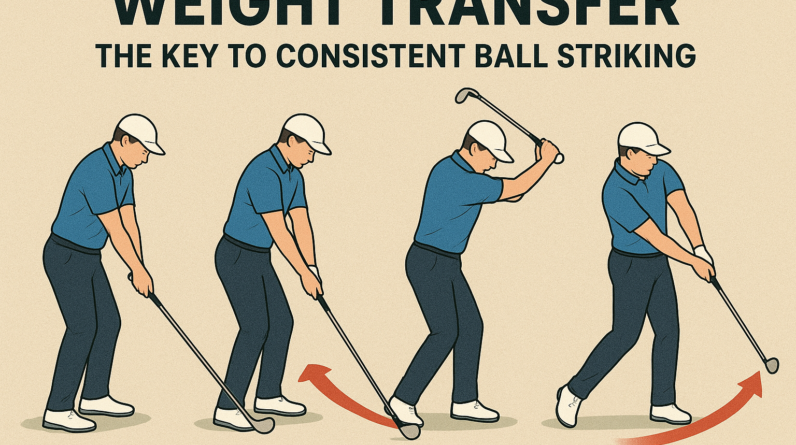

Weight Transfer: The Cornerstone of Consistent Ball Striking
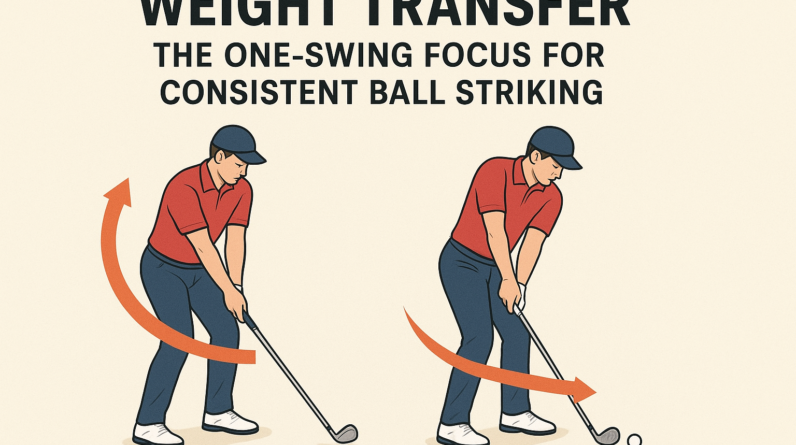
Focusing on weight transfer gives you a simple, repeatable way to improve accuracy and distance. This isn’t about smashing the ball harder with the arms; it’s about letting your lower body guide the swing with a smooth, controlled shift of pressure from back foot to lead foot.
What the concept is
- Weight transfer means moving your center of gravity from the trail foot (right foot for right-handed players) to the lead foot (left foot for right-handers) as you transition from backswing to downswing and through impact.
- It’s guided by your hips turning, not by your shoulders sliding or your feet sliding along the ground.
- Good weight transfer helps you strike the ball on the center of the face and maintain spine angle, so your body and club meet the ball consistently.
Why it matters to the golf swing
- Improves contact and consistency. A solid transfer keeps the clubface square to the path at impact.
- Enhances power without added effort. The legs and hips generate more speed when they drive the transfer rather than when you “hammer” with the arms.
- Boosts balance and sequencing. When weight shifts correctly, your body naturally rotates into a strong finish instead of wading around the ball.
What the golfer should feel when doing it correctly
- On the backswing, you feel a load of pressure toward the inside of your trail foot — your weight loading the back foot without collapsing the knee.
- During the downswing, you feel your hips rotate and your weight gradually move toward the lead foot, finishing with most of your weight on the lead side.
- At impact, you sense a stable base: ground pressure under the lead foot, with the trail foot releasing weight as you rotate through the ball.
2–3 common mistakes and fixes
-
Mistake 1: Weight stays on the trail foot too long (no transfer).
Fix: Start your downswing with a deliberate hip turn and a feeling of “pushing off” the trail foot toward the lead foot. Practice slow-motion swings focusing on moving the weight early, not late. Pause briefly at impact to confirm most of your weight is on the lead foot. -
Mistake 2: Swaying or sliding laterally instead of turning (loss of balance).
Fix: Emphasize a turning motion from the hips rather than a slide of the hips. Keep your spine angle constant and let the belt-buckle lead the rotation. A simple wall drill (stand with your backside lightly touching a wall, rotate hips without letting your torso push into the wall) can reinforce turning over sliding. -
Mistake 3: Inconsistent transfer across clubs (long irons vs wedges).
Fix: Use a single, repeatable cadence and feel for every club. Practice with a mid-iron at 70–80% speed, then 90% speed, focusing on the same weight shift pattern. Keeping the same sequence helps your impact location become more reliable regardless of club length.
One easy practice drill you can do at home or on the range
Step-Shift Drill – This drill trains a deliberate weight shift without adding arm tension:
- Stand with your feet close together and address the ball as you normally would, but don’t swing yet.
- Take a half-swing and focus on loading the trail foot at the top of the backswing. Then, as you start the downswing, step slightly toward the target with your lead foot while continuing to rotate your hips.
- Finish with your weight solidly on the lead foot and your chest facing the target.
- Repeat 8–12 times, first slowly, then at a comfortable pace. Aim for a smooth, continuous transfer rather than a jolting shift.
Practice tip: keep your head steady and your spine angle constant while performing the drill. If you notice tailbone or knee wobble, slow your tempo and reset your balance before proceeding.
Weight Transfer: The Cornerstone of Consistent Ball Striking
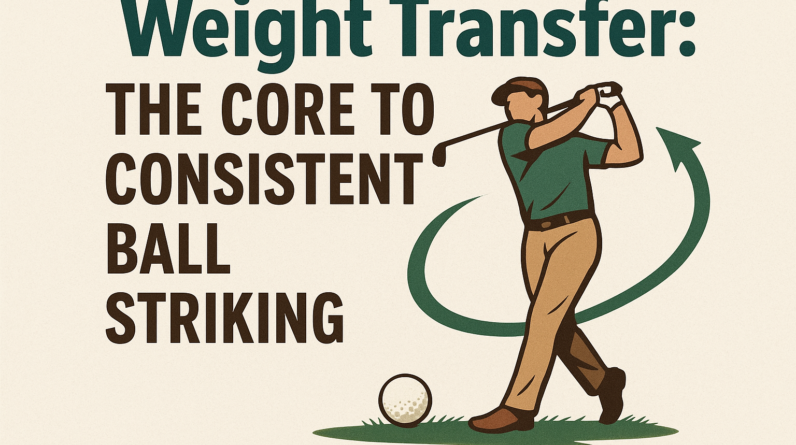
Weight transfer is the engine behind every clean, repeatable shot. In golf, tennis, and other ball-striking disciplines, how you move your body from the start of the swing to impact and beyond largely determines distance, accuracy, and control. This guide dives into the science, practical cues, and drills you can use to develop reliable weight transfer that translates to lower scores and more confidence on the course.
What Is Weight Transfer in Ball Striking?
Weight transfer, in it’s simplest form, is the purposeful movement of your body’s center of mass from one foot to the other during the swing. In golf, you start with more weight on the back foot (trail side) during the back swing, then progressively shift toward the front foot (lead side) through the downswing and impact. The goal is to maintain balance, preserve spine angle, and deliver clubhead speed with control.
- Back-swing load: Gather energy by loading into the trail leg while maintaining posture.
- Transition: Initiate the shift from the trail hip and knee toward the lead side without losing spine angle.
- impact: Maximize bottom-of-swing contact with a stable, braced front side to compress distance efficiently.
- Follow-through: Allow the weight to rotate naturally onto the lead foot, finishing with good balance.
biomechanics Behind Effective Weight Transfer
Weight transfer is a kinetic chain phenomenon. Ground reaction forces flow from the feet up through the legs, hips, torso, and finaly to the arms and club. Efficient transfer minimizes wasted energy and reduces the risk of over-rotation or inconsistent contact.
- Kinetic chain: Power originates at the ground and travels upward through a connected sequence of joints and muscle groups.
- Ground reaction forces: Stable pressure against the ground provides a solid foundation to unleash turning torque and clubhead speed.
- hip and spine sequencing: Controlled pelvic rotation and maintained spine angle enable a consistent strike path.
- Center of mass control: keeping your head slightly ahead of the ball and your center of mass over the middle of your stance enhances contact quality.
Key Phases of Weight Transfer in Golf
- Tee to top of backswing: Weight moves toward the trail foot, creating a coil between the lower body and upper body.
- Transition: The hips start to unload, and pressure shifts toward the lead foot while maintaining spine angle.
- Downswing and impact: The trail knee extends,the lead leg stabilizes,and the clubface meets the ball with a square face and centered contact.
- Follow-through: Weight finishes on the lead side with a balanced, controlled finish.
Why Weight Transfer Determines consistency
Consistency in ball striking comes from repeating the same transfer pattern shot after shot. When you control weight transfer, you:
- Improve contact quality and reduce push/Hook or slices caused by off-center impact.
- Increase clubhead speed without over-rotating the body or losing posture.
- Stabilize swing arc and tempo, enabling better distance control.
- Enhance balance through the finish, which correlates with better course management.
Developing a reliable transfer pattern takes awareness, drills, and mindful practice. Small, deliberate adjustments compound into meaningful gains over time.
Common Mistakes That Break Weight transfer
- Staying on the back foot: Excessively loading the trail heel can lead to late impact and distance loss.
- Early extension: Pushing hips forward too soon disrupts spine angle and reduces leverage at impact.
- Swaying or excessive head movement: Shifting weight off the center without organized sequencing lowers contact quality.
- Reverse weight shift: Losing balance and dipping onto the lead foot before impact causes mishits.
- Over-rotation of the upper body: If the chest rotates too early, the club loses lag and speed potential.
Drills and Practice Routines to Improve Weight Transfer
Adopt a progression approach: start with foundational cues, then advance to full-swing drills. Focus on feel and feedback rather than forceful effort. Here are practical drills you can implement on the range or at home:
- Pause and Load Drill: Take your backswing, pause for a count, then complete the swing while maintaining your spine angle. This trains sequencing and a deliberate shift to the trail leg.
- Step-Through Transition Drill: from a narrow stance, transition weight by stepping toward the target after impact to reinforce lead-side finish.
- 180-Degree Pivot Drill: Stand with feet shoulder-width apart, rotate hips 90 degrees toward target and then back to address to build awareness of pelvic sequencing.
- Tempo-Driven Swings: Use a 3-1-3 tempo (backswing to transition to downswing to impact) to synchronize weight shift with rotation.
- Wall-Pressure drill: Stand a few inches from a wall with your lead hip; as you swing, press into the wall slightly to feel proper weight transfer without swaying.
- Split-Stance Drill: Place one foot slightly ahead of the other; practice shifting weight laterally with minimal hip tilt to feel lead-side loading.
- Foot-Pressure Mapping: Use a pressure mat or simple cue: “feel the pressure move from the back foot to the front foot during impact.” This builds proprioception.
practical Tips for Immediate Gains
- Keep your spine angle constant from takeaway through impact; avoid rising up as you shift weight.
- Visualize a straight line of pressure from the back foot to the lead foot at impact.
- Use ground contact cues: feel heavier on the inside edge of the back foot during the downswing, then even out on the lead foot after impact.
- Align the hips with the target line to encourage clean weight transfer along the intended path.
- Record and review: a single swing video can help you see when the weight transfer pattern breaks down.
Case Studies and Frist-Hand Experiences
Below are concise examples of how players improved through a focused weight transfer approach. Real-world cues and drills helped them translate theory into measurable on-course gains.
Case Study A: Weekend golfer Reduces Inconsistency
- Challenge: Missed short to mid irons with inconsistent contact and distance control.
- Action: Implemented Pause and Load Drill and Tempo-driven Swings for 20 minutes, three times a week for 4 weeks.
- Result: More centered contact,6–8 yards gain in dispersion,and a more balanced finish. Feedback noted improved confidence on approach shots.
Case Study B: Competitor Builds Power with Control
- Challenge: Struggled with late release and loss of lag, reducing speed at impact.
- Action: Introduced Split-Stance Drill and Wall-Pressure cues to emphasize controlled weight transfer and pelvic sequencing.
- Result: increased clubhead speed while maintaining accuracy, especially on mid-to-long irons.
Case study C: Beginner Wins Early with Simple Cues
- Challenge: Over-rotation and inconsistent contact as a novice.
- Action: Used 180-Degree Pivot Drill to build awareness of hip sequencing; added Ground Contact reminders.
- Result: First-month swing started to feel repeatable, with notable improvements in balance and impact quality.
Weight Transfer Quick reference
Use this at the range to check your transfer pattern. The table uses simple cues you can apply before and during practice.
| Aspect | Cue / Action | common Feedback |
|---|---|---|
| Setup | Balanced stance, weight slightly more on the inside of the trail foot, soft knees | Stability before movement |
| Backswing | Feel pressure build on the trail foot | Coiling without losing posture |
| Transition | Lead hip lead, hips point toward target, maintain spine angle | Solid path for downswing |
| Impact | Weight moves to the lead foot, trail knee unlocks | Centered contact and solid compression |
| Finish | Full weight on lead side, chest facing target, balanced | Repeatable finish position |
Benefits of Mastering Weight Transfer
- Consistent ball-striking across clubs and shot types.
- Better distance control due to efficient energy transfer.
- Improved balance reduces mishits and post-impact dispersion.
- Increased confidence and tempo across the swing.
- Greater adaptability to course conditions and different lies.
Advanced Considerations and Variations
While the fundamentals hold, players at higher levels often adjust weight transfer for different shots. Here are some refined considerations:
- Lies and terrain: Uphill, downhill, and tight fairways may call for minor shifts in pressure distribution without breaking the core sequencing.
- Shot shaping: Slightly varying weight transfer can influence draw/fade tendencies when combined with grip and swing plane adjustments.
- Wrist hinge and lag: Proper transfer should preserve lag early in the downswing; avoid forcing weight shift at the expense of timing.