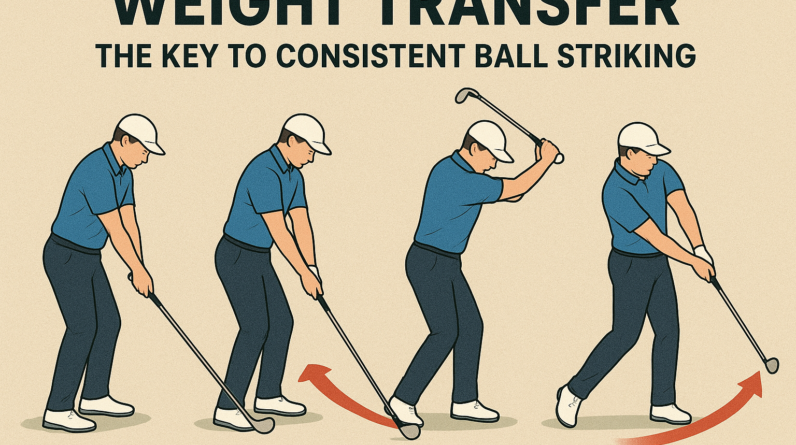

Weight Transfer: A Simple, Powerful Key to Consistent Ball Striking
When your body properly moves weight from the trail foot to the lead foot through impact, clean contact and solid ball flight follow. This post focuses on one essential concept—weight transfer—and gives you clear, actionable steps you can use on the range or at home.
What the concept is
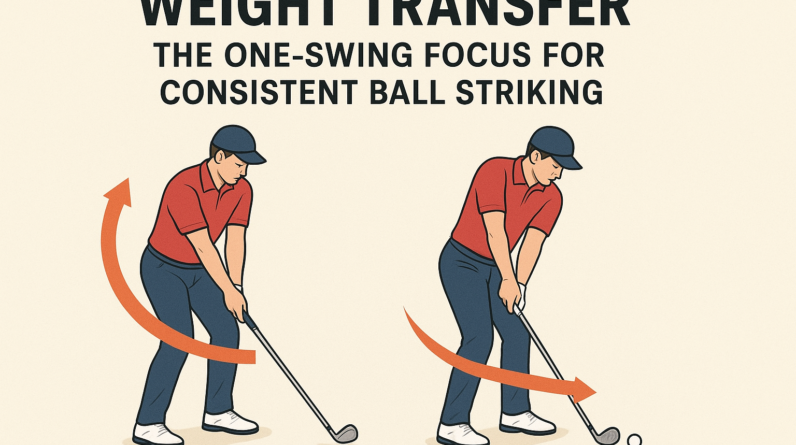
- Weight transfer is the movement of your center of gravity from the trail side (the right foot for right-handed players) toward the lead side (the left foot for right-handed players) as you strike the ball and finish.
- It involves a coordinated sequence: a subtle hip rotation and a controlled shift of pressure from the trail foot to the lead foot, timed so the clubface and hands can deliver the ball with solid contact.
- The goal isn’t a big, jarring slide. It’s a smooth, balanced rotation and pressure shift that stays connected to your whole body and your spine angle.
Why it matters to the golf swing
- Solid contact: Proper transfer helps the club strike the ball with the face square to the path at impact.
- Distance and control: Efficient weight shift allows you to generate speed without losing balance or direction.
- Consistency: When weight moves predictably, your strikes become more repeatable, reducing slices or pulls caused by an unstable balance.
What the golfer should feel when doing it correctly
- Early but controlled pressure on the lead foot as you approach impact.
- A stable trail leg that gradually unwinds into the ground without collapsing inward.
- Your hips turn toward the target as the upper body remains centered, so your chest and spine stay angled toward the target line.
- Balance finished on the lead foot with a solid, quiet finish, not falling back or over-shooting the target.
2–3 common mistakes golfers make with this concept
- Mistake 1: Weight stays on the trail foot through impact, causing thin shots or thin missed hits.
- Mistake 2: Weight shifts too early, before contact, so you bottom out behind the ball or lose compression.
- Mistake 3: A big lateral slide without enough rotation of the hips, which creates a loss of control and balance.
Simple, actionable fixes for each mistake
- Fix for Mistake 1: Train a deliberate, controlled shift onto the lead foot starting just as the downswing begins. Cue: think “hips rotate first, weight follows.” Keep a steady spine angle and press into the lead foot as you strike.
- Fix for Mistake 2: Pause briefly at the top of the backswing, then begin the downswing with a small, intentional weight shift to the lead side. This timing helps you compress the ball instead of overturning the shot.
- Fix for Mistake 3: Focus on rotating the hips toward the target while keeping the head and upper body stable. A simple cue is “rotate, don’t slide.” Practice with a small towel under the armpit to encourage solid, rotational movement rather than excessive lateral slide.
One easy practice drill you can do at home or on the range
- Step-Through Weight Transfer Drill:
- Stand with a comfortable, athletic setup. Start with a short backswing—just to the top of the backswing.
- As you begin the downswing, keep your weight on the trail foot and then step softly with your lead foot toward the target as you strike the ball. If you don’t have a ball, just rehearse the step and weight transfer without striking.
- Finish with your weight fully on the lead foot and your chest facing the target. Return to address and repeat.
- Tips:
- Keep the step small and controlled; the goal is timing, not speed.
- Maintain a quiet head and steady spine angle throughout the move.
- Do 2–3 sets of 8–12 reps, alternating between a shorter and slightly longer step as you become more comfortable.
Mastering weight transfer won’t overhaul your entire swing overnight, but it will build a foundation for cleaner contact and more consistent ball striking. Practice this focus in short sessions, stay patient, and you’ll feel a steadier, more repeatable delivery at impact.
Weight Transfer in Golf: The Simple Key to Clean Contact and Consistent Ball Striking
Why Weight Transfer Matters in Golf
At first glance, golf can feel like a game of timing and rhythm. The truth is that clean contact and consistent ball striking hinge on a single, repeatable physical action: weight transfer. When you move your weight efficiently from the back foot (trail foot) toward the front foot during the downswing and through impact, you create a stable base, solid contact, and powerful ball speed. conversely, poor weight transfer often shows up as thin or fat shots, slices or hooks, and inconsistent distances.
- Control of the center of mass: By shifting weight toward the lead foot at impact, you keep the center of mass over the pivot point, helping the clubface meet the ball with the correct square angle.
- Ground reaction forces: Proper transfer uses the ground as a springboard. Your legs and hips store and release energy, increasing efficiency and consistency.
- Consistency across clubs: Whether you’re hitting short irons or a driver, the same fundamental weight transfer pattern applies, reducing swing variation.
How Weight Transfer Works: From Setup to Impact
Understanding the physics behind weight transfer helps you translate it into repeatable practise habits. Here’s how it typically unfolds in a standard full swing for a right-handed golfer:
- Setup and posture: Start with balanced weight distribution roughly centered over the arches of your feet. A slight athletic knee flex and a slight tilt of your spine away from the target (toward the ball) help you maintain balance through the swing.
- Preswing weight distribution: As you begin the backswing, your weight shifts slightly toward the trail foot (right foot for a right-handed golfer). The hips rotate, the torso coils, and you feel a loading of the back leg. The trail heel may lift slightly to allow the hips to rotate freely.
- Transition (top of backswing to start of downswing): The key transition is a deliberate transfer of weight toward the lead foot (left foot for a right-hander). The hips initiate the move, the torso untwists toward the target, and the weight moves from the back foot toward the front foot while maintaining balance and lag in the wrists.
- Impact: At impact, most of your weight is on the lead foot, with a pleasant amount still on the trail foot to maintain balance. The goal is a stable, centered impact with the ball, allowing the clubface to strike squarely and compress the ball against the clubface.
- Follow-through: After impact, weight continues to transfer onto the lead side as you rotate through the shot, finishing with your chest facing the target and most of your weight on the lead foot.
Common teaching cues emphasize the feel of a smooth, forward push off the trail foot, a lateral shift without excessive slide, and a deliberate hip rotation that drives weight onto the lead side. The result is a more consistent strike pattern and better distance control.
Common Faults with Weight Transfer and How to Correct Them
- Sway or slide rather of pivot: The upper body moves laterally without a corresponding hip rotation, leading to poor contact. fix: Practice drills that promote hip-driven weight transfer, not mere lateral movement.
- Early extension: The hips thrust forward too early, causing a loss of spine angle and thickness. Fix: Maintain spine angle through impact by feeling a slight knee bend and core engagement.
- Stalling on the trail side: The trail knee loses flex and the body stops transferring weight. Fix: Keep slight trail knee flex and allow the hips to rotate toward the target as you move into impact.
- Over-rotation without transfer: Rotating the upper body without shifting weight creates path and contact issues. Fix: Synchronize hip rotation with a conscious weight shift to the lead foot.
Practical cueing helps: think “hips to target,” “push off the back foot,” and “feel pressure move to the front foot just before impact.” Use these cues in practice to build a repeatable pattern.
Drills and Practice Routines to Improve Weight Transfer
Below are targeted drills you can incorporate into any practice session. They help you feel the correct sequence without worrying about distance or spin.
1) Step-Through Weight Shift Drill
- Take your normal stance with a mid-iron.
- Take your backswing, then as you transition, step forward with your lead foot toward the target while maintaining balance.
- Finish with a full, balanced pose on your lead foot.
- What it trains: lead-foot pressure, hip rotation, and post-impact balance.
2) Pause-Then-Punch Drill
- Address position with a slight knee bend and neutral spine.
- Swing back to a comfortable top, pause for 0.5 seconds, then drive toward impact with forward weight shift.
- Finish naturally.
- What it trains: timing of weight transfer and sequencing from backswing to impact.
3) Pressure-Sensitive Ground Drill
- Place a small bag or footprint markers under your right foot (trail) and left foot (lead).
- During the backswing, keep more pressure on the trail foot; during the downswing and impact, transfer pressure to the lead foot.
- What it trains: tactile feedback for weight transfer accuracy.
4) Dual-Impact Mirror Drill
- Set up a mirror to observe your torso and hips; perform a series of half-swings focusing on hip rotation and weight shift.
- Keep your head steady and track the movement of your pelvis as you transfer weight forward.
- What it trains: swing path awareness and timing of weight transfer.
Drills at a glance (rapid reference):
| Drill | What to Practice | Common Mistakes | Tip |
|---|---|---|---|
| Step-Through Weight Shift | Lead foot pressure + hip rotation | Swaying or lurching | Keep rhythm steady; don’t rush the step |
| Pause-Then-Punch | Sequenced shift with a pause | Over-gripping or stiff shoulders | relax the grip; feel the forward move from hips |
| Pressure ground Drill | Foot pressure feedback | Hanging on back foot | Feel the front-foot pressure build through impact |
| Dual-Impact Mirror | Visual feedback on hips | Early extension | Keep spine angle; rotate into impact |
Practical Tips for Consistent Weight Transfer
- Start with a balanced setup and a light grip. If you’re gripping tightly, you’ll limit the natural weight shift.
- Keep your core engaged and your spine angle intact through impact.A strong core supports clean transfer.
- Feel a slight “press” into the ground with the trail foot during backswing and a deliberate forward push to the lead foot at impact.
- Improve ankle and knee mobility to allow smoother weight transfer. Gentle ankle flexion helps you load and unload efficiently.
- Use slow-motion practice to feel the sequence before increasing speed. Speed without control compounds errors.
Benefits and Practical Tips
- Cleaner contact: Weight transfer helps the clubface meet the ball with the square face, reducing pushes and pulls.
- Better ball flight control: A well-timed weight transfer leads to more consistent launch conditions and more predictable ball flight.
- Increased distance with control: Efficient energy transfer from the ground to the clubhead translates into higher ball speed without over-swinging.
- Lower scoring averages: Consistent contact and accuracy reduce three-putts and improve greenside performance over time.
Case Studies and First-Hand Experiences
Real golfers improve when they focus on weight transfer as a foundational pattern, not just a swing thoght. Here are two representative experiences:
Case Study A: John’s Path to Consistent Iron Play
John, a weekend golfer, struggled with fat iron shots that veered left. After incorporating the “pause-then-punch” drill and the step-through weight shift,he reported a notable decrease in inconsistent contact. Over six weeks, his iron dispersion tightened, and he began hitting closer to the center of the face more often. Key takeaways for John: focus on hip-driven weight transfer, keep a relaxed grip, and practice with tempo rather than force.
Case Study B: maria and the Driver Dilemma
Maria wanted more consistent driver contact. She found that she was stalling on the trail foot and losing width in her swing. By working on a mirror drill to visualize hip rotation and using a light-weight training aid that encouraged forward weight transfer, she increased awareness of the transfer pattern. After a 4-week program, she noticed a meaningful improvement in ball speed consistency and distance control off the tee.
Key Weight Transfer Cues by Phase
| Phase | cue / Feel | what to Observe | Common Pitfalls |
|---|---|---|---|
| Setup | Balanced, athletic stance | Weight centered; slight knee flex | Early collapse or excessive lean |
| Backswing | Load onto trail foot | Hip rotation, spine angle preserved | Sway or lateral slide |
| Transition | Hip drive toward target; weight moves forward | Center of gravity shifts to lead foot | Stalling or reverse weight shift |
| Impact | Lead foot pressure; forward push | Clubface square at contact | Early extension or fat shots |
| Follow-through | Full rotation onto lead side | Balance and finish position | Loss of posture or collapse |
Equipment, Levels, and How Weight Transfer Interacts with Clubs
weight transfer is a universal principle across all clubs, but your feel changes slightly depending on the club and your skill level.
: A compact swing with precise weight transfer keeps the ball starting on a predictable line. Emphasize a stable base and controlled hip rotation. : Fine-tuning weight transfer can correct specific inconsistencies, such as hook tendencies or low ball flights, by adjusting how and when weight moves to the lead foot.
Putting It All Together: A Simple 4-Week Plan
- Week 1: Focus on setup and preswing weight distribution. Practice the Pause-Then-Punch drill with a 7-iron, 20 minutes per day.
- Week 2: Add the Step-Through Weight Shift drill. Do 15 minutes with the lead foot stepping, plus 15 minutes of mirror work.
- Week 3: Combine drills into a 30-minute routine, emphasizing tempo and balance. Include the Pressure Ground Drill for feedback.
- Week 4: Apply to full shots on the range. Record a couple of shots with a phone camera to review how weight transfer looks at impact. Adjust cues as needed.
Consistency grows from deliberate, mindful practice. by treating weight transfer as a fundamental, your overall ball-striking quality will improve across clubs and shot types.
Final Notes for Consistency
Weight transfer is the bridge between good technique and repeatable performance. when you cultivate a forward-fed pressure shift through impact, you minimize compensation movements that degrade contact. Remember to keep your spine angle, control your tempo, and use the drills that best match your current level. With patience and consistent practice, clean contact and reliable ball striking become the default, not the exception.