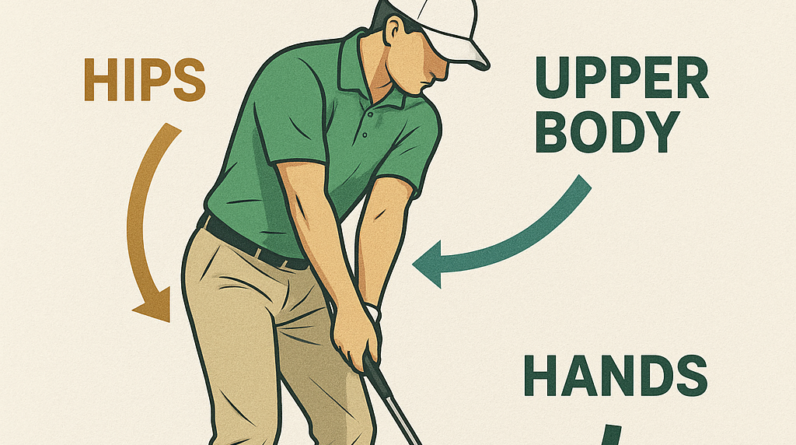

Master Your Swing Tempo: The 3:1 Rhythm for Consistent Ball Striking
Tempo is the rhythm of your golf swing—the timing between the backswing and the downswing. A smooth, repeatable tempo helps your arms and body work together, keeps your clubface on a square path, and makes it easier to strike the ball consistently. Don’t chase power first; chase a reliable rhythm, then add speed as your tempo becomes automatic.
What the concept is
- Tempo is the relative speed of the backswing versus the downswing. Most good players use a calm, repeatable rhythm where the backswing feels deliberate and the downswing begins with a controlled, synchronized transition.
- A common, easy-to-consider ratio is 3:1 (backswing:downswing). In practice this means the backswing takes about three times as long as the downswing, giving your body time to load and your hands time to release naturally.
Why it matters to the golf swing
- Better contact: a steady tempo helps you reach the ball with the same arc and face position more often.
- More forgiveness: consistent rhythm reduces speed drops and abrupt hand/arm action that can twist the clubface open or shut.
- Consistent ball flight: timing and sequencing stay intact across clubs, so your shots stay on target more often.
What you should feel when doing it correctly
- A relaxed, natural takeaway with no rush.
- A brief, comfortable pause at the top as you set your spine angle and ready your downswing.
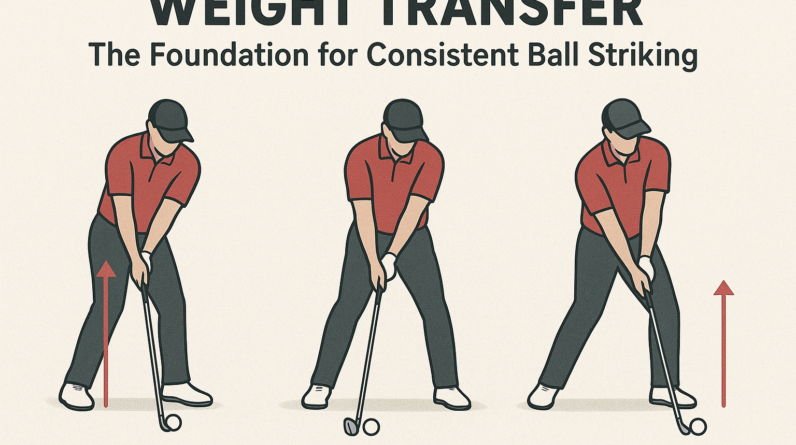
- A smooth transition into the downswing, initiated by the lower body, not a hard hand flip at impact.
- Balanced finish with your chest facing the target and your weight comfortably distributed.
2–3 common mistakes and simple fixes
-
Mistake 1: Rushing the swing (backswing or downswing).
Fix: Build a clear rhythm. Use a 3:1 cue: take the backswing in three smooth counts (1-2-3) and start the downswing on count 4. If you’re using a metronome or counting out loud, keep the count steady and don’t hurry to the ball. -
Mistake 2: Tension or stiff wrists that kill timing.
Fix: Keep grip pressure light and allow a natural wrist hinge. Imagine your wrists softening slightly as you start the downswing. The club should feel like it’s uncoiling rather than snapping shut. -
Mistake 3: No pause at the top, then an abrupt transition.
Fix: Add a tiny top pause (about 0.2–0.3 seconds). This helps you feel the load before the unload, making the downswing feel more controlled and on tempo.
One easy practice drill you can do at home or at the range
3-Beat Tempo Drill (Backswing = 3 counts, Downswing = 1 count)
- Set a tempo you can control (a metronome at 60–72 BPM works well, or simply count out loud).
- Without hitting a ball, take the club back on the first three counts: 1, 2, 3. Focus on a calm, deliberate takeaway and a moment at the top.
- On the fourth beat (count 4), initiate the downswing and swing through as you would to contact a ball. Feel the transition from the load to the explode-and-deliver phase.
- Repeat 6–8 times, maintaining the same rhythm. If you lose tempo, reset and start again.
- Gradually add a ball and keep the same 3:1 rhythm, then try to maintain it as you increase swing length.
Tip: the goal is not to swing faster, but to swing with a reliable rhythm. As you get comfortable, your body will know the timing and speed will feel more natural across different clubs.
Practice this rhythm regularly, and you’ll notice more consistent contact, straighter ball flights, and improved confidence with every club in your bag.
Master Your Swing Tempo: The 3:1 Rhythm for Consistent Ball Striking
Master Your Swing Tempo: The 3:1 Rhythm for Consistent Ball Striking
Why tempo matters: the foundation of repeatable contact
Tempo is the rhythm that guides your entire swing.A clean, repeatable strike isn’t just about raw strength or speed; it’s about timing. The 3:1 rhythm gives you a simple, teachable model: three parts of the backswing to one part of the downswing.This ratio helps you synchronize body segments, sequencing, and the moment of impact for more solid contact and better distance control.
Tip: If you’ve struggled with “hitting from the top” or “getting stuck” at impact, the 3:1 rhythm can reintroduce a natural release and stable core rotation.
What is the 3:1 rhythm? A practical definition for players of all levels
The 3:1 rhythm translates to timing that allocates three units of backswing duration for every one unit of downswing, including the critical transition from backswing to downswing and the moment of impact.In a counting framework, you can think of it as four equal temporal segments:
- Count 1: the start of the backswing
- Count 2: midpoint of the backswing
- Count 3: the final approach to the top
- Count 4: the downswing and impact (the “one” in 3:1)
Practically, this means your hips should start motion slightly earlier than your arms, your weight shift should be controlled, and your torso should unwound toward the target as the hands release through impact.The result is consistent face angle at impact, improved ball-first contact, and predictably centralized ball flight.
Benefits of mastering the 3:1 swing tempo
- Improved contact: a steadier, more repeatable strike pattern reduces toe and heel misses.
- Enhanced timing: you’ll feel a natural sequence from lower body to upper body, then release.
- Better dispersion: tighter shot groupings as timing becomes steadier.
- Increased control with irons and hybrids: precise timing helps with distance control and trajectory.
- Reduced swing faults: minimizes excess wrist hinge late in the downswing and early release tendencies.
This approach isn’t about restricting your swing’s freedom; it’s about providing a reliable tempo scaffold you can rely on under pressure—whether in practise rounds or tournament days.
How to implement the 3:1 tempo in your practice routine
Start with awareness drills that isolate timing, then progressively add speed and precision. The core idea is to cue your body to finish the backswing within three intent-driven counts before delivering a controlled, progressive downswing.
- Cue-based start: count aloud or in your head “1-2-3-4” as you swing, with “4” being the moment of impact. Treat counts 1–3 as the backswing and 4 as the downswing/impact.
- Metronome approach: set a metronome to a agreeable tempo that allows 4 counts per swing cycle (quarter-note feel). For beginners, a brisk but controllable tempo of 60–72 BPM works well; as you improve, you can increase tempo to 80–90 BPM, maintaining the 3:1 feel.
- mirror feedback: watch your hip and shoulder sequencing in a mirror.Ensure the hips begin to rotate slightly before the arms, with a smooth transition into the release.
- Low-speed emphasis: practice without a ball at first. Slow the motion to feel the rhythm, then reintroduce ball contact, keeping the 3:1 timing intact.
practice note: If you find your backswing too short or your downswing rushed,consider reducing the tempo slightly and focusing on a deeper,smoother takeaway to complete the three-count backswing.
Progressive drills for mastering the 3:1 tempo
- 3-1 Drill with a thin impact stick: Place a lightweight stick or alignment rod under your led arm to maintain connection. Take three slow,deliberate counts of backswing and then deliver a crisp downswing on the fourth count. Focus on a soft, centered impact.
- Step-Through Tempo Drill: Set a small step cadence: small step back with the trail foot during backswing for three steps, then step forward into impact on the fourth beat. This helps synchronize lower-body sequencing with the upper-body release.
- Slow-motion to regular-speed ladder: Start at a very slow tempo (3:1) and gradually increase speed while preserving the rhythm. Use a tempo map: 1-2-3-4 at 60 BPM, then 1-2-3-4 at 70 BPM, etc.
- Ball-start cueing: Place a row of tees and start with one ball, focusing on hitting the first ball with a 3:1 cadence. After you feel comfortable,work up to two or three balls in a row.
Pro tip: Record your swing to verify the cadence. You should see a linked sequence of hips initiating the move, a three-count backswing, and a clean, stable impact on count four.
A practical 4-week practice plan to embed the 3:1 tempo
| Week | Focus | Drills | Targets |
|---|---|---|---|
| Week 1 | Cadence awareness | 3-1 drill with mirror, metronome at 60 BPM | Feel 3 counts backswing, 1 count downswing; contact mostly centered |
| Week 2 | Stability and sequencing | Slow-motion practice with step-through tempo | Stable spine angle; consistent ball-first contact |
| Week 3 | Speed with control | Increase tempo to 70–80 BPM while maintaining rhythm | Repeatable timing under moderate pace |
| Week 4 | On-course integration | Practical rounds focusing on tempo in each swing | Consistent contact with improved dispersion |
The plan emphasizes gradual tempo elevation and consistent sequencing.If you notice drift—backswing too fast, or impact out of rhythm—scale back tempo by 5–10 BPM and redo the drill cycle.
Case study: A mid-handicap player transforms ball striking with the 3:1 rhythm
jake, a 14-handicap golfer, struggled with fat shots and inconsistent contact. He adopted the 3:1 rhythm as his core tempo cue, practicing the four-count cadence daily for 20 minutes. Over six weeks, his average miss distance shrank by 12 yards, and his dispersion tightened by nearly 25%. Jake reports feeling a more predictable release and less tension in the shoulders at impact.
By focusing on the rhythm rather than raw swing speed, Jake found a repeatable sequence that translated to better distance control and confidence on the course.
Firsthand experience: a coach’s viewpoint on teaching the 3:1 tempo
As a coach,I often start players with a simple metronome-pleasant cadence. The 3:1 rhythm serves as a universal cue that players can apply across irons, hybrids, and woods. In my coaching toolbox, the rhythm drill pairs well with grip security and posture checks. When a student holds a pause at the top for one beat, it reinforces the idea that the downswing should flow naturally from a stable upper body position.
The beauty of this approach lies in its universality. It works for beginners who are learning to sequence from the ground up and advanced players who need to smooth out deceleration issues in the transition. The 3:1 rhythm is a reliable, scalable method that keeps the swing honest under pressure.
Common mistakes and how to fix them
- Miscalibrated tempo: If the backswing dominates, the count collapses. Fix by slowing down the early backswing and ensuring a deliberate 3-count takeback before the top.
- Over-rotation before impact: This creates timing drift. Focus on a steady lower-body sequence and a controlled release through impact.
- Rushed downswing: Shortens the extension and reduces contact quality. Emphasize the 1-count delivery at impact, not a hurried swing.
- ball-first misfires in longer clubs: Distance control is a cadence issue. Revisit Week 2 drills to restore rhythm before returning to full-speed swings.
FAQ: Swift answers about the 3:1 swing tempo
- Q: Do I need to slow down my swing to use 3:1?
A: Not necessarily. Start with a comfortable tempo that preserves the 3:1 feel. Speed comes after the cadence is established. - Q: Can I apply 3:1 to all clubs?
A: Yes, but you may adjust tempo slightly for longer clubs to maintain contact. Maintain the rhythm pattern rather than chase speed. - Q: How long dose it take to see results?
A: Most players notice enhancement after 3–6 practice sessions focused on cadence, with more consistent results after 3–6 weeks.
Note