
Weight Transfer: The Critical Switch for Consistent Ball Striking
Today we’re focused on one foundational concept that influences every contact you make with the golf ball: weight transfer. In plain terms, it’s how you move your body pressure from your back foot to your front foot through the swing, especially from the top of the backswing to impact. When done well, you’ll feel grounded, balanced, and connected to the target line.
What the concept is
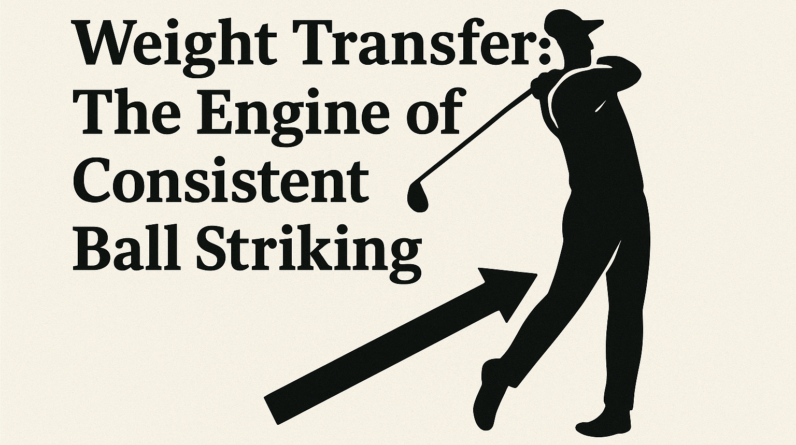
- Weight transfer is a controlled, athletic shift of pressure from the trail (back) foot to the lead (front) foot as you swing. In a right-handed swing, that means moving weight from the right foot toward the left foot and through to the lead side at impact.
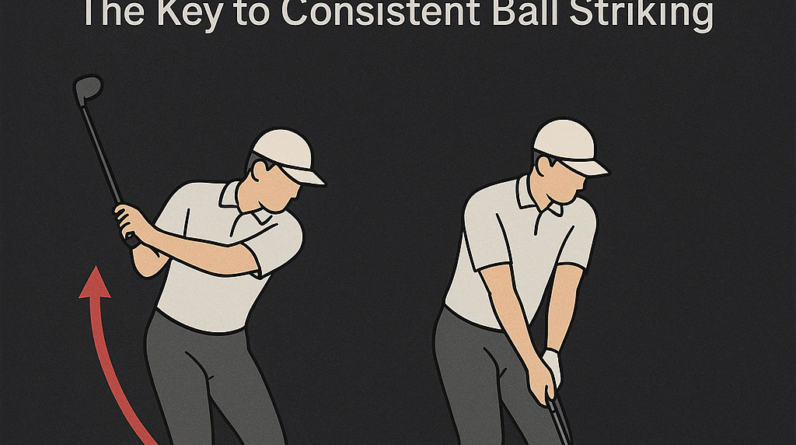
- Good transfer happens in sequence: load on the trail leg in the backswing, a smooth transition during the downswing, and peak pressure on the lead foot at impact, finishing with a balanced follow-through.
Why it matters to the golf swing
- Helps you strike the ball consistently with solid compression and solid contact.
- Promotes a square clubface at impact by keeping your hands and arms connected to your body’s rotation.
- Maintains spine angle and body balance, reducing mishits like fat shots or casts.
- Increases distance potential because the energy stored in your legs is efficiently released through the lead side.
What you should feel when doing it correctly
- Pressure gradually shifts to the lead foot as you approach impact (a firm yet athletic feel on the front leg).
- Your trail knee stays soft and your hips rotate toward the target without collapsing or sliding excessively.
- Your chest and belt buckle gradually face the target as weight moves forward.
- You can nod your head slightly toward the target and finish with most of your weight on the lead foot, staying balanced without excess upper-body sway.
2–3 common mistakes with fixes
1) Hanging back on the trail foot (weight staying on the right heel) during impact
- Why it hurts accuracy: you miss the forward shaft lean and the clubhead arrives behind the ball.
- Fix: actively feel pressure building into the lead foot before impact; try a small drill to train early transfer (see drill below). Keep the trail knee soft and allow the hips to rotate through impact.
2) Too early of a weight shift or too rapid a hip slide
- Why it hurts: the clubhead can swing ahead of your body, producing thin or heavy strikes and misalignment.
- Fix: delay lower-body movement slightly until the downswing momentum starts; let the hips rotate and the weight shift through the moment of contact, not before.
3) Losing posture or spine angle during the transition
- Why it hurts: posture collapse makes contact inconsistent and limits power transfer.
- Fix: keep a steady spine angle from takeaway through impact; imagine your lower body driving the rotation while your upper body stays quiet until the weight has clearly moved forward.
One simple practice drill you can do at home or on the range
Step-Through Weight-Shift Drill
- Stand with your feet together and take a small backswing—just to the halfway point.
- As you start the downswing, take a deliberate, small step forward with your lead foot (toward the target). You should land softly and feel your weight shifting forward as you strike the ball.
- Reset and repeat 10–12 times, focusing on smooth, continuous transfer rather than a big jump. Do this with and without a ball to build the feel, then add a ball and make a normal swing while maintaining the step-through rhythm.
Short, focused practice like this helps you internalize the feeling of a forward, balanced transfer. When you return to full shots, you’ll notice more solid contact, more consistent direction, and more distance when you combine weight transfer with good rotation.
Recap: Weight transfer is the steady, athletic move of pressure from back foot to front foot that powers your impact. Maintain balance, feel the lead-side pressure, and avoid hanging back or rushing the transition. Use the Step-Through Drill to train the feel, then apply it to your everyday swings for more reliable ball striking.
Weight Transfer: The Critical Switch for Consistent Ball Striking
In any sport that hinges on precise contact with a ball—golf, baseball, tennis, or cricket—the difference between a solid strike and a mishit frequently enough boils down to a single biomechanical principle: weight transfer. The way a player shifts their center of mass from one foot to the other, and how that shift is sequenced through the swing, can dramatically influence power, accuracy, and repeatability. This article dives into the physics, cues, and practical drills that unlock weight transfer as a reliable switch for consistent ball striking.
Understanding Weight Transfer in the Swing
What is weight transfer?
Weight transfer is the controlled movement of your body’s center of mass from the back foot toward the front foot during the attempt to strike a ball. In a well-timed transfer, the pressure shifts smoothly, preserving balance while accelerating the club or bat through the ball. The underlying mechanism involves the entire kinetic chain—from the ground up—where ground reaction forces drive upper-body rotation and arm acceleration.
Why it matters for ball striking
- Power production: efficient weight transfer converts vertical and horizontal ground forces into club speed or bat velocity at impact.
- Consistency: A repeatable transfer path reduces timing errors and off-center hits.
- Contact quality: When the center of mass is over the front foot at impact, the sweet spot is more likely to contact the ball squarely.
- Injury prevention: Proper sequencing places less undue strain on the back and shoulders by distributing load through the legs and hips.
The Kinetic Chain: How Weight Transfer Works inside the Swing
Weight transfer is not a single action but a coordinated sequence that involves the feet,ankles,knees,hips,torso,and arms. Understanding the phases helps athletes train the skill with intention.
Setup and loading phase
In the setup,you establish a stable base and micro-loads the back foot. The torso tilts slightly and the hips begin to turn away from the target. The lead foot plants more weight as you prepare to unwind,and the back knee tracks toward a loaded position.This groundwork creates stored energy in the legs and trunk that will be unleashed during the swing.
Transition and unloading phase
As you move toward impact, the weight shifts from the back foot to the front foot. Think of the hips “opening” toward the target while the torso remains connected to the lower body.The shift is nuanced: not a pure lateral slide, but a diagonal transfer that brings the center of mass toward the target while maintaining balance and posture. This transition is where most players lose timing, so precision cues matter.
Impact and follow-through phase
At impact, a well-timed weight transfer ensures the front foot has stabilized and the body has rotated through. The result is a clean, centered contact and an efficient transfer of momentum into the ball. After contact, a controlled follow-through helps dissipate energy safely and maintains accuracy for the next swing.
Biomechanical Cues: Translating Science into Action
Turning theory into practice requires simple,repeatable cues that athletes can feel. The cues below address different aspects of weight transfer and can be used alone or in combination during training sessions.
- Weight shift cue: “Feel pressure move from the back heel to the front toe as you swing.”
- Hip-to-ball cue: “Lead with the hips; let them drive the turn so the torso follows.”
- Ground reaction cue: “Push off the ground with intention; rebound energy travels up the leg.”
- Balance cue: “Stable head, quiet upper body—let the lower body move first.”
- impact cue: “Hit the ball with the center of your body over the front foot.”
Practical Cues and Drills to Master Weight Transfer
Drills that emphasize sensation, timing, and sequencing help convert the abstract concept of weight transfer into tangible skills you can train daily. Below are accessible options for players at different levels.
Drill: Step-Through Weight Transfer (Golf and Baseball)
How to do it: Start with your feet shoulder-width apart. Take a small step toward the target with the front foot while maintaining a slight knee bend. Focus on transferring weight from the back foot through the front foot and finishing with the front knee forward. Repeat for 2–3 sets of 8–12 reps per side.
Drill: Slow-Motion Swings with Pause
How to do it: Perform a full swing in slow motion, pausing at key points: top of backswing, halfway to impact, and at impact. Pay attention to where your weight is located at each pause. This builds proprioception and helps you feel the transfer in real time.
Drill: Ground-Reaction Vector (Plyometrics)
How to do it: Incorporate light plyometric pushes or hops, focusing on a controlled transfer of force from the back foot to the front foot. Keep hips quiet and spine neutral. This trains how ground reaction forces contribute to the swing without sacrificing balance.
Drill: wall-Touch Sequencing
How to do it: Stand close to a wall without hitting it. start with your back foot planted, then rotate and shift weight to the front foot as you “touch” the wall with your lead shoulder in a controlled arc. This emphasizes sequencing and maintaining posture while transferring weight.
Common mistakes and corrections
- Mistake: Over-rotating the hips too early, causing a reverse weight shift. Correction: cohere hip rotation with a intentional forward-weight transfer so the head remains centered over the front foot at impact.
- Mistake: Lateral slide without forward direction, leading to off-center hits. Correction: Maintain a diagonal line from back foot to front foot, ensuring the weight moves toward the target rather than merely sideways.
- Mistake: Early extension with the arms, wich disrupts sequencing. Correction: Allow the torso to rotate first, followed by the arms, so the transfer is linked to the body’s core movement.
Benefits of Proper Weight Transfer
Integrating consistent weight transfer into your routine yields tangible benefits beyond ball speed.Here are the top advantages players report across disciplines:
- Increased ball speed with control due to efficient energy transfer from ground up.
- Improved accuracy thanks to stabilized impact position and reduced mishits.
- Better timing through clear sequencing cues and repeatable patterns.
- Enhanced endurance as energy is distributed across larger muscle groups, reducing fatigue in the arms and shoulders.
- Versatility that translates across sports, from golf to baseball to tennis, with only sport-specific adjustments required.
Case Studies and First-Hand Experiences
Hearing real-world examples helps translate theory into practical wisdom. Here are two concise narratives that illustrate the impact of weight transfer on consistent ball striking.
Case Study A: Weekend Golfer refines Sequencing
A recreational golfer struggled with dispersion and inconsistency. After a focused program on weight transfer, including step-through weight transfer drills and slow-motion swings, the player reported a measurable drop in shot dispersion and a 5–8 yards increase in carry distance on average. The key change was a deliberate, timed transfer of weight from the back foot to the front foot, synchronized with hip rotation and spine alignment.Feedback from the player emphasized better balance through the front leg at impact and a more controllable follow-through.
Case Study B: Baseball Player Improves Contact Quality
A high-school baseball batter faced frequent off-center hits and inconsistent power. A coach implemented ground-reaction cue drills and wall-touch sequencing to reinforce how weight shifts forward during the swing. Within six weeks, the batter demonstrated a higher solid-contact rate and a shift toward a neutral spine angle at impact, resulting in a more predictable ball trajectory and more confident plate appearances. The improvement came from integrating lower-body loading with upper-body timing, ensuring the hips and torso led the motion rather than the hands rushing the stroke.
Analytics and Practical Insights for Coaches
For coaches and serious students, combining qualitative cues with quantitative measures can accelerate progress. Here are practical insights to incorporate into practice plans:
- Video analysis: Record swings from face-on and down-the-line angles to observe foot pressure shifts and hip rotation timing. Look for the moment the weight moves decisively toward the front foot at the approach to impact.
- Force plate or pressure mat data: If available, track center-of-pressure movement to quantify the shift from back to front foot and correlate with ball contact quality.
- Tempo and rhythm: Maintain a steady tempo that supports a smooth weight transfer rather than abrupt, forceful shifts that disrupt balance.
- Sport-specific adjustments: Tailor cues to the sport. Golf emphasizes a stable spine angle and precise club path,while baseball benefits from a slightly longer weight transfer to maximize bat speed through the hitting zone.
table: Weight Transfer Cues by Phase
| Phase | Primary Cue | common Feedback |
|---|---|---|
| Setup | Stable base, slight back-load | Feel grounded; hips begin to rotate but stay connected to spine |
| Load | Back foot pressure increases | Energy stored in legs; torso remains tall |
| Transition | Weight shifts diagonally toward front foot | Hips lead; torso follows; head stays centered |
| Impact | Front foot stabilizes; center of mass over the front foot | Centered contact; minimal sway |
| Follow-through | Continued rotation through the finish | controlled deceleration; balanced finish |
Programming the Practice: Sample 2-Week Plan
Below is a concise plan you can adapt. Each session should include a 5–10 minute general warm-up, followed by specific weight-transfer drills, and a short period of feedback-based practice. Keep sessions to 30–45 minutes to avoid fatigue that can disrupt sequencing.
: Step-Through Weight Transfer (2 sets x 10 reps per side) + Slow-Motion Swings (3 x 6 with pauses at key points) - Day 3–4: Ground-Reaction Vector drills (2 sets x 8 hops) + Wall-Touch Sequencing (2 sets x 6 reps)
- Day 5–6: Mixed drills combining cues; video review for posture and weight shift (15–20 minutes)
- Day 7: Rest or light mobility work; reflect on cues that felt most natural
Integrating Weight transfer Into Daily Training
To make weight transfer a natural part of your game, weave it into every practice, not just specialty sessions. Simple integration ideas include:
- Always start with feet-ground contact checks in your warm-up.
- Before every shot or swing, cue yourself to “load your back foot” and “unload toward the target.”
- Use video feedback or a friend’s eye to confirm that weight is transferring smoothly, not abruptly.
- Incorporate short, sport-specific mini-games that reward precise timing and balance during transfer movements.
Common Questions About Weight Transfer
Here are rapid answers to frequent questions athletes ask about improving weight transfer for consistent ball striking.
- Q: Can weight transfer compensate for a suboptimal swing plane?
A: It can improve contact quality and speed, but a correct swing path is still critically importent for long-term consistency. - Q: How long does it take to feel the benefits?
A: With focused drills, many players notice improvements within 2–4 weeks, especially in consistency and balance. - Q: Is weight transfer different for golf vs. baseball?
A: The principles are the same, but the timing and emphasis may shift slightly based on equipment and target zone demands.
Final Thoughts on The Weight Transfer Switch
Weight transfer is the critical switch that enables your body to convert energy stored in the lower body into precise, powerful contact with the ball. By understanding the phases,practicing targeted cues,and integrating weight-transfer drills into your regular routine,you’ll see gains in distance,accuracy,and consistency across ball-striking sports.The journey isn’t about forcing a dramatic change; it’s about honing a reliable sequence that your body can repeat under pressure. Embrace the kinetic chain, trust the shift, and watch your ball-striking consistency rise to meet your potential.