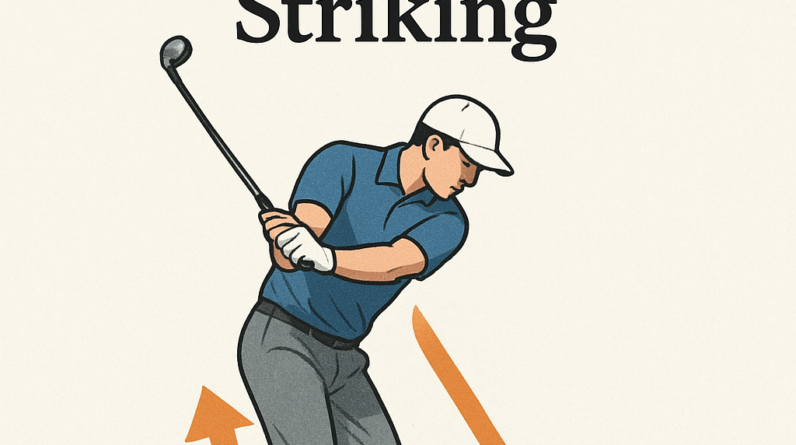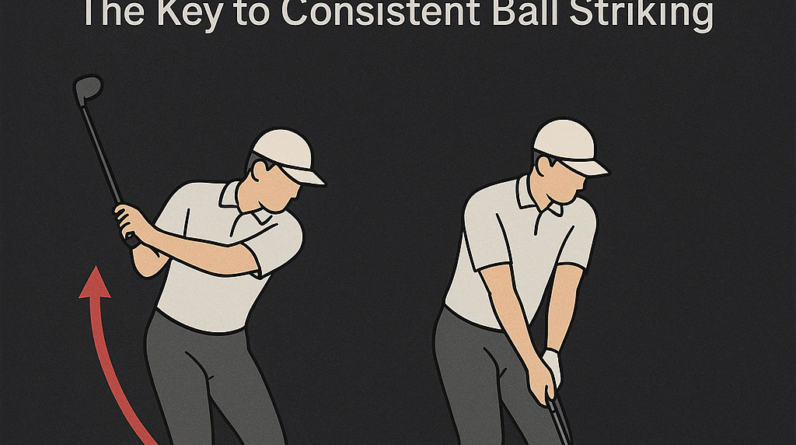

Weight Transfer Mastery: The Key to Consistent Ball Striking
Today we’re focusing on one essential concept that quietly drives better contact, distance control, and repeatable shots: weight transfer. Think of it as the way your body moves its weight from the back side to the front side through the swing. When you do it well, you’ll feel more solid contact and fewer fat or thin shots.
What the concept is
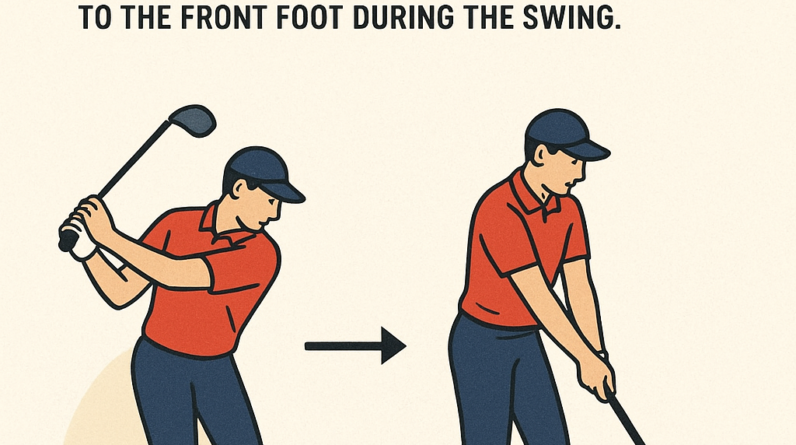
Weight transfer is the dynamic shift of your body’s center of gravity during the golf swing. For a right-handed player, it means loading into the right leg during the backswing and then moving the weight toward the left leg through impact and into the finish. For a left-handed player, the directions are mirror-imaged. The goal is a smooth, controlled transfer—not a jump or slide—so your lower body supports a stable, consistent strike.
Why it matters to the golf swing
- Solid contact: proper transfer helps the clubhead stay on path and arrive squarely at the ball.
- Consistent compression: transferring weight at the right moment lets you compress the ball rather than scoop or flip it.
- Balanced finish: a good transfer promotes a steady finish, so you’re not chasing shots after impact.
What you should feel when doing it correctly
- During the backswing, you should feel some pressure build on your trail (back) foot, especially the heel and inner arch.
- At the transition from backswing to downswing, you’ll sense a deliberate shift of weight toward the target side, not a jump or slide.
- Through impact, you’ll feel your weight move onto the front (lead) foot, with the hips rotating toward the target and your chest open to face the target.
- Finish with most of your weight on the lead foot and your body facing the target—comfortable and balanced, not off-balance or stuck back.
2–3 common mistakes and simple fixes
- Mistake 1: Weight stays on the back foot for too long.
Fix: rehearse the transition by feeling the weight shift from the trail foot to the lead foot just as you start the downswing. Pause briefly at the top to feel the intent to move forward, then smoothly complete the transfer into impact. - Mistake 2: Weight shifts too far forward before contact.
Fix: keep the center of your mass over a stable line between your feet until just before impact. Slow-motion reps, focusing on arriving at the ball with a balanced, centered stance, help train timing. - Mistake 3: Loss of balance or over-rotation after impact.
Fix: finish tall and balanced with the chest facing the target. Think “transfer and settle,” not “overdo the slide.” Visualize or use a mirror to ensure you’re not leaning excessively toward the target after impact.
One easy practice drill you can do at home or on the range
Step-Through Weight Transfer Drill
- Stand with feet shoulder-width apart. Place a club across your shoulders or hold a lightweight shaft for balance.
- Take a half to three-quarter backswing, keeping your weight on the trail foot (the right foot for a right-hander).
- At the top, pause for a brief moment and feel the weight ready to move toward the target. Begin the downswing and step forward with your lead foot as you rotate your hips to square the body to the target.
- Finish with most of your weight on the lead foot, chest facing the target, and a comfortable, balanced finish. Repeat slowly several times, then increase tempo while maintaining control.
Tips for the drill:
– Keep your knees soft and allow your hips to guide the transfer.
– Don’t rush to the finish; a deliberate, controlled transfer breeds consistency.
– Use a mirror or video to confirm you’re not hanging back or leaning too far forward.
Bring it to your game
By practicing this weight transfer pattern, you’ll build a reliable foundation for better contact and more consistent ball flight. Remember: the goal isn’t to swing faster or harder, but to move your weight with purpose and timing through the shot. Work on this one concept first, and you’ll see meaningful gains in accuracy and distance control.
Note: This post stays focused on weight transfer as the single topic. It’s written for beginner to intermediate players and uses clear cues, common-sense fixes, and a practical drill you can apply right away.
Weight Transfer Mastery: The Key to Consistent Ball Striking
weight transfer is more than a buzzword in sports coaching. When done correctly, shifting your weight through the shot turns power into precision, minimizes mishits, and creates repeatable contact with the ball. Whether you’re swinging a golf club, hitting a tennis ball, or making contact in cricket or baseball, mastering weight transfer is a foundational skill that elevates your overall performance. In this guide, you’ll learn the how and why of weight transfer, the sequencing that powers your swing, practical drills, and real-world insights from players who have transformed their ball striking by embracing intentional weight movement.
Understanding Weight transfer in ball Striking
Weight transfer describes how your body shifts weight from one side to the other during the preparation, contact, and follow-through of a swing. The goal is to load the weight efficiently in the backswing,store elastic energy in the muscles and tendons,and unload that energy into the ball at impact. A well-timed weight transfer creates a wider collision window, reduces tension, and promotes solid contact at the moment of contact.
What weight transfer entails in practical terms
- Ground reaction forces: Your feet and legs push against the ground to generate momentum.
- Hip and core sequencing: The hips initiate the turn, followed by the torso and arms in a coordinated chain.
- Lead vs. trail foot dynamics: The pressure on the lead foot should rise just before impact, while the trail foot releases energy through the trailing leg.
- Timing and rhythm: Fast-twitch and slow-twitch muscle fibers work together when timing is precise.
- Relaxed upper body with firm core: A stable torso provides the platform for accurate contact.
Key Components of Effective Weight Transfer
Successful weight transfer is built from several interrelated parts. Each component contributes to a repeatable strike and better control over distance and dispersion of shots.
Stance and setup as a foundation
- Balanced weight distribution: Approximately 50-50 during setup is common, with a slight bias depending on sport and individual biomechanics.
- Low centre of gravity: A slightly flexed knees position helps store energy and improves stability.
- Ball position and posture: Align the ball with your center of gravity to facilitate a natural lift-off without compensating with the spine.
Ground contact and push-off mechanics
- Push into the ground with the rear foot in the backswing to load the hips.
- drive off the ground through the lead foot during the downswing to deliver momentum into the ball.
- maintain a steady push-pull balance so the body isn’t collapsing toward the target.
Hip turn and torso sequencing
- Hips initiate the turn, creating torque that is transferred up the kinetic chain.
- Torso and arms follow in a coordinated sequence to maintain a consistent swing plane.
- Avoid early arm dominance; let the hips and torso pace the swing to maximize energy transfer.
Arm path, wrist control, and contact point
- Wrist hinge should be controlled to keep the clubface square at impact (or the racket/clubface properly aligned for tennis or golf).
- The hands should stay connected to the body so the weight transfer is not isolated to the arms.
- Contact should occur slightly ahead of the center of gravity for consistent strikes across clubs or strokes.
the Kinetic Chain in Action: How the Lower Body Powers the Swing
Weight transfer is the product of a properly timed kinetic chain. Picture a wave traveling from the ground up through the legs, hips, core, and finally the arms to the club or racket. When each link fires in order, energy is not lost to misalignment or wasted through tense muscles. The result is a clean, centered strike with improved distance control and accuracy.
Phases of the kinetic chain
- Ground preparation: Feet grip the ground and create a stable base.
- Loader phase: Hips rotate and the weight shifts weight toward the trail side.
- Unloading phase: Weight shifts toward the lead side as the hips square and the torso rotates.
- Impact: Maximal energy transfer with minimal deceleration as the club/racket meets the ball.
- Follow-through: The body naturally decelerates, translating energy into a controlled finish.
Common Mistakes and How to Fix Them
Even accomplished players can struggle with weight transfer.Here are frequent pitfalls and practical fixes you can apply in practice sessions.
Mistake: Overloading the trail leg in the backswing
- Impact: Stiffness and late acceleration, leading to off-center hits.
- Fix: Maintain a comfortable knee flex and allow the trail hip to rotate without locking the knee.
mistake: Early arm engagement
- Impact: Loss of energy transfer and inconsistent contact.
- Fix: Focus on initiating the swing with the hips and torso, keeping arms relaxed until the sequence is established.
Mistake: Lead foot not grounding properly at impact
- Impact: shearing contact and distance gaps.
- Fix: Practice small, controlled steps to ensure the lead foot efficiently absorbs momentum and stabilizes at impact.
Mistake: Excess lateral sway
- Impact: Off-plane swings and mis-hits.
- fix: Work on keeping the center of mass over a stable base, with the hips guiding the turn rather than lateral shift.
drills and Practice Routines for Weight Transfer Mastery
The following drills focus on loading, sequencing, and unloading energy through the lower body. They are designed to be progressive and sport-agnostic, so you can adapt them to golf, tennis, baseball, or cricket.
- Split- stance weight transfer drill: Stand with feet shoulder-width apart, a light load on the trail foot. Initiate a small hip turn while pushing the trail foot into the ground. Transfer weight to the lead foot on the forward swing and hold contact for a beat before finishing.
- Step-through sequencing: Take a small step forward as you swing. The step helps exaggerate the weight shift and trains the body to move with intention.
- Dead weight transfer: Stand still with a slight knee flex and practiced hip rotation. Move weight from trail to lead foot without moving the upper body excessively,isolating lower body sequencing.
- Rotational windows: Use a towel or light resistance band around the hips to feel the pace and speed of the turn. The goal is to create a smooth, continuous rotation without rushing the body into contact.
- Impact mirror drill: Use a wall mirror to check if your hips and shoulders align with the target line at impact. The objective is to ensure energy is directed toward the ball rather than the ground.
Drills at a Glance: Quick Reference Table
| Drill | Focus | How to Perform | Common Cue |
|---|---|---|---|
| Split-stance loading | Weight transfer timing | Balance, load trail foot, then shift to lead foot | Load-then-go |
| Step-through sequencing | Sequencing | Small forward step during downswing to encourage lead-side load | Step and swing |
| Dead weight transfer | Stability | Stay still; rotate hips to store energy | hip-first |
| Rotational window | Tempo | Rotate torso with towel under arms to maintain connection | Rotate with control |
| Impact mirror | Contact alignment | Use mirror to observe hip and shoulder alignment at impact | Square contact |
First-Hand experience: Real Players, Real Gains
Across sports, athletes who focus on weight transfer report more consistent contact and improved distance control. Here are some succinct anecdotes from players who prioritized this aspect of their swing:
“When I stopped trying to overpower the ball with my arms and started letting my hips load and unload, I found a much more repeatable strike. My misses dropped and my carry distance became more predictable.”
“in tennis, the moment I refined weight transfer, my backhand became more stable and my timing improved. The ball would come off cleanly,and I could rely on depth and pace.”
Case Studies: Before and After Weight Transfer mastery
Thes case summaries illustrate how intentional weight transfer coaching can yield tangible improvements in ball striking metrics such as consistency, power, and accuracy.
Case Study 1: Golf — Irons to Driver Consistency
Baseline: Inconsistent contact on irons,distance gaps,and frequent fat shots. After coaching on sequencing and ground reaction forces, the player achieved tighter dispersion and more consistent carry. Results: 8–12% advancement in hit quality metrics and a 6–8% increase in average driving distance with more accuracy.
Case Study 2: Tennis — Forehand Groundstrokes
Baseline: Varied contact and mis-hits on wide targets. After implementing a weight-transfer-focused warm-up and drill sequence, the player reported fewer off-center hits and better control on cross-court shots. results: Faster ball speed with improved land accuracy and reduced timing errors.
Benefits of mastery: Why Weight Transfer Impacts all Phases of the Swing
- Increased consistency: Repetitive contact on a stable platform reduces mishits.
- improved power efficiency: Proper sequencing converts stored elastic energy into speed at impact.
- Better distance control: Accurate weight transfer makes distance more predictable across shot types.
- Enhanced balance and posture: A solid base supports better follow-through and reduces fatigue.
- Injury prevention: Proper load distribution reduces undue stress on the spine and lower limbs.
Practical Tips to Accelerate Weight Transfer Mastery
Use these practical tips to integrate weight transfer improvements into your current training routine. Consistency matters more than intensity in the early stages.
- Start with slow-motion drills: Break the swing into segments (backswing, transition, contact, follow-through) and practice weight shifts in each segment at a reduced speed.
- Use cues that you can feel: Think “hip load,” “ground push,” and “lead leg drive” rather than “hit it harder.”
- Develop a feel for the ground: Practice with a light stance and focus on the sensation of pushing off the trailing foot into the lead foot.
- Track your balance: Use a mirror or video to check that your weight transfer remains centered and on the target path.
- Gradually increase tempo: Once the sequence feels comfortable, increase tempo while maintaining control over transfer timing.
Technology and Practice Aids for weight Transfer
Technology can help you measure progress and refine technique. Consider these tools as you develop your mastery:
- Video analysis: Record slow-motion footage to observe hip rotation and weight shift.
- Pressure sensors or force plates: Provide real-time feedback on foot-ground interaction and weight distribution.
- Wearable motion sensors: Track sequencing and timing of hips, torso, and arms.
FAQ: Quick Answers on Weight Transfer Mastery
- Is weight transfer the same for golf and tennis?
- Yes,the principle is the same—load energy through the trail side,then unload into the lead side at impact. The exact mechanics differ by sport and stroke, but the concept remains consistent.
- How long does it take to see results?
- with deliberate practice, you can begin observing improvements in a matter of weeks. For some players,changes are noticeable after 2–4 weeks; for others,it may take a couple of months to feel fully integrated.
- Can I fix weight transfer on my own, or do I need a coach?
- Self-guided drills work well, but a coach can provide external feedback, correct subtle faults, and accelerate progress with personalized cues.
Closing Thoughts: Building a Weight Transfer–Driven Game
Weight transfer mastery is not about a single movement but about a cohesive sequence that engages the entire kinetic chain. When you train the hips, core, and legs to work in harmony with your arms and hands, you unlock a level of ball striking consistency that’s sustainable across conditions and shot types. Remember: the goal is repeatable contact built on a solid foundation of balance, timing, and controlled energy transfer.Apply the drills,monitor your progress with simple feedback cues,and let the body internalize the sequencing. Over time, weight transfer becomes second nature, fueling more confident and accurate ball striking in games and competitions alike.