
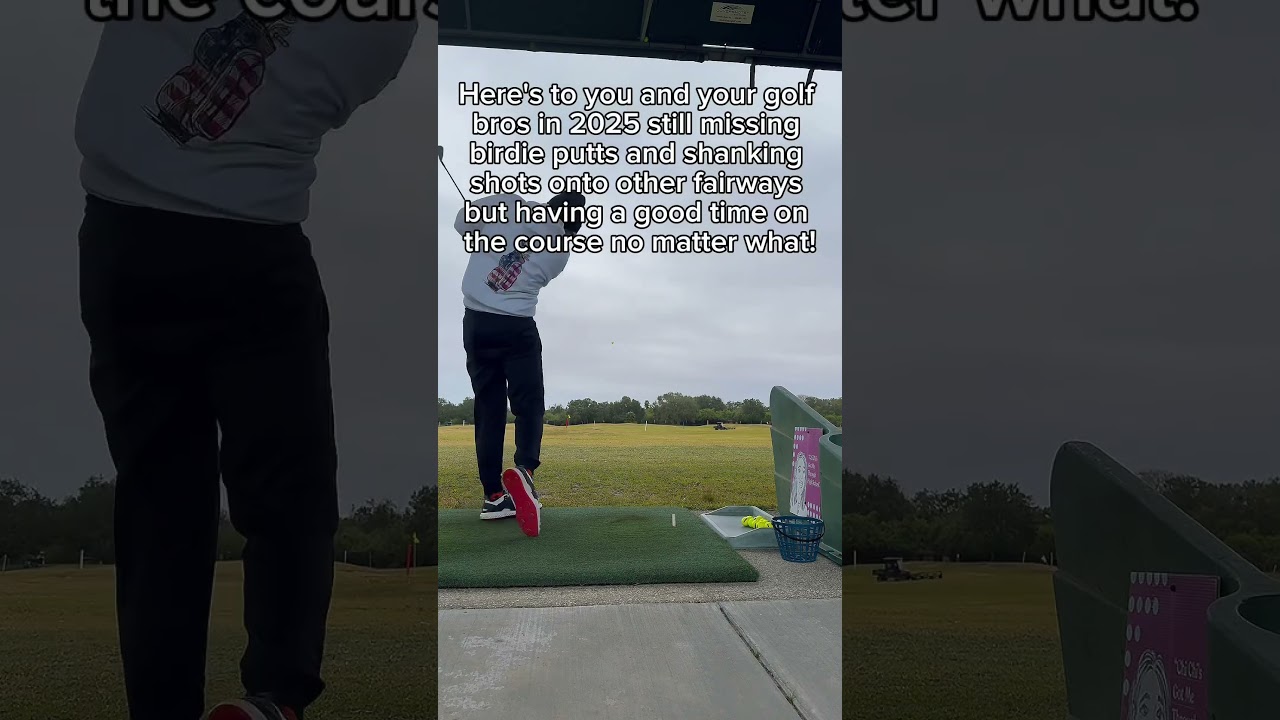
How to be successful in golf in 2025 #golf #golfswing #shorts
Mindset, Goals, and Routine for 2025
Success in golf starts long before you address the ball. The year 2025 brings new opportunities with smarter practice, improved swing fundamentals, and a data-driven approach to on-course decision making. Establish a clear mindset, set actionable goals, and design a repeatable daily routine that fits your schedule.
- Set SMART goals: Specific,Measurable,Achievable,Relevant,and Time-bound. Example: “Reduce handicaps from 12 to 8 within 9 months.”
- Baseline metrics to track: driving distance and accuracy, greens in regulation (GIR), scrambling, sand save percentage, and putts per round.
- Rituals that stick: a consistent pre-round warm-up, a fixed post-round review, and a weekly practice plan that aligns with your goals.
- Mindful practice: focus on quality reps, not just volume. Use intentional practice with drills, feedback, and measurable progress.
Pro tip: combine your practice data with on-course feedback.The best players adjust their plans after each round based on what’s working and what isn’t. This adaptive approach is essential in 2025.
Core Skill Areas to Prioritize
To be successful in golf this year, focus on the four pillars: driving, iron play, short game, and putting. Each area contributes to score reduction and confidence on the course. Below are targeted strategies and drills that deliver real results.
1) Driving distance and Accuracy
Distance is valuable, but accuracy fuels lower scores. Optimize your swing tempo,ball position,and release control to maximize fairways hit and maintain distance where you need it moast.
- Tempo and rhythm: practice with a tempo metronome (e.g., 4-2-6 count for backswing to downswing transition).
- Ball position and posture: align the ball slightly forward of center for drivers; ensure a steady spine angle at impact.
- Launch and spin: work with a launch monitor to keep launch angle in a practical range (typically 12–15 degrees for many players) while controlling spin.
- Strategy on the tee: pick targets, not just distance. Aim for fairways,not dead-center power shots.
2) Iron Play and Greens in Regulation (GIR)
Iron play is about precision, trajectory control, and distance planning. A solid iron game reduces pressure on the short game and sets up clear birdie opportunities.
- Club selection and landing zones: visualize a target landing spot and practice stingers, mid-high trajectory shots, and controlled fade/dade shapes as needed.
- Distance control: learn your effective swing for each iron by alternating clubs and practicing “feel vs. number” drills.
- Shot shaping practice: work on drawing or fading the ball to adapt to doglegs and wind.
3) Short Game Mastery
The short game is where most scoring separation happens. Focus on chips, pitches, and bunker play with consistent technique and a toolbox of options around any green.
- Chipping basics: focus on a low-trajectory chip with minimal wrists, or a high soft lander when needed.
- Pitch shots: develop a compact technique that offers reliable adjustability for different grass conditions.
- Bunker play: practice open and closed stance swings with focused hand-path control to execute clean sand shots.
4) Putting and Green Reading
Putting is where rounds can flip quickly. Combine proper speed control, line-reading practice, and routine consistency to lower three-putt risk and convert more chances.
- Speed control: practice lag lines and short putts with varied distances to simulate real round speed on different greens.
- Line reading: read the slope, grain, and break from multiple vantage points. use a consistent routine to confirm reads with a teammate or mirror.
- Tap-in consistency: finish with a repeatable pre-shot routine and a calm tempo in the stroke.
5) Course Management
Plan smarter, not harder. Use risk-reward analytics to decide when to go for a green, lay up, or play to a safer zone. Smart decisions save strokes over a round and year.
Practice Design for 2025
A well-structured practice schedule accelerates enhancement.combine block practice to build fundamentals with random practice to transfer skills to the course.
Key concepts: deliberate practice, feedback loops, and measurable progress.
Weekly Practice Framework
- two days focused on ball-striking (driving and irons) with drills that emphasize tempo and distance control.
- One day on the short game: chipping, pitching, bunker play, and a portion of green reading.
- One day on putting and on-course simulation: distance control, line drills, and simulated pressure situations.
- One light mobility and mental game session to prevent injuries and improve focus on the course.
Sample Weekly Schedule (12-Week Cycle)
Use this as a starting point and adapt to your needs. The schedule emphasizes a balance of technique, competence, and course-readiness.
| Day | Focus | Drill/Drills | Time |
|---|---|---|---|
| Mon | Driving distance & Accuracy | Tempo drill + target-based fairway practice | 60 min |
| Wed | Iron Play & Trajectory | Landing-spot visualization,distance control with 7-iron to 5-iron | 75 min |
| Fri | Short Game | Chipping from three lies,bunker technique,flop vs. bump-and-run | 60 min |
| Sat | Putt & On-Course Simulation | Speed drills, pressure putt scenarios, 9-hole practice round | 90 min |
tip: Track your practice time and results. If a drill isn’t producing progress after two weeks, swap in a new variation or consult a coach for feedback.
Equipment and Technology in 2025
Fitting, gear, and tech continue to evolve. The right equipment can unlock swing efficiency and confidence, while smart practice tech accelerates progress.
- Club fitting: get fitted for drivers,irons,and wedges by a professional to match your swing speed,angle of attack,and spin.
- Launch monitors: devices like TrackMan or Foresight provide actionable data on launch angle, spin rate, attack angle, and ball speed.
- Training aids: alignment sticks, impact tape, and swing analyzers help you visualize and correct misalignments quickly.
- Grips and feel: ensure grips suit your hand size and climate; texture and tack influence tempo and confidence.
Smart equipment choices should support your goals. Avoid chasing the latest gadget if it doesn’t align with your practice plan or budget.
Fitness and Recovery for Golf in 2025
Golf requires mobility, balance, and endurance. A simple, consistent fitness routine reduces injury risk and improves swing efficiency.
- Mobility: hips, thoracic spine, and ankle mobility support a better turn and weight transfer.
- Core stability: a strong core improves balance and shot consistency.
- Posture and swing mechanics: maintain a tall spine and neutral head position to minimize swing faults.
- Recovery: prioritize sleep, hydration, and light active recovery on rest days to support repeated practice and rounds.
Nutrition and hydration for On-Course performance
Performance on the course is influenced by fuel. Small, steady energy intake helps maintain focus and swing quality during a round.
- Hydration: sip water or electrolyte drinks regularly, aiming for steady hydration without overdoing fluids during a round.
- snack timing: consume balanced snacks (protein, carbs) at breakpoints like after 9 holes or before a long stretch of play.
- Meal timing: eat a light, balanced meal 2–3 hours before playing and avoid heavy meals right before a round.
Data-Driven Progress: How to Track Improvement
numbers tell the story of improvement. Use a simple framework to monitor performance and adjust strategies as needed.
- Baseline metrics: new round average scores, driving distance, fairways hit percentage, GIR percentage, scrambling, and putts per round.
- Quarterly reviews: compare metrics across 3-month intervals to identify trends and the impact of changes in practice.
- Shot-tracking: tag shots on a few holes to understand where you lose the most strokes (e.g.,missed greens,greenside errors).
- Video analysis: use a phone or camera to review swing mechanics every 2–3 weeks,focusing on a single aspect per session.
Case Studies: Real-World Success stories
These concise examples illustrate practical strategies that have worked for different players. The emphasis is on process, not just results.
Case Study 1: From 14 Handicap to Single Digits
- Initial baseline: 14 handicap, inconsistent driving, and a weak short game around the greens.
- Actions taken: 8–12 weeks of structured practice focusing on tempo, iron distance control, and a two-zone putting routine.
- outcome: Handicap dropped to 9 within 6 months; improved GIR percentage and a more reliable short game that saved several pars per round.
Case Study 2: College Player Finishing Tournaments Stronger
- Initial baseline: solid ball-striking but inconsistent on greens and course management under pressure.
- Actions taken: targeted approach to green reading, improved pre-round routines, and a tactical on-course strategy plan tailored to each course.
- Outcome: notable score reductions in late-season events and faster adaptation to different course setups.
First-Hand Experience: Practical Insights from Players at All Levels
Real-world experiences reinforce the principles discussed. Here are a few learnings shared by players who implemented the 2025 framework.
- Amateur learner: focused on a reliable two-gear swing (train slow,swing fast) to improve tempo; gained consistency off the tee and fewer three-putts.
- Weekend warrior: started with a 2-day-per-week practice plan, swapped random practice for block practice on longer clubs, and saw more greens in regulation on course rounds.
- competitive club player: integrated an on-course strategy memo, including hole-by-hole plan adjustments, which reduced risk exposure on tight fairways.
Practical Tips and Speedy Wins for 2025
- Commit to a simple pre-round routine that gets you into rhythm in 5–8 minutes.
- Use a single practice drill per session and log progress to avoid overwhelm.
- Prioritize distance control over raw power in driving and long irons.
- Establish a consistent warm-up that includes mobility, balance, and short-game reps.
- Read greens from at least two vantage points before you pick a line.
- Aim for a safe target on tee shots when needed to reduce big misses.
- Balance aggressive play with smart layups when risk exceeds reward.
- Keep a mental checklist for on-course decisions (wind, lie, hazard threat, and club selection).
- Track your numbers after each round and adjust your practice plan accordingly.
- Invest in coaching or a lesson if you hit a plateau beyond a couple of months.
benefits of Coaching and Structured guidance
- Personalized swing analysis and feedback on technique, tempo, and sequencing.
- Accountability and consistency in practice schedules and goals.
- Access to proven drills, practice plans, and performance tracking tools.
- Accelerated learning through structured progression and regular adjustments.
Content Strategy for Golfers: Ranks and Shorts
For players who also create golf content,especially shorts,a simple approach can drive engagement and search visibility. Align topics with popular queries such as “golf swing tips,” “short game drills,” and “course management strategies.” Include targeted keywords naturally in your captions, titles, and on-page text. Use structured data or schema where possible to help search engines understand your content and improve click-through rates.
Final Practical Takeaways for 2025
- Combine a solid mental framework with a practical, data-backed practice plan.
- Prioritize control over power; consistent contact and direction lead to better rounds.
- Make the short game your biggest scoring asset; a few successful up-and-downs can shift a round dramatically.
- Use technology as a helper, not a crutch—interpret data in the context of your actual rounds.
- Seek guidance when you reach a plateau or consistently struggle with a specific area.