
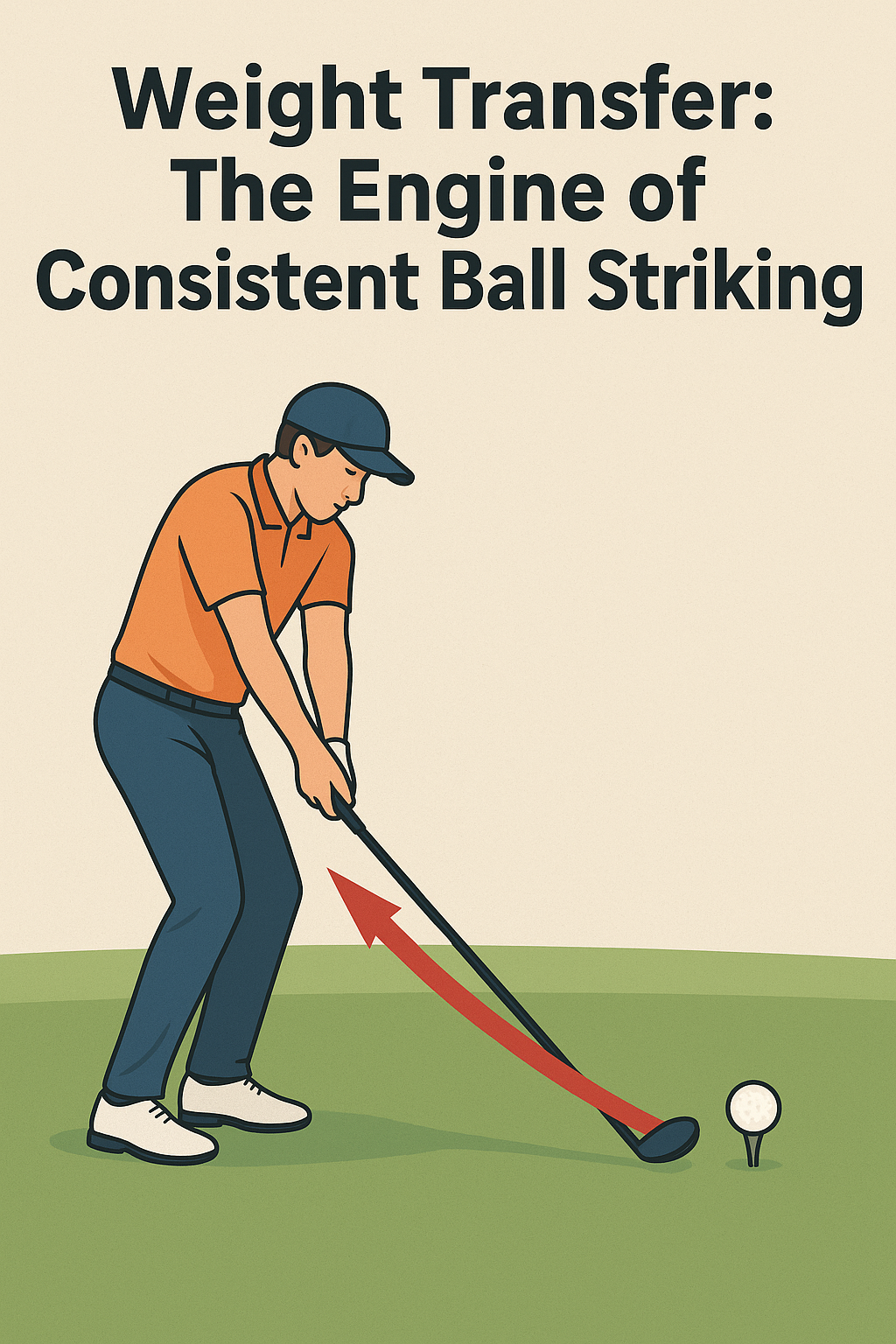
Weight Transfer: The Engine of Consistent Ball Striking
This focused guide covers one single, critical concept: how you move your weight during the swing. For most players, getting the weight shift right makes the difference between solid contact and inconsistent strikes. I’ll explain what it is, why it matters, what you should feel, common mistakes, fixes, and a simple drill you can do at home or on the range.
What the concept is
- Weight transfer means moving your center of gravity from your trailing side (the right side for right-handed golfers) to your lead side (the left side) as you swing.
- In a good sequence, your hips rotate first, your torso and arms follow, and your weight gradually shifts toward the lead foot through impact. Finish with most of your weight on the lead foot.
Why it matters to the golf swing
- Solid contact: Proper transfer helps you strike the ball with the center of the clubface more often, reducing thin or fatty shots.
- Power and speed: A clean weight shift allows the body to store and release energy efficiently, contributing to consistent ball speed without over-using the arms.
- Direction and balance: Balanced weight flow supports a stable swing path and helps you square the clubface at impact more reliably.
What the golfer should feel when doing it correctly
- Backswing: Your weight stays primarily on the trail foot (the right foot for right-handers) as you coil and turn. Your lead foot remains relatively quiet on the ground.
- Downswing: You begin the movement with your hips rotating toward the target, and you feel pressure shift from the trail foot to the lead foot. Your chest and shoulders follow the rotation, not the other way around.
- Impact and finish: Most of your weight is on the lead foot. You finish tall and balanced, with the trail heel light or off the ground and your chest facing the target.
2–3 common mistakes and simple fixes
Mistake 1: No weight transfer at all (staying back on the trail side through impact)
- Why it hurts: Missed contact, pulls, or blocks; you can’t compress the ball consistently.
- Fixes:
- Feel a slight early knee bend in the trail leg at address and maintain that bend as you transition into the downswing.
- During practice, slow the swing to emphasize a hip-first downswing. Pause at the top for 0.5–1 second, then rotate your hips toward the target while letting the weight shift naturally.
- Finish with most weight on the lead foot and the trail foot lightly connected to the ground.
Mistake 2: Early weight shift to the lead foot before impact
- Why it hurts: You “slide” forward too soon, you lose lag, and the clubface can open or close unpredictably.
- Fixes:
- Practise with a slow takeaway and a deliberate downswing start from the hips. Don’t rush the weight transfer; let it occur as you rotate.
- Visualize the sequence: hips rotate first, then torso, then arms. Keep the head steady and allow the weight to move progressively forward rather than dumping onto the front foot.
Mistake 3: Over-shifting or losing balance by finishing too forward
- Why it hurts: You can lose control of the swing arc and struggle to reproduce the same contact later.
- Fixes:
- Work on a balanced finish: shoes quiet on the ground, chest facing the target, and weight clearly on the lead foot without collapsing the knee.
- During practice, stop after impact and check your posture: are you balanced, with a slight knee flex in the lead leg and a tall spine?
One easy practice drill (no ball needed)
- Stand in your normal address position with a light, athletic posture. Place most of your weight on the trail foot.
- Make a slow, two-part swing: first rotate the hips to begin the downswing, then allow the weight to shift to the lead foot as you rotate through impact. Do not rush the transfer.
- Hold the finish for 2 seconds, ensuring most of your weight rests on the lead foot and your chest is facing the target.
- Repeat 10–12 times, focusing on the feeling of the weight moving smoothly forward and the hips initiating the downswing.
Tip: Start with half-swings to ingrain the feel, then gradually increase to full swings as you gain confidence. Track your balance and finish position, and aim for consistent contact before you try to add distance.
Mastering weight transfer won’t overhaul your entire swing overnight, but it will improve consistency, contact, and ball flight. Practice with intent, stay patient, and you’ll see steady progress in your ball striking.
weight Transfer: The Engine of Consistent Ball Striking
Weight Transfer: The Engine of Consistent Ball Striking
What exactly is Weight transfer?
Weight transfer refers to the controlled movement of your body’s center of gravity during the swing. It’s the purposeful shift of load from the trail foot to the lead foot (or vice versa, depending on the stroke) that powers contact with the ball. When performed effectively,weight transfer creates a stable base,builds lag in the swing,and delivers energy from the ground up—thru the legs,hips,torso,and into the arms and club or racket.
Think of weight transfer as the engine that converts static balance into dynamic acceleration. The goal is smooth, coordinated sequencing: starting with a stable platform, loading energy with your back side, and delivering it through the kinetic chain into the ball.
why Weight Transfer Matters in Ball Striking
- Consistency: Proper transfer reduces mis-hits by ensuring the club or racket meets the ball at the optimal angle and speed.
- power with Control: the ground reaction force generated through leg and hip engagement translates to more speed without sacrificing accuracy.
- Injury Prevention: Efficient loading and unloading of the legs minimizes compensations that stress the low back, knees, and shoulders.
- Shot Variety: A reliable transfer allows better manipulation of ball flight, spin, and trajectory across different shots.
The Mechanics: From Feet Through Hips to Hands
A sound weight transfer follows a simple, repeatable pattern. Start with a balanced athletic stance. As you begin the swing, your weight should shift toward the trail leg (back foot in a right-handed swing) to load the hips and create angular momentum. At the moment of impact, the weight shifts back toward the lead leg to stabilize the contact and release stored energy through the ball.
- Footwork: Subtle edging of the feet, with a deliberate push off the ground to generate trailing-leg load.
- Knee and Hip Sequencing: The trail knee flexes and the hip rotates slightly ahead of the hands, creating a smooth, delayed release of energy.
- Core Stabilization: The core acts as a linkage, preventing excess upper body motion and keeping the swing on plane.
- Posture and balance: A stable spine angle helps maintain a consistent strike path during the transfer.
benefits of Proper Weight Transfer
- Improved contact consistency and center contact with the ball.
- Increased ball speed with controlled launch angles.
- Enhanced balance through impact, reducing off-center mishits.
- Better capability to adapt to different ball positions and swing lengths.
- Higher confidence and repeatability under pressure.
Common Mistakes When Weight Transfer Fails
- Over-rotation without stabilization, causing clubs to miss the ball high or thin.
- Excessive lateral shift, resulting in loss of athletic balance and inconsistent contact.
- Stalling on the back foot, leading to sluggish tempo and late impact.
- Poor sequencing between legs, hips, torso, and arms, which reduces energy transfer.
Practical Drills to Build Consistency
Incorporate these cues and drills into practice to train automatic weight transfer. Start with slower tempos and gradually increase pace as control improves.
- In the stance, lift the lead heel slightly at impact position while keeping weight anchored, then return to the starting position. This trains the feeling of lead-leg engagement during contact.
- Take a small step toward the target with the lead foot just after impact to promote a forward weight shift and better balance.
- In a slow swing, pause at impact to feel the weight transfer from trail to lead leg, then resume the follow-through with a smooth rotation.
- Stand with your back foot lightly touching a wall for stability; practice transferring weight without losing posture, focusing on keeping the spine angle constant.
- Use a towel or light resistance band to feel how the hips and torso load before the arms release energy toward the ball.
Sport-specific Considerations
Golf: Ground Forces and Subtle Shift
In golf,weight transfer is frequently enough a subtle,ground-based action. The goal is to load the trail side during the backswing and release energy to the ball through the lead side at impact, all while maintaining a stable lower body. This creates a consistent strike and helps achieve a penetrating ball flight.
- Keep a slight knee flex and a quiet head position through impact.
- Focus on a clean transition from backswing load to downswing release without excessive lateral movement.
- Use a hinge-and-reach motion that transfers energy efficiently from the legs to the torso and then to the arms.
Tennis: Ground Contact to Power Path
In tennis, weight transfer is fast and dynamic due to shorter contact times. Players use a rapid drop-into-stance and a rapid transfer of weight across the forward foot to accelerate the racket through the ball.
- Weight should shift from back foot to front foot during each stroke, synchronized with trunk rotation.
- Efficient transfer supports heavy topspin or flat drives, depending on grip and racket face angle.
- A stable core helps manage variability in ball height and pace.
Baseball: From Stance to Swing Arc
Baseball requires a pronounced weight shift as the batter loads the back hip and then unleashes energy into the front leg and through the arms to meet the pitched ball. Proper transfer helps maintain balance and accelerate the bat through the zone.
- Load with the back hip and produce forward pressure into the front knee at contact.
- Maintain slight knee flex and a flat, stable front side to prevent flying open.
- Coordinate hips with hands to maximize bat speed and contact efficiency.
First-Hand Experience and Case Snippets
Real-world players frequently enough describe weight transfer as a “feel” rather than a strict formula. Here are condensed experiences from coaching notes and player journals:
- Amateur golfer improved contact by 25% after focusing on a quiet head and a smooth trail-to-lead weight shift during the downswing.
- Tennis players who struggled with consistency found that practicing the step-through transfer helped stabilize the stroke path on off-center balls.
- A baseball hitter increased barrel speed by training a deliberate lead-leg drive while preserving balance through impact.
Key Metrics for Tracking Weight Transfer Progress
Use these metrics during practice to quantify improvements in balance, sequencing, and ball contact.
| Phase of Swing | Primary Body Cue | What to Observe | Typical Betterment Indicator |
|---|---|---|---|
| Backswing | Load in trail leg | Weight moves into rear hip; torso tall; balance maintained | Deeper, controlled loading without swaying |
| Downswing to Impact | Transition to lead leg | Energy moves forward; hips rotate prior to hands | Earlier sequencing; more solid contact |
| Impact | Lead-side stability | Ball struck with a centered face; minimal slide off the line | centred, consistent contact across shots |
| Follow-through | Completion on the forward side | Full transfer to front foot; balanced finish | Balanced finish with predictable ball flight |
Cues and Drills: Quick Reference
Use these cues alongside drills to reinforce correct weight transfer during practice sessions.
| Cue | Drill | Target |
|---|---|---|
| “Load, then Load” | Toe-Tap Drill | Lead to trail transfer without over-rotating |
| “Feel the Ground” | Bridge drill | Stability and balance at impact |
| “Step and Drive” | Step-Through Drill | Forward momentum and proper sequencing |
Practical Tips for Daily Improvement
- Train with intentional tempo: slow and controlled at first, then build speed as form stabilizes.
- Record and review: use video to check whether weight shifts smoothly from back to front and whether the head remains relatively still.
- Wear stable footwear and use a flat, even surface to enhance balance during practice drills.
- Integrate core strengthening and hip mobility work to support robust, repeatable transfers.
Sample 4-week Plan to Improve Weight Transfer
Apply this progressive plan to build reliable weight transfer across different ball-striking activities.
- Weeks 1–2: Fundamentals and balance work; 15–20 minutes of drills, 3–4 sessions per week.
- Weeks 3–4: Tempo, sequencing, and sport-specific applications; add short video reviews and feedback loops.
Incremental progress is more vital than speed. Track improvements in contact quality, consistency, and balance at impact.