
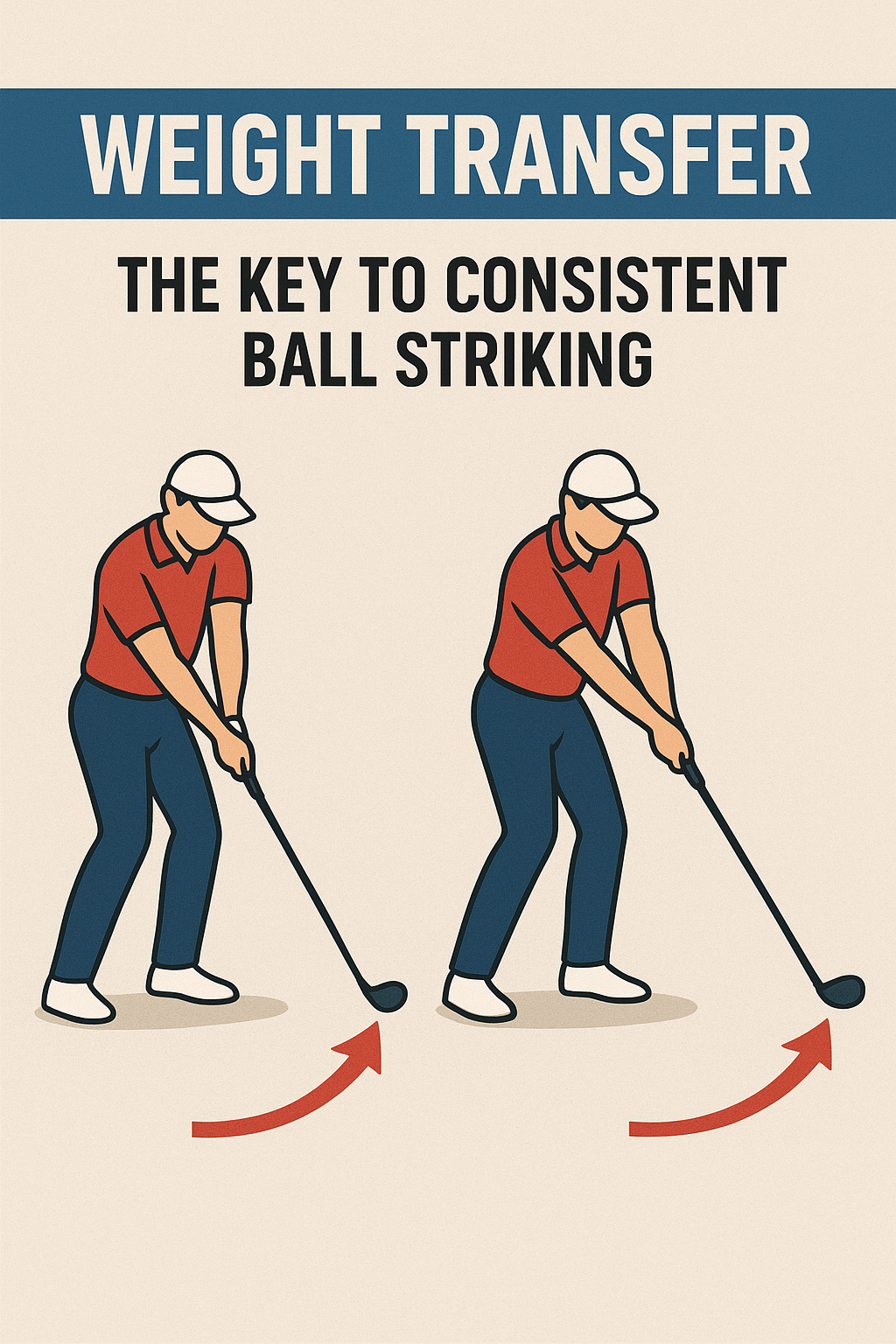
Weight Transfer: The Key to Consistent Ball Striking
When you think about a solid golf strike, think “weight moving with the swing.” Weight transfer is the controlled shift of your body’s weight from the trail foot (right foot for a right‑handed golfer) to the lead foot (left foot) as you move from takeaway through impact and into the follow‑through. Done well, it keeps your balance, helps compress the ball, and produces solid, repeatable contact.
Important note: this is a focused, single-topic post. We’re not teaching the entire swing here—just how to move your weight correctly to support cleaner contact and more consistent outcomes.
What the concept is
- Weight starts on the trail foot at address and during the backswing, then shifts toward the lead foot as you swing down and through the ball.
- The transfer is a blend of turning your hips/torso and allowing your knee/ankle to work in harmony, not a pure lateral slide.
- Momentum and balance come from a controlled sequence: rotation first, then forward weight shift, finishing with the majority of weight on the lead side.
Why it matters to the golf swing
- Cleaner contact: a well‑timed transfer helps you strike the ball before the head of the club pushes into the turf, reducing fat shots (duffed) and thin shots (missed low on the face).
- Distance and consistency: moving into your lead side through impact allows for more stable spine angle and better clubface control, which translates to consistent ball flight.
- Balanced finish: finishing with weight to the lead foot helps you recreate the same posture and feel on every swing, leading to repeatable results.
What you should feel when doing it correctly
- As you start the downswing, you feel your belt buckle and chest rotate toward the target while your weight gradually shifts from the trail foot to the lead foot.
- Your lead knee and hip flex slightly as you load into the front side, and your trail heel lightens or rises a bit as the weight moves forward.
- Your head stays relatively still relative to your spine, and you finish with solid balance on the lead foot.
2–3 common mistakes and simple fixes
- Mistake: Hanging back and keeping too much weight on the trail foot through impact.
- Fix: Cue yourself to “press into the lead foot” through impact. Practice turning your hips and torso toward the target while allowing the trail heel to rise softly as weight shifts forward. Pause briefly at impact to feel the weight on the lead side before finishing.
- Mistake: Weight shifts too early, with the hips sliding rather than rotating into the shot.
- Fix: Focus on rotating the hips first, not just sliding the hips toward the target. Think of your chest pointing toward the target while your weight gradually transfers to the lead foot. Keep the spine angle steady and allow the rotation to drive the transfer, not brute slide.
- Mistake: Overemphasis on the front foot, causing loss of balance or a “falling out” finish.
- Fix: Create a balanced finish by finishing tall and centered over the lead foot. Picture your weight settling slightly into the front side without collapsing the posture. A light, controlled finish is a cue for a repeatable transfer.
One easy practice drill you can do at home or on the range
Step-Through Weight Transfer Drill
- Stand with your feet together and your weight evenly distributed.
- Take a practice swing with a half‑to‑three‑quarter backswing. At the transition, step forward with your lead foot toward the target as you swing through to a balanced finish.
- Feel the weight shift from the trail foot to the lead foot during the downswing and through impact, finishing with most of your weight on the lead side.
- Repeat 8–12 times, ensuring you don’t pause at impact for too long; you want a smooth, continuous transfer.
Tip: perform this drill slowly at first to lock in feel, then gradually increase tempo as your muscle memory grows. Keep your posture upright, your spine angled, and your energy light but purposeful.
With a clear focus on weight transfer, you’ll reinforce a consistent bottom line for contact and distance without getting tangled in other swing details. Practice this, and your ball striking should become more dependable across clubs and shots.
Weight Transfer: The Key to Consistent Ball Striking
Understanding Weight Transfer
Weight transfer, frequently enough described as a intentional loading and unloading of your body weight, is the cornerstone of repeatable ball striking across multiple disciplines.Whether you’re swinging a golf club, rallying in tennis, or driving a baseball, the ability to move your center of gravity smoothly from the back foot to the front foot creates the power, timing, and accuracy you’re chasing.
Key ideas to grasp include:
- the swing is a kinetic chain.Ground forces start from the feet and travel through the legs, hips, torso, and finally to the bat/club/ racket.
- Delayed weight transfer can dampen speed and reduce control; premature transfer can cause off-center contact or mis-hits.
- Consistency comes from repeating the same weight-shift pattern wiht quality contact at the same impact position.
Tip: Your primary goal is not just “move weight” but to time the transfer so the body is loaded in the backswing and unloading occurs precisely as the clubface meets the ball or the racket meets the shuttle, depending on your sport.
Why Weight Transfer Drives Consistency
- Control of compression and leverage: By loading the back foot, you create stored elastic energy that releases through impact, enhancing both speed and control.
- Stability and balance: A well-timed transfer maintains postural alignment, reducing compensations that lead to mishits.
- Predictable impact position: When weight shifts through the center, your hands and arms can meet the target with consistent club/shaft angle.
- Improved ground reaction forces: Ground reaction forces drive the entire motion; optimizing them improves efficiency and reduces effort for the same output.
Biomechanics of Weight Transfer
The Kinetic Chain
The swing is a coordinated sequence: pelvis rotation, torso torque, and arm extension all harmonized with a deliberate shift of weight. In a typical efficient sequence, the hips initiate the loading phase, the torso follows, and the hands deliver the moment of impact. Any disruption in this chain—such as early extension or excessive lateral sway—reduces the effectiveness of weight transfer and can degrade ball striking.
Ground Reaction Forces and Balance
ground reaction forces (GRFs) are the invisible currency of a clean strike. You’re effectively trading a portion of your body weight into the ground and using it to generate speed. A stable base during the backswing, and a controlled push-off during impact, allow the club to square up with the ball consistently.
Loading, Unloading, and Timing
Loading occurs as weight builds on the back foot in readiness for the strike. Unloading happens as you shift weight forward through impact. Timing is the key—too quick a shift can produce a steep attack angle, too slow can result in deceleration before contact. The goal is to time loading and unloading to peak at the instant of contact for maximum transfer of energy.
Weight Transfer in Different Sports
Golf
In golf, weight transfer is often described as shifting from the trail foot (right foot for right-handed golfers) to the lead foot (left foot) through the downswing.A good weight shift helps deliver a solid impact, maximizing carry and accuracy while maintaining swing arc and face alignment.
Tennis
In tennis, weight transfer across the baseline stroke or first serve helps generate pace and control. Players who keep their weight loaded over the back foot during preparation and then smoothly transfer weight forward through contact tend to hit with cleaner ball contact and improved depth control.
Baseball and Cricket Shots
Batting and batting-like shots rely on a well-timed weight shift to convert hip and trunk rotation into bat speed. A deliberate weight transfer promotes a consistent swing plane and reduces the likelihood of crowdswing or cast rather than swing.
Practical Tips to Train Weight Transfer
- Ground awareness drills: Practice with your feet close together to feel how weight shifts without losing balance. Then gradually widen your stance to simulate real swing width.
- Front-foot emphasis: In your practice, place emphasis on feeling the front foot finish the transfer, with a deliberate extension through impact.
- Slow-motion swing analysis: Use slow-motion video to observe when your weight moves and how your hips rotate in relation to the hands.
- Foot pressure cues: Use soft mats or pressure sensors to feel the shift from the back foot to the front foot during the downswing.
- Impact position focus: Train to reach a consistent impact position with the weight centered and slightly toward the lead foot, ensuring the balance point remains stable.
Drills and Practice Routines
Structured drills help translate theory into consistent action. Try these drills 2–3 times per week, integrating them into your regular practice.
- Step-Through Drill: start with weight centered on the back foot. Take a small backswing, then step into your finish with full weight transfer to the front foot. Focus on a smooth, controlled unloading through impact.
- Medicine Ball Rotational Drill: Stand with feet shoulder-width apart, hold a medicine ball at chest level.Rotate hips and torso while maintaining spine angle, then release forward to mimic the transfer of energy through impact.
- Slow-motion Swing with Tempo: Perform a 10–15 second swing while counting a 1-2-3 tempo.Emphasize loading on the back foot and a deliberate, even distribution of weight to the lead foot at impact.
- One-Plane Balance Drill: With feet together, swing on a single leg for a few reps, then switch legs.The goal is to preserve balance while loading and unloading weight.
- Mirror Feedback Drill: Use a mirror to monitor lower body movement. Ensure the knee tracks over the ankle on the lead leg during the forward shift and that the hips initiate the turn without excessive sway.
Tip: Pair drills with short video clips. Analyzing your technique after each session helps you notice subtle timing differences and align them with your target outcome.
| Drill | Setup | Cue | Common Mistakes |
|---|---|---|---|
| Step-Through Drill | Light stance, backswing small | Finish with full weight on lead foot | Sways, keeps weight on back foot |
| medicine Ball Rotational Drill | Feet shoulder-width apart | Rotate hips, then accelerate forward | Arm-dominant rotation, uneven tempo |
| Slow-Motion swing | Normal stance, slow swing | Tempo and balance, weight transfer timing | Rushed unloading, stop-and-start feel |
| One-Plane Balance Drill | Stand on one leg, switch | Maintain posture and spine angle | Loss of balance, hip slide |
Case Studies
Case Study A: A Golfer Who Reduced Inconsistency
Background: A mid-handicap golfer struggled with ball flight inconsistency and compensations during the downswing. After incorporating weight-transfer drills, thay reported improved centered contact and tighter dispersion.
What changed: The player focused on loading the trail hip, initiating the downswing with hip rotation, and finishing with balanced weight on the lead foot. Over 6 weeks, carry distance improved by 6–8 yards on average and the number of mishits dropped by roughly one-third.
Case Study B: Tennis Player Stabilizing Ground Contact
Background: A baseline player battled late mishits and erratic depth control on forehand groundstrokes.Weight transfer cues helped stabilize ground contact and improve net clearance.
What changed: The player emphasized deliberate weight loading during the backswing and a clean forward shift through contact, contributing to more consistent depth and rhythm in rallies.
Case Study C: Baseball Hitter Enhancing Bat Speed
Background: A high school hitter relied on brute arm speed but lacked efficient energy transfer from legs. A program centered on managing weight transfer produced noticeable increases in bat speed and contact quality.
What changed: The hitter learned to apply force into the back leg on the early downswing and push forward through the hips toward contact, aligning hand speed with hip rotation for a cleaner, more powerful strike.
metrics and How to Measure Progress
- Track back-to-front weight shift timing, hip lead, and trunk angle at impact.
- Impact position quality: Look for square clubface at impact with a balanced finish and minimal sway.
- Ground contact symmetry: Use pressure mats or simple observation to confirm even loading on both feet prior to impact.
- Clubhead speed and ball data: Track changes in speed, launch angle, and spin to quantify improvements in efficiency.
Common Mistakes and How to Fix Them
- Late weight transfer: Leads to fat shots or pushes. Fix: Initiate the transfer earlier in the downswing and feel the trail-to-lead shift.
- Excessive sway or slide: Skews contact. Fix: Stabilize the lead knee and hinge the hips, keeping the torso over the center of gravity.
- Early extension: Reduces efficiency of energy transfer. Fix: Maintain spine angle and rotate hips toward the target.
- Arm-dominant strike: Weight transfer becomes secondary. Fix: Emphasize hip rotation and leg drive as primary energy sources.
Tools and Resources
- Video analysis apps or slow-motion capture to assess weight shift timing
- Pressure mats or force plates for understanding ground reaction forces
- Impact tape or face tape to verify contact quality
- Coaching or feedback from a ball-striking specialist to tailor cues
First-Hand Experience: A Practical Viewpoint
From my experience coaching players across several sports, weight transfer is less about a single dramatic move and more about a reliable, repeatable sequence. Players who learn to feel the weight shift as a natural part of their swing or stroke tend to be more forgiving of minor timing errors. The best performers are patient with the loading phase, knowing that quality unloading through impact is what translates into length, control, and consistency.
In early sessions, I focus on simple cues: “load back, then drive forward with your hips” and “stay balanced as you rotate.” As players progress, the cues evolve into more nuanced language that aligns with their swing style, but the core idea remains: a deliberate, controlled weight transfer that peaks at impact.
Benefits of proper Weight Transfer
- Enhanced consistency across shots and sessions
- Greater power without additional physical effort
- Improved accuracy and ball flight control
- Reduced risk of injury through balanced loading
- Better rhythm and timing, leading to more repeatable outcomes
FAQ: Weight transfer and Ball striking
A: not always. the amount of weight transfer depends on the sport, shot type, and individual mechanics. The goal is a consistent transfer pattern that matches your swing plane and timing, not a rigid rule about how far you must shift.
A: It varies, but most players notice meaningful improvements within 4–8 weeks of dedicated practice, especially when coupled with structured drills and video feedback.